Loading...
Done
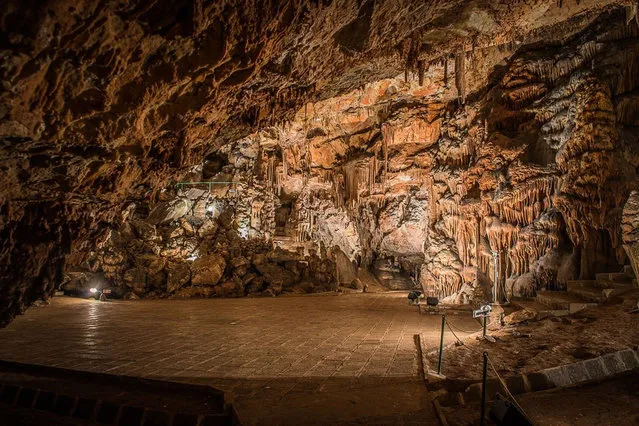
Saeva Dupka Cave

Saeva dupka (Bulgarian: Съева дупка) is a cave in Northern Bulgaria near the village of Brestnitsa, Lovech Province (43°2′N 24°11′E). Its five halls and 400 metres of corridors offer some of the most beautiful cave formations in the country. Besides that the cave has hosted many Choral music performances, thanks to the excellent acoustic conditions. Saeva dupka was named after two brothers Seyu and Sae who used it as a hiding place during the Ottoman occupation of Bulgaria. Recent excavations have showed the cave was inhabited since Roman times. Currently Saeva dupka is one of the 100 Tourist Sites of Bulgaria.
Details
20 Feb 2013 11:30:00
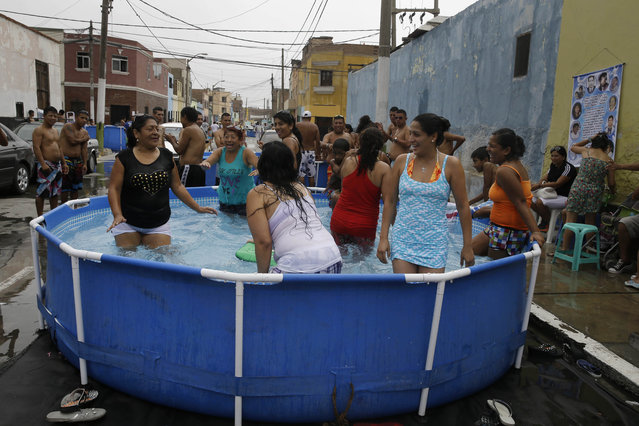
A group of women dance in a pool in Callao, Peru, Sunday, February 22, 2015. One of centers for the front-doorstep, pool-party phenomenon is Lima's port city of Callao. People hold parties in them and sometimes entire blocks chip in to buy a pool, which can be had in local department stores for a bit over $100. (Photo by Martin Mejia/AP Photo)

A group of women dance in a pool in Callao, Peru, Sunday, February 22, 2015. One of centers for the front-doorstep, pool-party phenomenon is Lima's port city of Callao. People hold parties in them and sometimes entire blocks chip in to buy a pool, which can be had in local department stores for a bit over $100. (Photo by Martin Mejia/AP Photo)
Details
24 Feb 2015 15:20:00
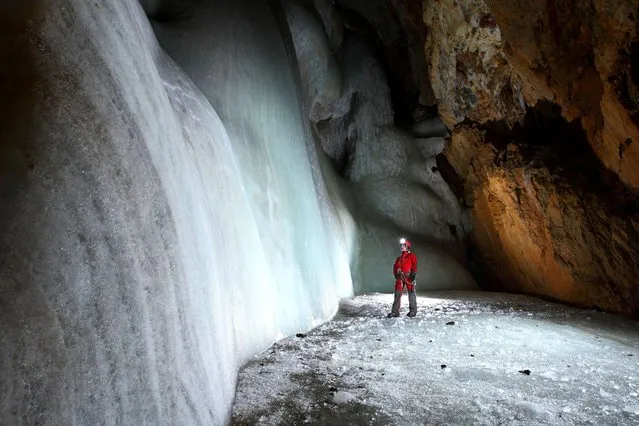
The Ice Cave in Postojna, Slovenia. (Photo by Peter Gedei/Caters News)

Slovenian photographer Peter Gedei started caving 25 years ago and has carried a camera with him on every trip getting stunning pictures from his travels, capturing the ice formations, tight chambers and beautiful halls. Photo: The Ice Cave in Postojna, Slovenia. (Photo by Peter Gedei/Caters News)
Details
15 Dec 2013 10:51:00
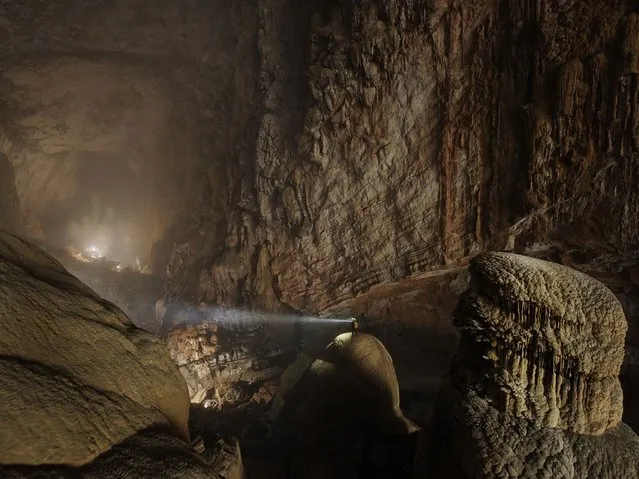
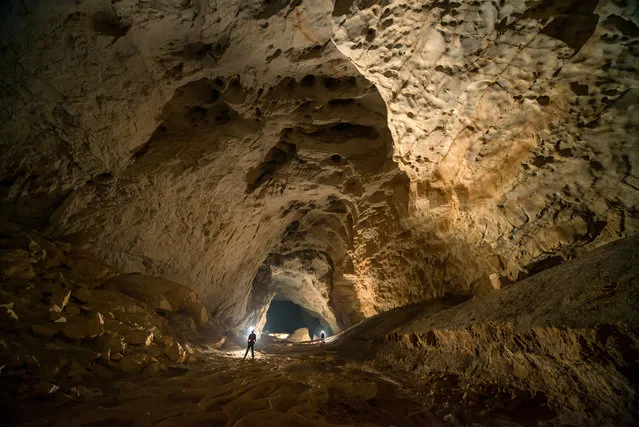
Son Doong Cave

Son doong cave is a cave in Phong Nha-Kẻ Bàng National Park, Bố Trạch district, Quảng Bình Province, Vietnam. Currently the biggest known cave in the world, the cave is located near the Laos-Vietnam border. Inside is a large, fast-flowing underground river.
In early August 2013, the first tourist group explored the cave on a guided tour at a cost of US$3,000 each. The group had six members from Australia, Norway, Russia and USA and spent 7 days and 6 nights for the tour. Next exploration trips will be arranged.
Details
22 Sep 2013 12:30:00
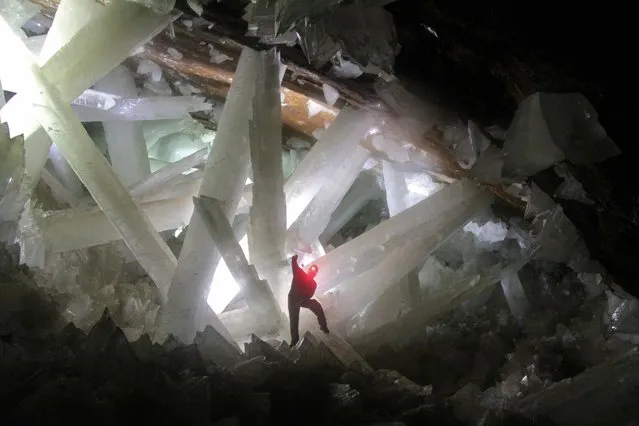
Giant Crystal Cave in Naica, Mexico

Cave of the Crystals or Giant Crystal Cave is a cave connected to the Naica Mine 300 metres (980 ft) below the surface in Naica, Chihuahua, Mexico. The main chamber contains giant selenite crystals (gypsum, CaSO4·2 H2O), some of the largest natural crystals ever found. The cave's largest crystal found to date is 12 m (39 ft) in length, 4 m (13 ft) in diameter and 55 tons in weight. The cave is extremely hot with air temperatures reaching up to 58 °C (136 °F) with 90 to 99 percent humidity. The cave is relatively unexplored due to these factors. Without proper protection people can only endure approximately ten minutes of exposure at a time.
Details
20 May 2014 07:56:00
Caving expedition in Fengshan, China, Guangxi province. (Photo by Francois-Xavier De Ruydts/Caters News)

“Adventurers have gone deep underground to discover previously unexplored caves in these pictures. The awe-inspiring snaps show the cavers dwarfed by the huge series natural rock chambers in the Leye – Fengshan Geopark, China. Belgian photographer Francois-Xavier De Ruydts, 33, captured the team of explorers as they trekked through the deep wonderground in January 2014”. – Caters News. Here: Caving expedition in Fengshan, China, Guangxi province. (Photo by Francois-Xavier De Ruydts/Caters News)
Details
29 Oct 2014 12:08:00
Krubera Cave Gerogia

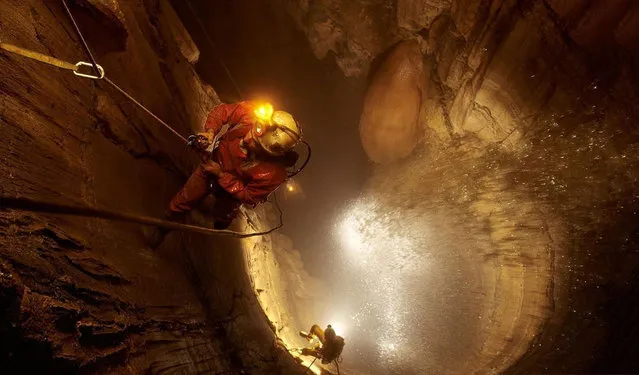
Krubera Cave is the deepest known cave on Earth. It is located in the Arabika Massif of the Gagrinsky Range of the Western Caucasus, in the Gagra district of Abkhazia, a breakaway region of Georgia.
Details
06 Jul 2014 20:33:00
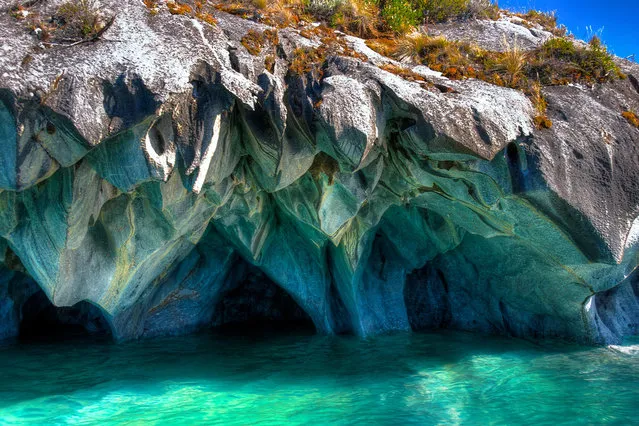
 Marble Caves, Patagonia, Chile

The Marble Caves of Patagonia, Chile, are beautiful vibrant blue caverns, partially submerged in the equally stunning turquoise waters of Carrera Lake. The lake itself is on the border of Argentina and Chile, with the caves located on the Chilean side. The caves are comprised of three main caverns: the Chapel (La Capilla), the Cathedral (El Catedral), and the Cave (La Cueva). Visitors to the caves can explore them in a small boat or kayak, but only when Carrera Lake’s waters are calm and gentle. A rare and invaluable natural wonder, the existence of these caves is currently threatened by plans to build five large dams in the area. If you visit these caves, please treat them with the utmost respect and care.
Details
15 Aug 2012 11:25:00