Loading...
Done
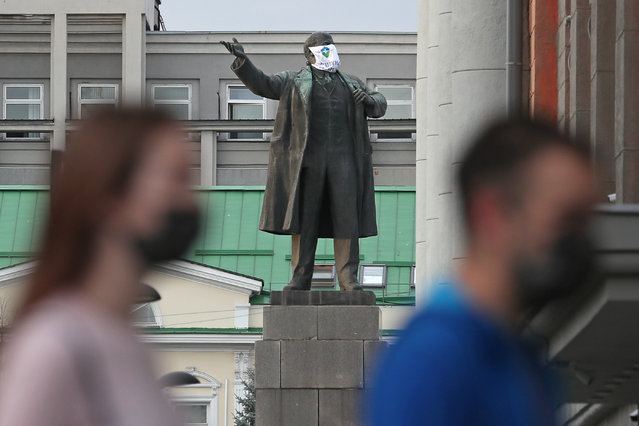
A statue of Vladimir Lenin in 1905 Goda Square in Yekaterinburg, Russia on October 14, 2020, with a face mask put on and signed “Protect Yourself and the Ones You Love”. A group of medical volunteers has put face masks on local statues with consent from the authorities. (Photo by Donat Sorokin/TASS)

A statue of Vladimir Lenin in 1905 Goda Square in Yekaterinburg, Russia on October 14, 2020, with a face mask put on and signed “Protect Yourself and the Ones You Love”. A group of medical volunteers has put face masks on local statues with consent from the authorities. (Photo by Donat Sorokin/TASS)
Details
20 Oct 2020 00:01:00
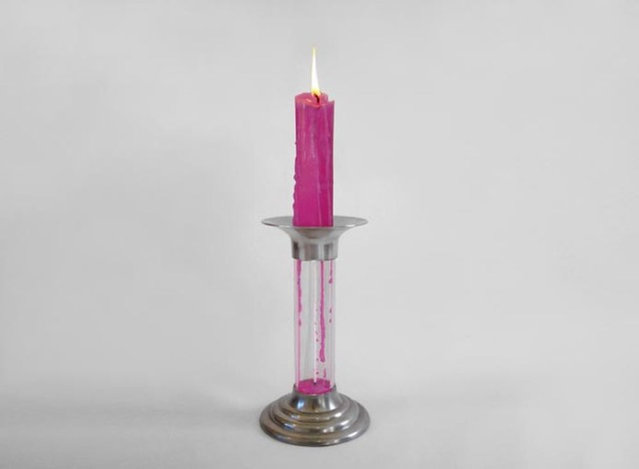
Rekindle Candle By Benjamin Shine

The Rekindle Candle is a clever candlestick holder that regenerates the candle as it burns by forming the melted wax into a new candle. The newly-formed candle can then be placed on top of the holder and the process can be started again. Rekindle Candle was designed by Benjamin Shine.
Details
23 Aug 2014 17:37:00
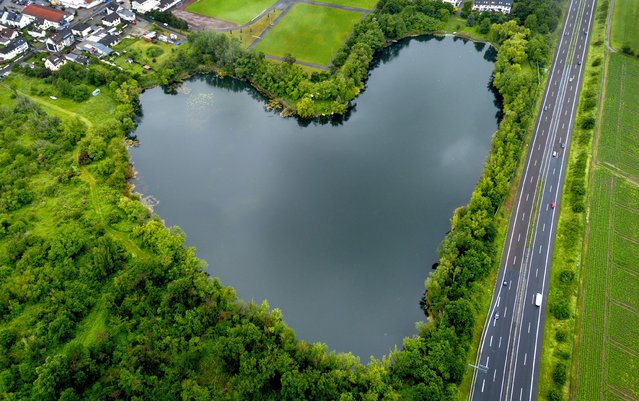
An areal view of the lake in the form of a heart in Rodgau, near Frankfurt, Germany, Friday, May 24, 2024. (Photo by Michael Probst/AP Photo)

An areal view of the lake in the form of a heart in Rodgau, near Frankfurt, Germany, Friday, May 24, 2024. (Photo by Michael Probst/AP Photo)
Details
02 Jul 2024 00:16:00
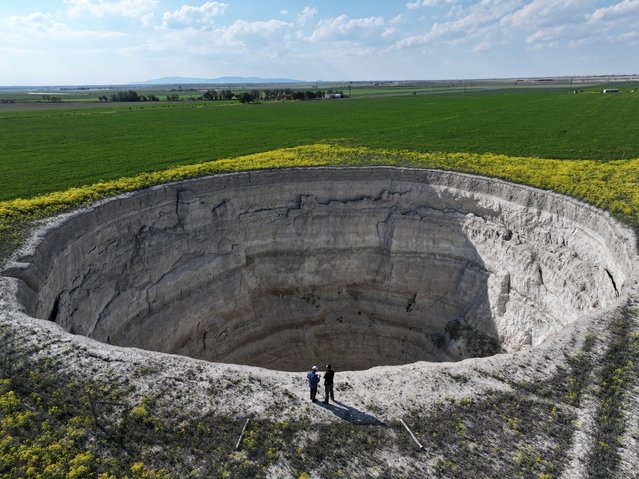
A view of Yarimoglu sinkhole (obruk), caused by some form of collapse of the surface layer in 2009, in Konya province, Turkiye on May 15, 2025. The gigantic pit formed between the fields where intensive irrigation activities are carried out is expanding and growing every year. (Photo by Abdullah Dogan/Anadolu via Getty Images)

A view of Yarimoglu sinkhole (obruk), caused by some form of collapse of the surface layer in 2009, in Konya province, Turkiye on May 15, 2025. The gigantic pit formed between the fields where intensive irrigation activities are carried out is expanding and growing every year. (Photo by Abdullah Dogan/Anadolu via Getty Images)
Details
19 Jul 2025 02:09:00
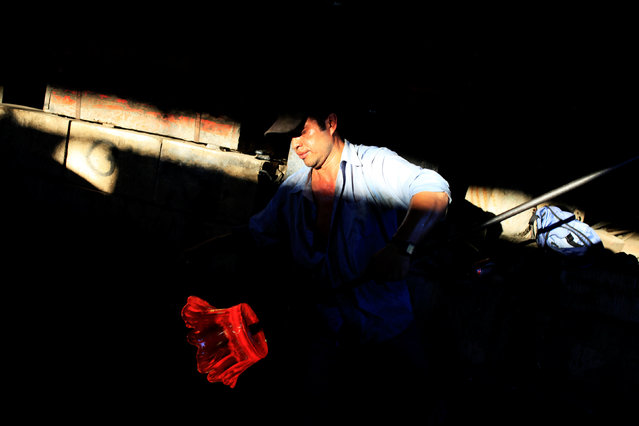
A glassmaker forms molten glass next to a furnace at Cespedes factory in Olocuilta, El Salvador February 8, 2017. (Photo by Jose Cabezas/Reuters)

A glassmaker forms molten glass next to a furnace at Cespedes factory in Olocuilta, El Salvador February 8, 2017. (Photo by Jose Cabezas/Reuters)
Details
10 Feb 2017 00:04:00
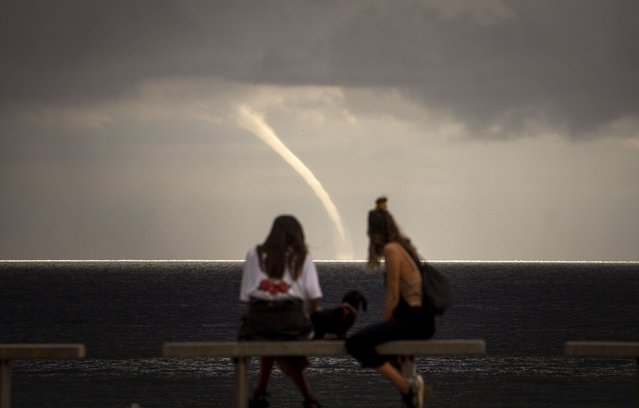
People look at a funnel cloud formed near the beach in Barcelona, Spain, Monday, September 21, 2020. (Photo by Emilio Morenatti/AP Photo)

People look at a funnel cloud formed near the beach in Barcelona, Spain, Monday, September 21, 2020. (Photo by Emilio Morenatti/AP Photo)
Details
19 Oct 2020 00:01:00
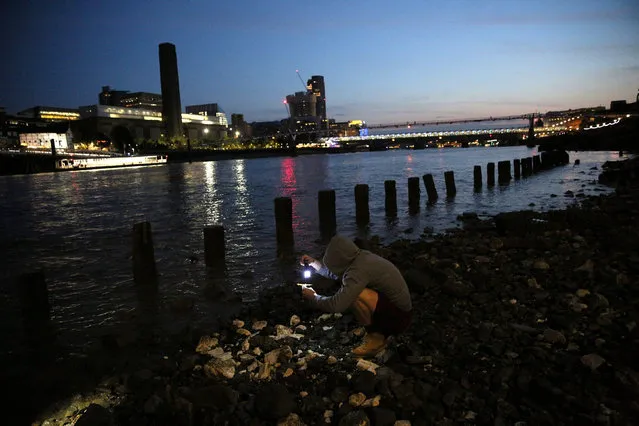
A mudlark uses a torch to look for items on the bank of the River Thames in London, Britain June 06, 2016. Mudlarking is believed to trace its origins to the 18th and 19th century, when scavengers searched the Thames' shores for items to sell. These days, history and archaeology fans are the ones hoping to find old relics such as coins, ceramics, artifacts or everyday items from across centuries. They wait for the low tide and then scour specific areas of exposed shores. "If you're in a field you could be out all day long, with the river you're restricted to about two or three hours," mudlark Nick Stevens said. While many just use the naked eye for their searches, others rely on metal detectors for which a permit from the Port of London Authority is needed. Digging also requires consent. (Photo by Neil Hall/Reuters)

A mudlark uses a torch to look for items on the bank of the River Thames in London, Britain June 06, 2016. Mudlarking is believed to trace its origins to the 18th and 19th century, when scavengers searched the Thames' shores for items to sell. These days, history and archaeology fans are the ones hoping to find old relics such as coins, ceramics, artifacts or everyday items from across centuries. their finds with the Portable Antiquities Scheme. Any item over 300 years old must be recorded. (Photo by Neil Hall/Reuters)
Details
27 Aug 2016 10:43:00
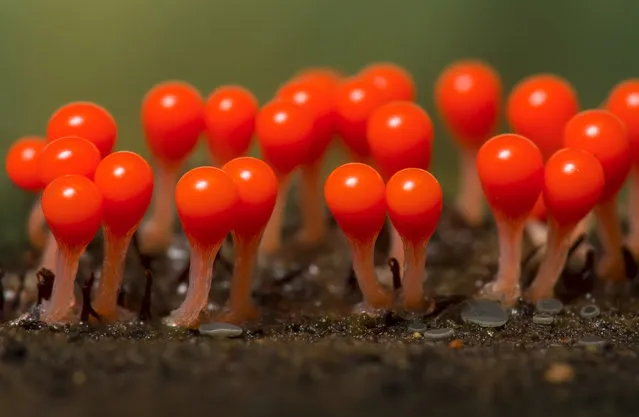
These may look like alien creatures from another planet, but the odd organisms are, in fact, colorful, microscopic life forms found in our forests. The bizarre slime molds, known as mycetozoa or fungus animals, were captured by geologist Valeriya Zvereva. (Photo by Valeriya Zvereva/Caters News)

These may look like alien creatures from another planet, but the odd organisms are, in fact, colorful, microscopic life forms found in our forests. The bizarre slime molds, known as mycetozoa or fungus animals, were captured by geologist Valeriya Zvereva. She spent months documenting the common life forms that are found beneath our feet – but are rarely seen. Incredibly, the organisms can move and hunt for other microscopic life forms on which to feed. Zvereva, who is from Moscow, used a special macro lens to capture the vibrant and up-close shots, which show off the organisms’ unlikely beauty. (Photo by Valeriya Zvereva/Caters News)
Details
20 Apr 2015 13:27:00