Loading...
Done
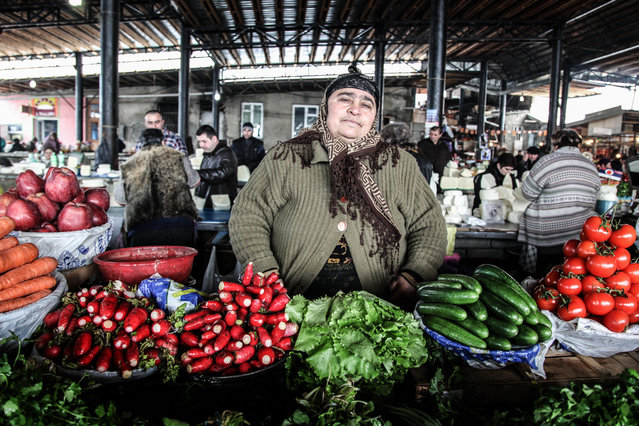
Telavi, Georgia. The photographer says his fascination with Slavic languages and culture took him onto a long journey through post-Soviet Europe, before he finally settled in Tbilisi, the capital of Georgia. (Photo by Gianluca Pardelli)

Gianluca Pardelli is something of an expert on markets. For the past two years, he’s travelled across eastern Europe, from Azerbaijan to Uzbekistan, Moldova to Georgia, photographing them. Here: Telavi, Georgia. (Photo by Gianluca Pardelli)
Details
16 Nov 2015 08:10:00
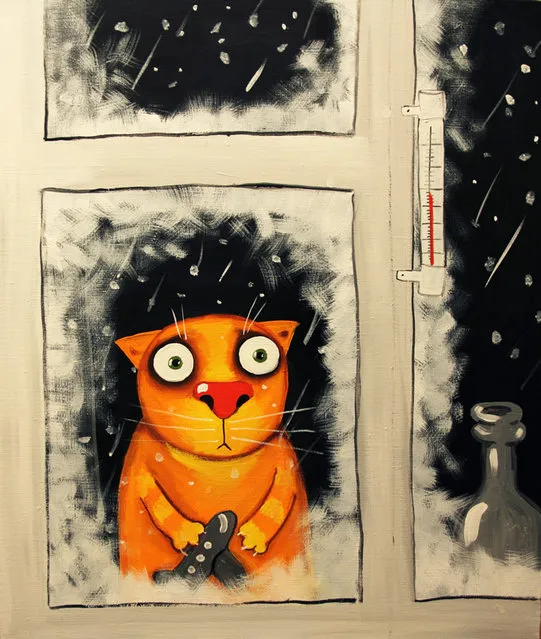
“Grandfather Frost did not come”. (Photo by Vasya Lozhkin)

HAPPY NEW YEAR!
“Grandfather Frost did not come”. (Photo by Alex Kudelin aka Vasya Lozhkin)
“Grandfather Frost is a fictional character who in some Slavic cultures plays a role similar to that of Santa Claus”. – Wikipedia
Details
31 Dec 2014 15:03:00
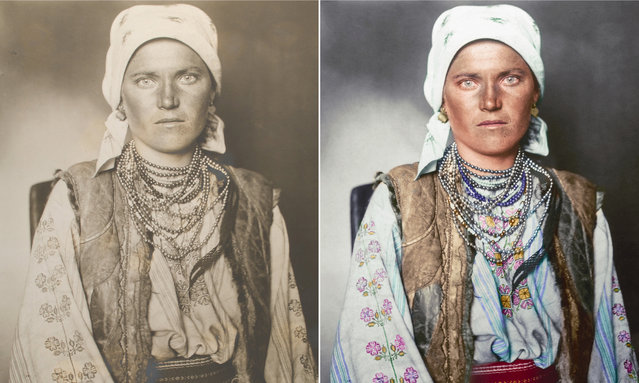
A Ruthenian woman circa 1906 from the region historically inhabiting the kingdom of the Rus, incorporating parts of modern-day Slavic speaking countries. Her outfit consists of a shirt and underskirt made from linen embroidered with traditional floral-based patterns. (Photo by Augustus Francis Sherman/New York Public Library/The Guardian)

Many of the 12 million people who entered the US through New York’s Ellis Island wore traditional dress from their homelands. Here: A Ruthenian woman circa 1906 from the region historically inhabiting the kingdom of the Rus, incorporating parts of modern-day Slavic speaking countries. Her outfit consists of a shirt and underskirt made from linen embroidered with traditional floral-based patterns. (Photo by Augustus Francis Sherman/New York Public Library/The Guardian)
Details
03 Oct 2016 09:15:00
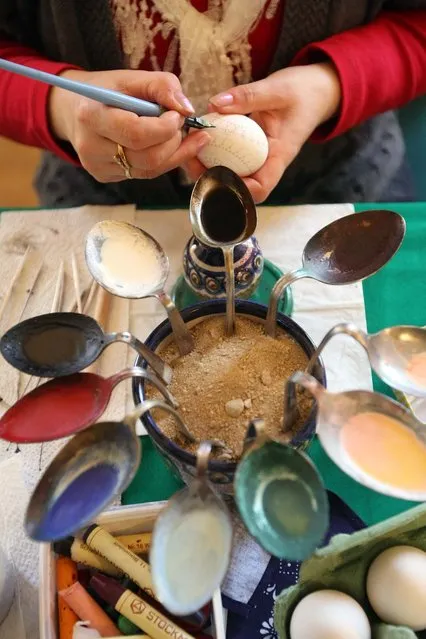
A Sorb egg painter decorates an Easter egg while using bent spoons full of melted wax as coloring at the annual Easter egg market on March 16, 2013 in Schleife, Germany. Easter is a particularly important time of year for Sorbs, a Slavic minority in eastern Germany, and the period includes the tradition of painting Easter eggs that include visual elements intended to ward off evil. Many Sorbs still speak Sorbian, a language closely related to Polish and Czech.  (Photo by Adam Berry)

A Sorb egg painter decorates an Easter egg while using bent spoons full of melted wax as coloring at the annual Easter egg market on March 16, 2013 in Schleife, Germany. Easter is a particularly important time of year for Sorbs, a Slavic minority in eastern Germany, and the period includes the tradition of painting Easter eggs that include visual elements intended to ward off evil. Many Sorbs still speak Sorbian, a language closely related to Polish and Czech. (Photo by Adam Berry)
Details
19 Mar 2013 06:41:00
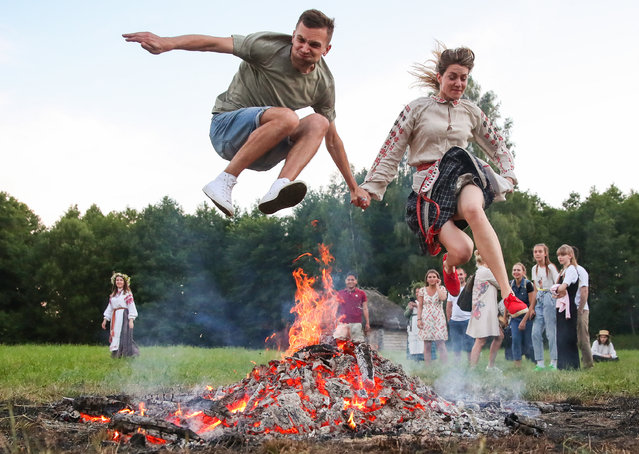
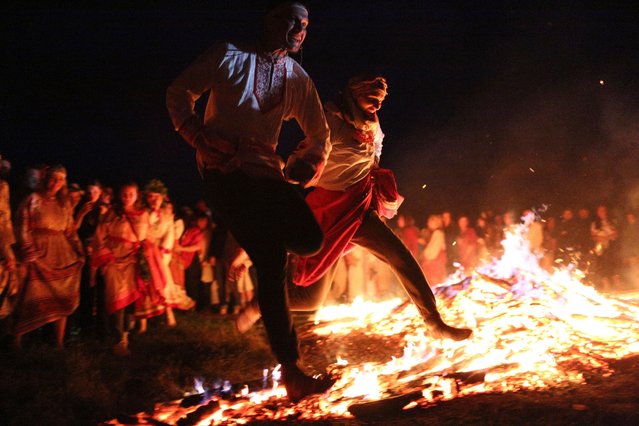
A man and a woman jump over a bonfire during Ivan Kupala Day celebrations held by the Belarusian State Museum of Folk Architecture and Rural Lifestyle in the village of Ozertso near Minsk, Belarus on July 4, 2020. Ivan Kupala Day, also known as Ivana-Kupala or Kupala Night, is a traditional pagan holiday celebrated in eastern Slavic cultures. Various rituals are traditionally performed on Kupala Night, including making flower wreaths, fortune-telling, jumping over bonfires, and burning a wheel-like effigy symbolizing the sun. (Photo by Natalia Fedosenko/TASS)

A man and a woman jump over a bonfire during Ivan Kupala Day celebrations held by the Belarusian State Museum of Folk Architecture and Rural Lifestyle in the village of Ozertso near Minsk, Belarus on July 4, 2020. Ivan Kupala Day, also known as Ivana-Kupala or Kupala Night, is a traditional pagan holiday celebrated in eastern Slavic cultures. Various rituals are traditionally performed on Kupala Night, including making flower wreaths, fortune-telling, jumping over bonfires, and burning a wheel-like effigy symbolizing the sun. (Photo by Natalia Fedosenko/TASS)
Details
23 Jan 2021 09:53:00
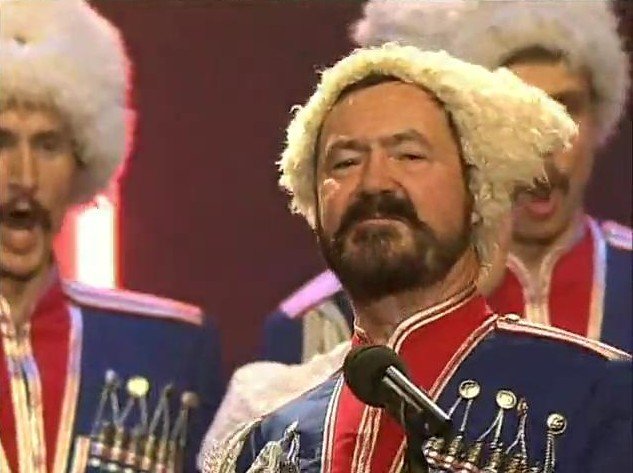
Remarkable Cossack Songs

“Cossacks are a group of predominantly East Slavic people who originally were members of democratic, semi-military communities in Ukraine and Southern Russia. They inhabited sparsely populated areas and islands in the lower Dnieper and Don basins, and played an important role in the historical development of both Ukraine and Russia”. – Wikipedia

Photo: Кубанский казачий хор (Kuban Cossack chorus) - Розпрягайте, хлопцi, коней (Unharness The Horses, Guys!) – Ukrainian
Details
23 Oct 2012 14:20:00
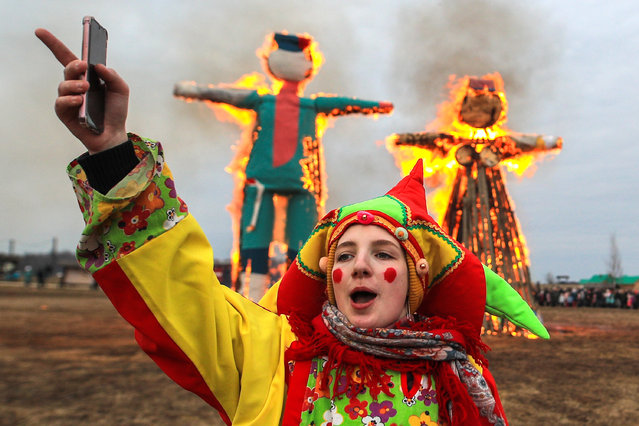
Burning effigies of winter during a celebration of Maslenitsa festival (Pancake Week) at the Etnomir (Ethnoworld) cultural and educational center in Kaluga Region, Russia on March 1, 2020. The holiday celebrates the end of winter and marks the arrival of spring. (Photo by Sergei Bobylev/TASS)

Burning effigies of winter during a celebration of Maslenitsa festival (Pancake Week) at the Etnomir (Ethnoworld) cultural and educational center in Kaluga Region, Russia on March 1, 2020. The holiday celebrates the end of winter and marks the arrival of spring. (Photo by Sergei Bobylev/TASS)
Details
04 Mar 2020 00:05:00
People jump over the fire wearing traditional Russian village-style clothes as they celebrate the summer solstice with a bonfire in the village of Okunevo, about 200 kilometers (125 miles) northeast of the Siberian city of Omsk, Russia, in Okunevo, Russia, late Thursday, June 20, 2024. (Photo by Evgeniy Sofiychuk/AP Photo)

People jump over the fire wearing traditional Russian village-style clothes as they celebrate the summer solstice with a bonfire in the village of Okunevo, about 200 kilometers (125 miles) northeast of the Siberian city of Omsk, Russia, in Okunevo, Russia, late Thursday, June 20, 2024. (Photo by Evgeniy Sofiychuk/AP Photo)
Details
13 Jul 2024 04:06:00