Loading...
Done


“Dog meat refers to edible parts and the flesh derived from (predominantly domestic) dogs. Human consumption of dog meat has been recorded in many parts of the world, including ancient China, ancient Mexico, and ancient Rome. According to contemporary reports, dog meat is consumed in a variety of countries such as Switzerland, China, Vietnam, the Philippines, and Korea. In addition, dog meat has also been used as survival food in times of war and/or other hardships”. – Wikipedia

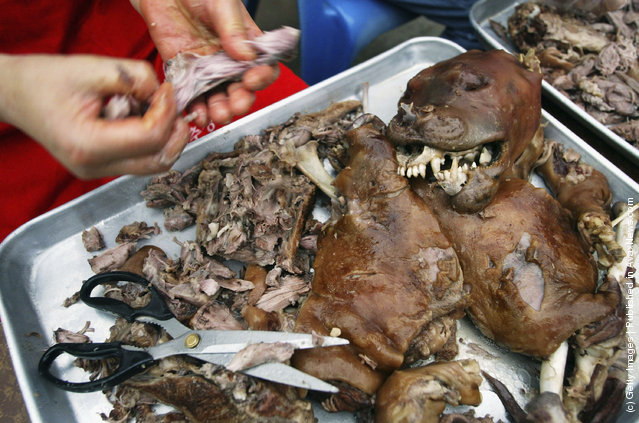
Photo: A chef prepares dog meat at a restaurant on July 4, 2005 in Gwacheon, South Korea. Dog meat is a traditional dish in Korea dating back to the Samkuk period (period of the three kingdoms BC 57 – AD 668). Although many recipes existed historically for dog meat, now chefs only make soups, or dishes using boiled or roasted meat. Koreans traditionally eat dog meat on the hottest day of the summer, for it's reputed benefits of virility, invigoration and health. (Photo by Chung Sung-Jun/Getty Images)
Details
24 Jul 2011 13:21:00


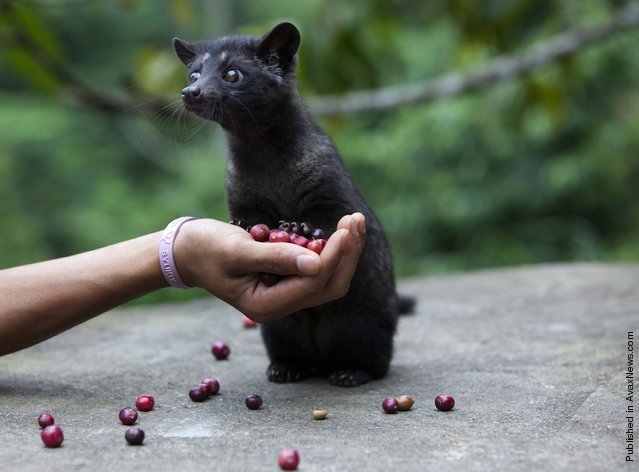
“Kopi luwak (Malay pronunciation), or civet coffee, is one of the world's most expensive and low-production coffee. It is made from the beans of coffee berries which have been eaten by the Asian Palm Civet (Paradoxurus hermaphroditus) and other related civets, then passed through its digestive tract. ...
Details
19 Mar 2011 18:41:00


PALEMBANG, SUMATRA, INDONESIA - NOVEMBER 14: Fitriyani Fitriyani (L) of Indonesia and Janice Ng (R) of Singapore compete in the Sport Climbing Womens Speed Track Finals on day four of the 2011 Southeast Asian Games at Jakabaring Sports Complex on November 14, 2011 in Palembang, Sumatra, Indonesia. (Photo by Matt King/Getty Images)
Details
21 Nov 2011 12:51:00
Ativista do grupo Igualdade Animal posa dentro de um enorme pacote de carne na Praça da Catedral, em Barcelona, Espanha. O ato marca uma campanha por um dia mundial sem carne. (Photo by Lluis Gene/AFP Photo)

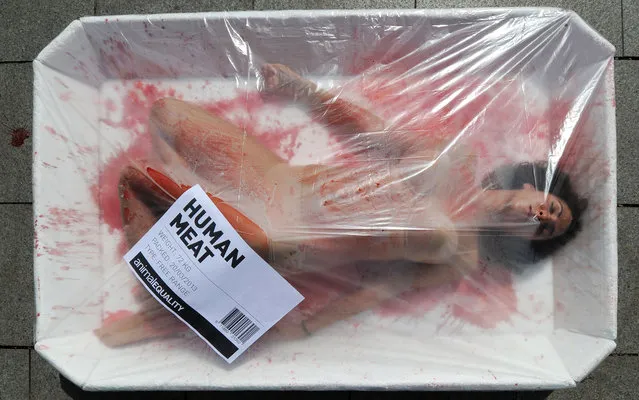
Animal rights activists from the group “Animal Equality” are covered with plastic sheets to represent meat packaging as they stage a protest during “Day Without Meat” event in Barcelona, Spain, on March 20, 2013. (Photo by Lluis Gene/AFP Photo)
Details
21 Mar 2013 15:18:00
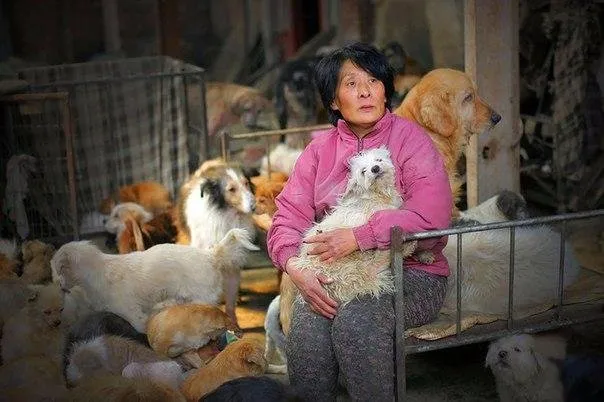
Yang Xiaoyun Saved 100 Dogs From Meat Festival

Yulin, a city in southern China, celebrates the summer solstice by throwing a festival that involves the slaughter and consumption of as many as 10,000 dogs. Not everyone in China supports such practices, however; 65-year-old Yang Xiaoyun, a retired teacher who runs an animal shelter in Tianjin, traveled more than 2,400 km (1,500 miles) and spent more than 7,000 yuan ($1,100 or €990) to save 100 dogs from certain death.
Details
25 Jun 2015 07:24:00
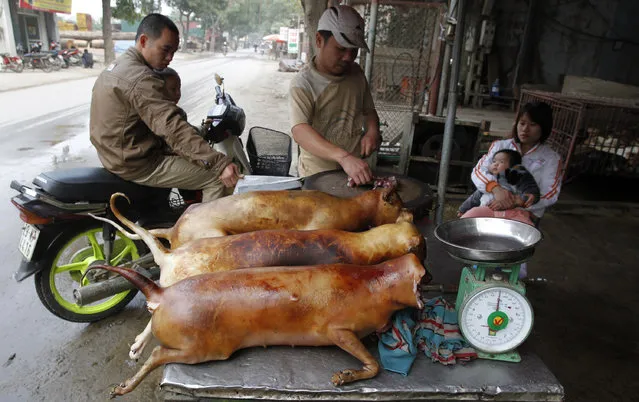
A vendor (C) cuts slaughtered dogs for sale at his roadside stall in Duong Noi village, outside Hanoi December 16, 2011. While animal rights activists have condemned eating dog meat as cruel treatment of the animals, it is still an accepted popular delicacy for some Vietnamese, as well in some other Asian countries. (Photo by Reuters/Kham)

A vendor (C) cuts slaughtered dogs for sale at his roadside stall in Duong Noi village, outside Hanoi December 16, 2011. While animal rights activists have condemned eating dog meat as cruel treatment of the animals, it is still an accepted popular delicacy for some Vietnamese, as well in some other Asian countries. Duong Noi is well-known as a dog-meat village, where hundreds of dogs are killed each day for sale as popular traditional food. Dog-eating as a custom is rooted in Vietnam and was developed as a result of poverty. One kilogram of dog meat costs about 130,000 dongs ($6.2). (Photo by Reuters/Kham)
Details
16 Jul 2013 11:40:00
An animal advocate lays in fake blood in a replica of a meat package with a label that reads “meat” during a protest “The meat is murder” in the Bulgarian capital Sofia on May 8, 2016. (Photo by Nikolay Doychinov/AFP Photo)

An animal advocate lays in fake blood in a replica of a meat package with a label that reads “meat” during a protest “The meat is murder” in the Bulgarian capital Sofia on May 8, 2016. (Photo by Nikolay Doychinov/AFP Photo)
Details
10 May 2016 13:32:00
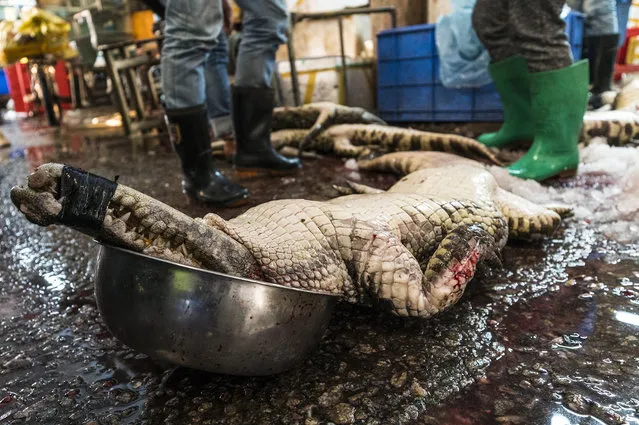
A dead crocodile is seen on Huangsha Seafood Market in Guangzhou, Guandong Province, China, 22 January 2018. Tsukiji Market of China or Huangsha Seafood Market is biggest one in Southern China and one of the biggest in China, as there are literally hundreds of different varieties of fish and seafood scattered throughout the market. Since the proximity of the fish market is so close to the Zhujiang River, it's quite easy for the large fishing vessels and fishermen to unload their fresh catch right at the market, which ensures that the fish and seafood remain fresh. Fish and other seafood are coming there from all around the globe. Seafood Market is full of different kinds of live fish, live shellfish, and live seafood on display in crystal clear tanks and it's common to see 5-star chefs, retailers and expats to source for fresh and high-quality seafood supplies for reasonable prices. While it is a wholesale fish market, since many Guangzhou restaurants and businesses come to purchase their seafood here, the public is welcome to come and even purchase. Many local Chinese have the vendors slice up fresh salmon fillets to take home or carry seafood into one of the nearby specialty restaurants, where they will cook if for them and serve it with vegetables and other side dishes of their choice. One of the biggest attractions for both, tourists and buyers, on market are crocodiles, which are brought there alive in wooden cases with taped jaws so they can?t accidentally bite. They are from crocodile farms from Guangdong, China and from Vietnam. Crocodile meat is popular in most Asian countries and it is consider as delicate one. Crocodiles weight from 10 to 25 kg and bigger ones are about 2 years old. They cost about 70 RMB (8.90 EURO) when bout as whole, or if you buy as parts most expensive and appreciated parts are paws 120 RMB (15.26 EURO) per kg, and tail 100 RMB (12.72 EURO) per kg. (Photo by Aleksandar Plavevski/EPA/EFE)

A dead crocodile is seen on Huangsha Seafood Market in Guangzhou, Guandong Province, China, 22 January 2018. Tsukiji Market of China or Huangsha Seafood Market is biggest one in Southern China and one of the biggest in China, as there are literally hundreds of different varieties of fish and seafood scattered throughout the market. (Photo by Aleksandar Plavevski/EPA/EFE)
Details
17 Apr 2020 00:05:00