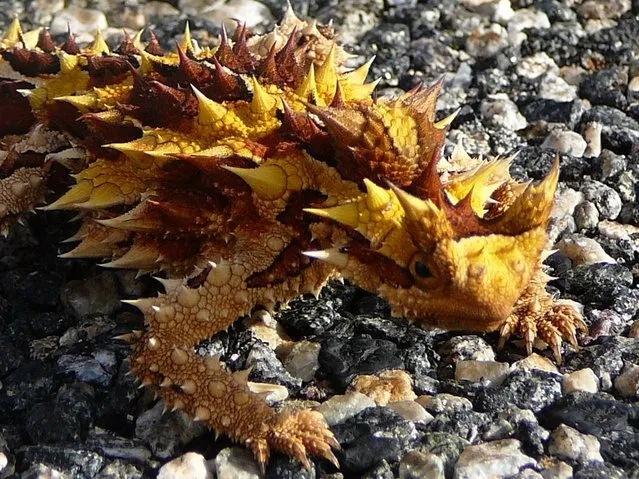
The thorny dragon or thorny devil (Moloch horridus) is an Australian lizard, also known as the mountain devil, the thorny lizard, or the moloch. This is the sole species of genus Moloch. The thorny devil grows up to 20 cm (8.0 in) in length, and it can live up to 20 years.
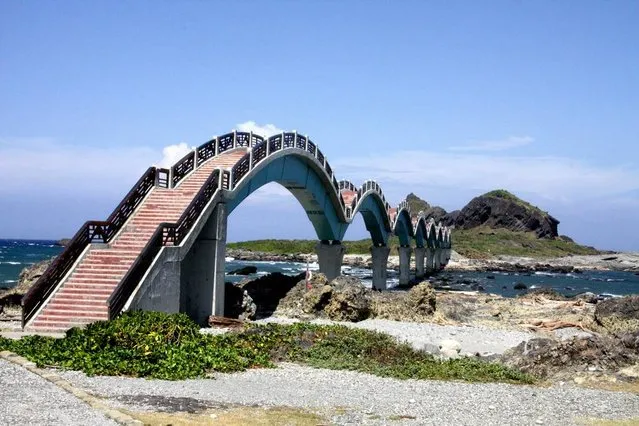
Sanxiantai is an area containing a beach and several islands located on the coast of Taitung County, Taiwan. The beach stretches for ten kilometers in length. It is situated at the 112-kilometer mark. A popular tourist attraction for its rocky coastal views, the area is well known for its long footbridge that connects the coast to the largest island.
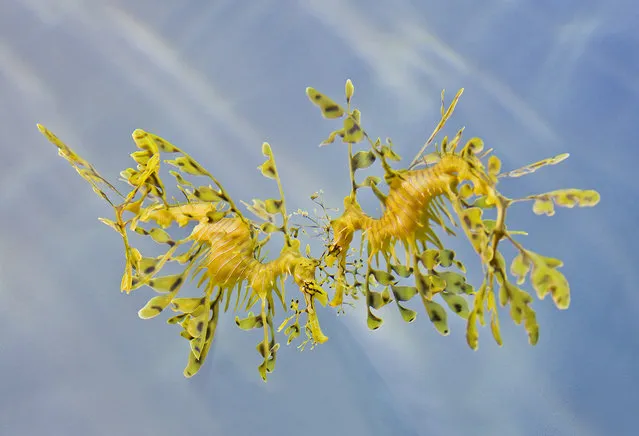
The leafy seadragon or Glauert's seadragon, Phycodurus eques, is a marine fish in the family Syngnathidae, which also includes the seahorses. It is the only member of the genus Phycodurus. It is found along the southern and western coasts of Australia. The name is derived from the appearance, with long leaf-like protrusions coming from all over the body. These protrusions are not used for propulsion; they serve only as camouflage. The leafy seadragon propels itself by means of a pectoral fin on the ridge of its neck and a dorsal fin on its back closer to the tail end. These small fins are almost completely transparent and difficult to see as they undulate minutely to move the creature sedately through the water, completing the illusion of floating seaweed.
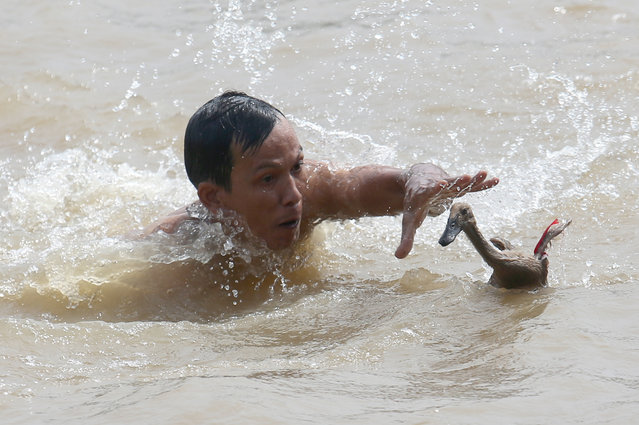
A man tries to catch a duck during a competition held as a part of the Dragon Boat Festival, known locally as “Peh Cun Festival”, on the Cisadane river in Tanggerang, Indonesia, Thursday, June 9, 2016. The event is celebrated every fifth day of the fifth month on the Chinese lunar calendar. (Photo by Tatan Syuflana/AP Photo)
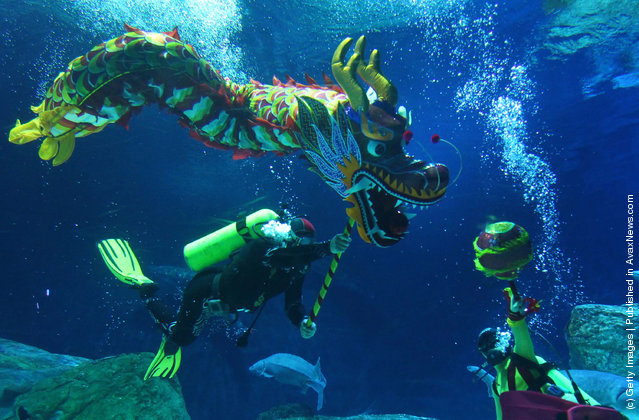
People dressed as a “Chinese Dragon”, swim in water at the Beijing Aquarium on January 5, 2012 in Beijing, China. The new year in Chinese calendar is the year of Dragon which will fall on January 21, 2012. (Photo by ChinaFotoPress/Getty Images)
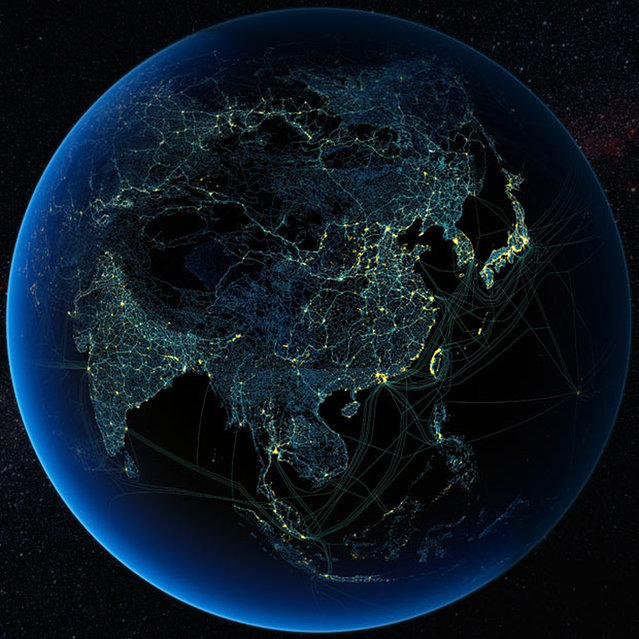
Defined according to wikipedia it is “a recent and informal geologic chronological term that serves to mark the evidence and extent of human activities that have had a significant global impact on the Earth’s ecosystems. The term was coined by ecologist Eugene Stoermer but has been widely popularized by the Nobel Prize-winning atmospheric chemist Paul Crutzen.”
The images here where created by Felix Pharand-Deschenes depicting how various human influences, from road and rail, to internet cables and airlines create significant patterns covering the Earth. What can we learn from these patterns in how they are influencing the environment
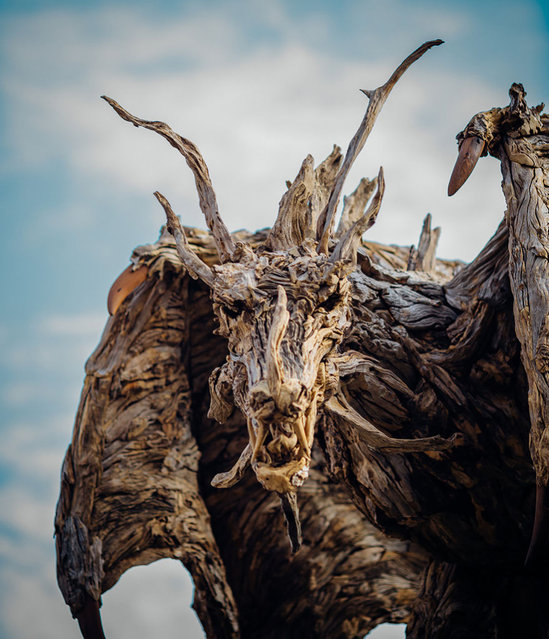
James Doran has created two epic dragon sculpture. The first, perched on a dead tree, is called ‘The Wyvern in the Baobabs’ (a wyvern is a type of dragon with two legs and two wings). The other, ‘Wyvern’s Folly,’ is perched on a gazebo made from reclaimed steel and recycled water bottles.