Loading...
Done
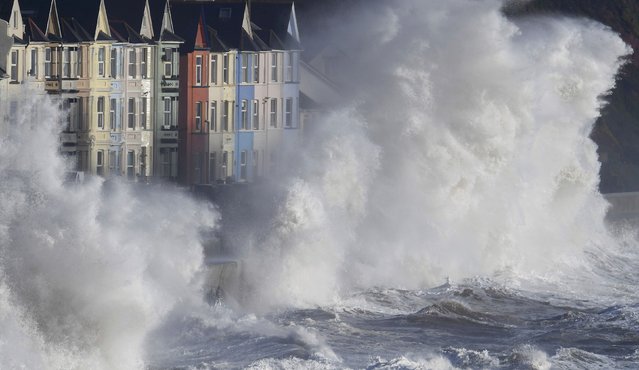
Waves hit the seawall during heavy seas and high winds in Dawlish in south west Britain, February 2, 2017. (Photo by Toby Melville/Reuters)

Waves hit the seawall during heavy seas and high winds in Dawlish in south west Britain, February 2, 2017. (Photo by Toby Melville/Reuters)
Details
08 Feb 2017 00:05:00
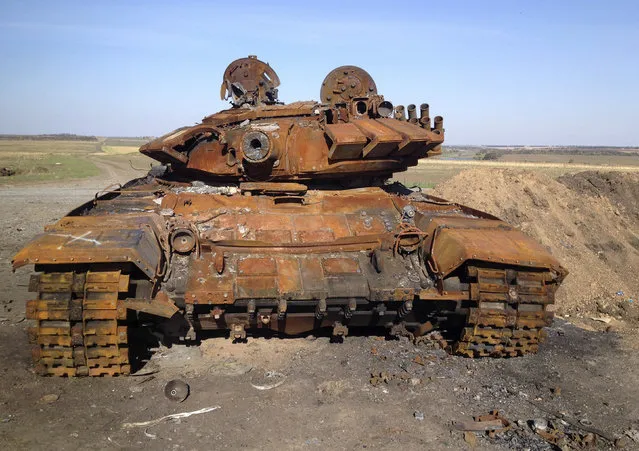
A destroyed T-72 tank, which presumably came from Russia, is seen on a battlefield near separatist-controlled Starobesheve, eastern Ukraine, October 2, 2014.(Photo by Maria Tsvetkova/Reuters)

A destroyed T-72 tank, which presumably came from Russia, is seen on a battlefield near separatist-controlled Starobesheve, eastern Ukraine, October 2, 2014. The burnt-out remains of dozens of tanks and armoured vehicles in fields near the small village of Horbatenko bear witness to the ferocity of a battle that turned the tide of the conflict in eastern Ukraine. Among the debris, Reuters found the blackened carcasses of what military experts have since identified as two Russian army tanks, supporting statements by Kiev and the West that the rebels were backed by troops and equipment sent by Moscow. (Photo by Maria Tsvetkova/Reuters)
Details
24 Oct 2014 12:14:00


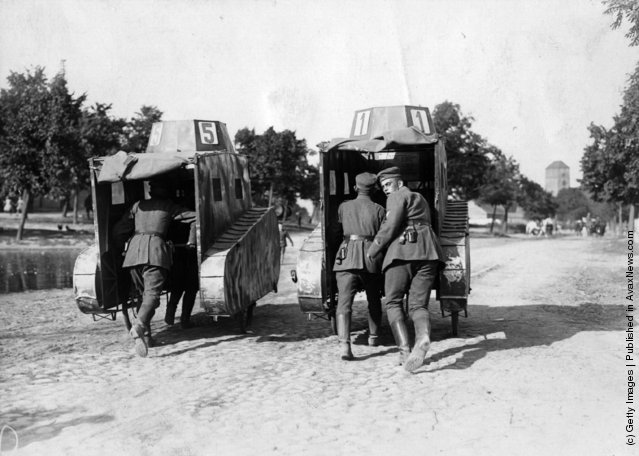
Two dummy tanks being pushed along a road by German soldiers. (Photo by Hulton Archive/Getty Images). Circa 1925
Details
06 Apr 2011 09:46:00
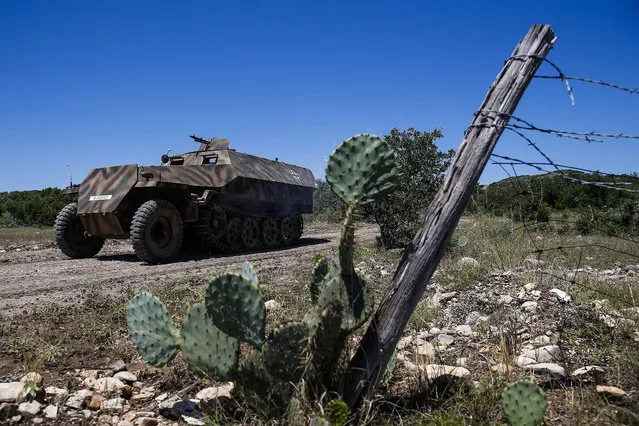
In this May 24, 2017, photo, DriveTanks.com customers drive on a tank course at Ox Ranch  in Uvalde, Texas. (Photo by Michael Ciaglo/Houston Chronicle via AP Photo)

In this May 24, 2017, photo, DriveTanks.com customers drive on a tank course at Ox Ranch in Uvalde, Texas. The ranch is a free-roaming range filled with exotic animals, some to hunt, and home to DriveTanks.com, where tourists pay to transport themselves into another era and another life. (Photo by Michael Ciaglo/Houston Chronicle via AP Photo)
Details
09 Jun 2017 06:28:00
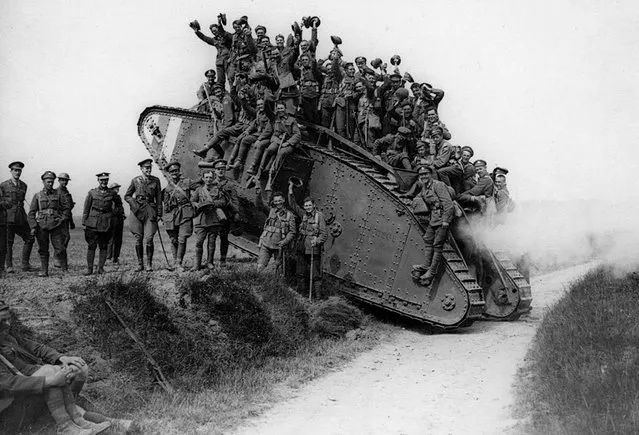
These black-and-white photos are taken from the new book “Armoured Warfare in the First World War 1916 – 1918” by Anthony Tucker-Jones and published by Pen & Sword Military. “Interestingly the British, French and Germans took completely different approaches with varying results”. The British military produced “Little Willie” in Autumn 1915 weighing 18 tonnes, which had a crew of two plus four gunners. “Inspired by a tracked artillery tractor “Little Willie” was referred to as a water tank – hence the name tank – to ensure secrecy”, said Anthony. “This led to the strange looking Mark I with its peculiar rhomboid shape, designed to cross trenches with guns in sponsons on either side. The Germans saw the tank as unchivalrous and were slow to grasp its utility. They favoured the Stormtrooper (specialist soldiers used to infiltrate enemy trenches) and artillery, not the tank”, said Anthony. “However, they didn’t hesitate to make use of captured British tanks. Although the tank helped secure victory and German soldiers dubbed it “Germany’s Downfall” the country was ultimately brought to its knees by the Allies blockade”. Here: British troops hitch a ride on a Mark IV after the massed tank fleet spearheading attack at Cambrai on November 20, 1917. (Photo by Anthony Tucker-Jones/Mediadrumworld.com)

These black-and-white photos are taken from the new book “Armoured Warfare in the First World War 1916 – 1918” by Anthony Tucker-Jones and published by Pen & Sword Military. Here: British troops hitch a ride on a Mark IV after the massed tank fleet spearheading attack at Cambrai on November 20, 1917. (Photo by Anthony Tucker-Jones/Mediadrumworld.com)
Details
23 Feb 2017 00:02:00
The Bajau people of Malaysia live their lives completely at sea, living in wooden huts and spending their days fishing. Sailing over crystal clear waters, the Bajau people of Malaysia live their lives almost entirely at sea. (Photo by Ng Choo Kia/Hotspot Media/SIPA Press)

The Bajau people of Malaysia live their lives completely at sea, living in wooden huts and spending their days fishing. Sailing over crystal clear waters, the Bajau people of Malaysia live their lives almost entirely at sea. Photographer Ng Choo Kia joined the Bajau people on their pirogues, which are long narrow canoes made from single tree trunks, and documented their daily life in a series of pictures. (Photo by Ng Choo Kia/Hotspot Media/SIPA Press)
Details
05 May 2015 10:49:00
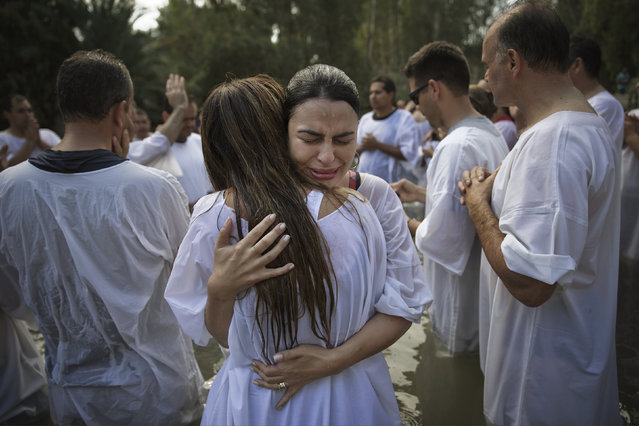
Christian pilgrims from Brazil embrace after they are baptized in the water of the Jordan River during a ceremony at the Yardenit baptismal site near the northern Israeli city of Tiberias October 15, 2014. (Photo by Finbarr O'Reilly/Reuters)

Christian pilgrims from Brazil embrace after they are baptized in the water of the Jordan River during a ceremony at the Yardenit baptismal site near the northern Israeli city of Tiberias October 15, 2014. (Photo by Finbarr O'Reilly/Reuters)
Details
16 Oct 2014 12:54:00
A man (2nd L) takes pictures as visitors run away from a wave caused by a tidal bore which surged past a barrier on the banks of Qiantang River, in Hangzhou, Zhejiang province August 14, 2014. (Photo by Reuters/Stringer)

A man (2nd L) takes pictures as visitors run away from a wave caused by a tidal bore which surged past a barrier on the banks of Qiantang River, in Hangzhou, Zhejiang province August 14, 2014. (Photo by Reuters/Stringer)
Details
19 Aug 2014 10:40:00