Loading...
Done
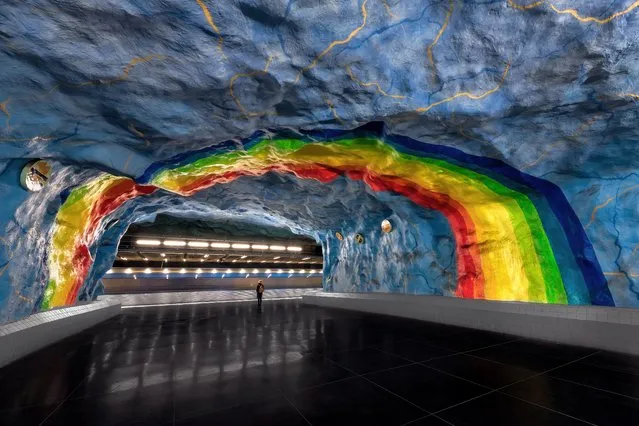
A rainbow arcs over a girl on the platform of Stadion station. (Photo by Conor MacNeill/The Observer)

Beneath the Swedish capital lies an intricate web of underground train lines. More than 90 of the 100 stations in the 110km tunnel system, sometimes referred to as “the world’s longest art gallery”, have been decorated with paintings, installations, mosaics and sculptures by 150 artists since the 1950s. After spending a couple of weeks exploring arctic Norway and Sweden, London-based travel photographer Conor MacNeill headed underground to capture images of the metro stations. Here: A rainbow arcs over a girl on the platform of Stadion station. (Photo by Conor MacNeill/The Observer)
Details
05 Jun 2016 13:21:00
Police women ride Segways as they patrol at Guangzhou South Railway Station in Guangzhou, China

Police women ride Segways as they patrol at Guangzhou South Railway Station on Jaunary 4, 2012 in Guangzhou, China. (Photo by ChinaFotoPress/ChinaFotoPress via Getty Images)
Details
04 Jan 2012 14:14:00
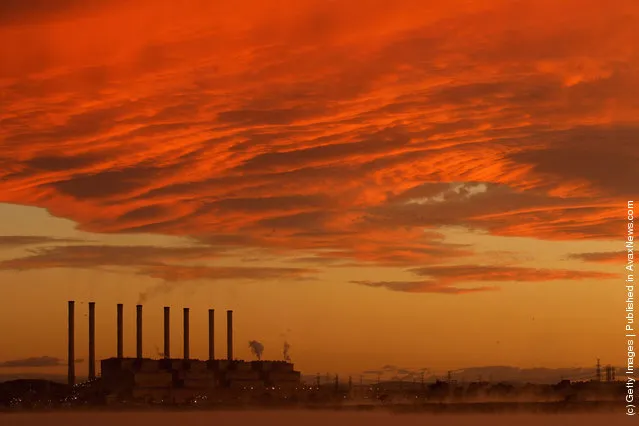
A view of the Hazelwood Power Station across the cooling pondage at sunrise in Melbourne, Australia

A view of the Hazelwood Power Station across the cooling pondage at sunrise on March 21, 2012 in Melbourne, Australia. The brown coal fueled power station, located in Latrobe Valley is the oldest in Victoria and provides the state nearly 25% of its energy. In 2005 Hazelwood was labeled Australia's least carbon efficient power station by WWF Australia and continues to be a target of issue of environmentalist groups. (Photo by Hamish Blair/Getty Images)
Details
21 Mar 2012 08:34:00
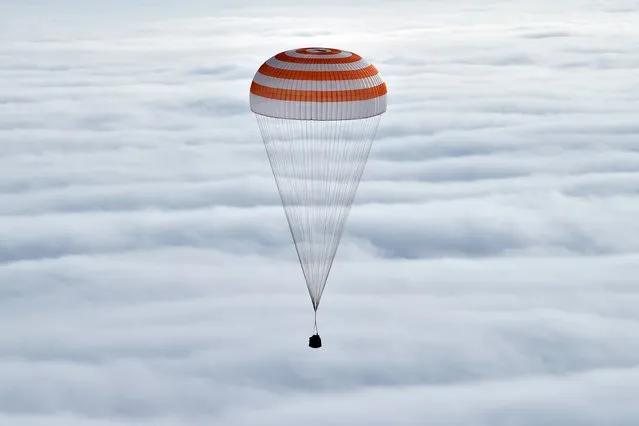
A Soyuz capsule carrying International Space Station (ISS) crew members U.S. astronaut Scott Kelly, Russian cosmonauts Sergei Volkov and Mikhail Korniyenko descends beneath a parachute near the town of Dzhezkazgan (Zhezkazgan), Kazakhstan, March 2, 2016. (Photo by Kirill Kudryavtsev/Reuters)

A Soyuz capsule carrying International Space Station (ISS) crew members U.S. astronaut Scott Kelly, Russian cosmonauts Sergei Volkov and Mikhail Korniyenko descends beneath a parachute near the town of Dzhezkazgan (Zhezkazgan), Kazakhstan, March 2, 2016. (Photo by Kirill Kudryavtsev/Reuters)
Details
03 Mar 2016 11:12:00
These stunning coloured images show detailed x-ray images of everything from skulls to light bulbs. Artist Paula Fontaine, from Westminster Massachusetts, created the images using a process called digital map painting. Here: Brain storm, conceptual composite X-ray. (Photo by Paula Fontaine/Barcroft Media)

These stunning coloured images show detailed x-ray images of everything from skulls to light bulbs. Artist Paula Fontaine, from Westminster Massachusetts, created the images using a process called digital map painting. To create the images the x-ray emission source – the head of the machine on an arm which focuses the beam – is placed over the object. Paula then retreats behind a shielded screen before activating the x-ray exposure. Here: Brain storm, conceptual composite X-ray. (Photo by Paula Fontaine/Barcroft Media)
Details
27 Mar 2015 13:34:00
X-Rays of Presents Hugh Turvey

British Institute of Radiology artist-in-residence Hugh Turvey creates images with x-rays to reveal the hidden contents of wrapped presents.
Details
04 Jul 2013 12:01:00
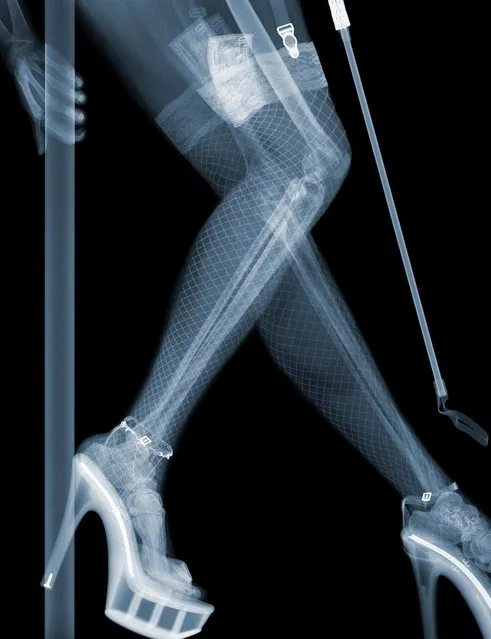
“Stripper”: Has tucked her cash away safely. (Photo by Nick Veasey/Barcroft Media)

British artist Nick Veasey used an X-ray machine to show us exactly what's going on under people's clothes. The equipment took copies of items separately before they were mashed together to create characters and situations. The work is part of Veasey's latest exhibition named “X-ray Voyeurism”. In order to create the work, the 51-year-old has spent the last 20 years exposing himself to harmful radiation in his studio. Photo: “Stripper”: Has tucked her cash away safely. (Photo by Nick Veasey/Barcroft Media)
Details
22 Jun 2014 10:49:00
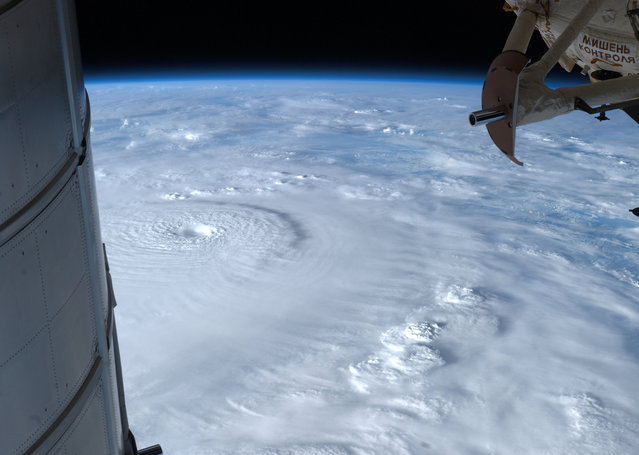
Typhoon Bopha moves toward the Philippines, observed from the ISS, on December 2, 2012. (Photo by AP Photo/NASA/The Atlantic)

Typhoon Bopha moves toward the Philippines, observed from the ISS, on December 2, 2012. (Photo by AP Photo/NASA via The Atlantic)
Details
02 Apr 2013 12:22:00