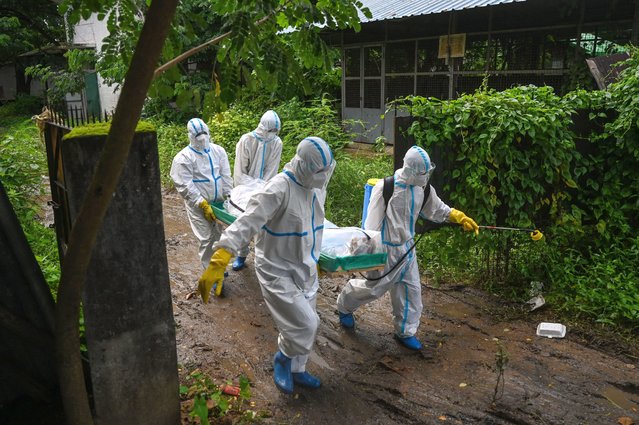
Volunteers wearing personal protective equipment (PPE) carry the body of a victim of the Covid-19 coronavirus to a cemetery in Hlegu Township in Yangon on July 10, 2021. (Photo by Ye Aung Thu/AFP Photo)
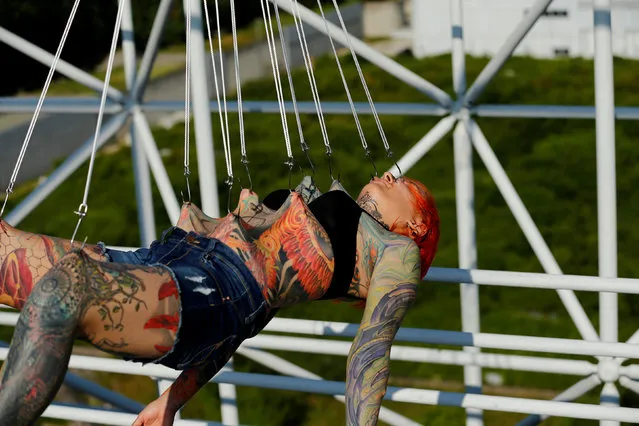
Kaitlin, 28, from the United States is suspended from hooks pierced through her skin by the professional body artist Dino Helvida in Zagreb, Croatia June 7, 2016. (Photo by Antonio Bronic/Reuters)
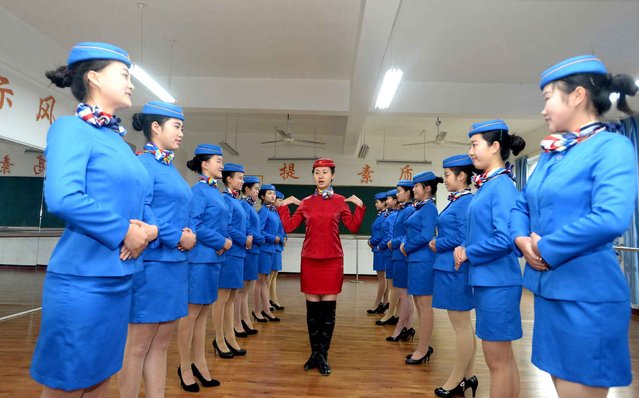
Students exercise in body training at Bishan Vocational Education Center in Chongqing, southwest China, January 13, 2016. These students were trained to be stewardesses of the high-speed train. (Photo by Xie Jie/Xinhua)
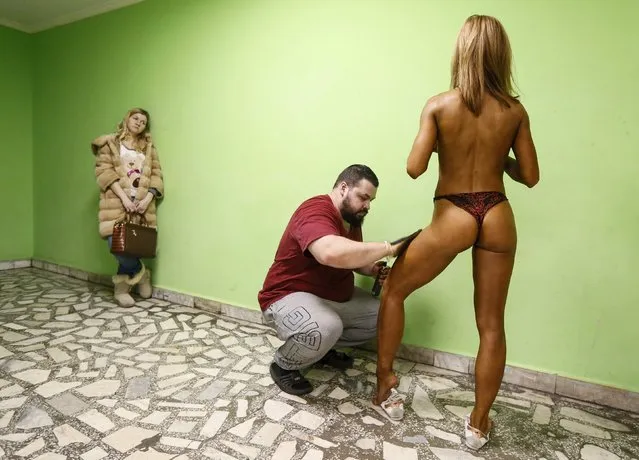
A participant has her body painted before a local bodybuilding and fitness championship in the Siberian city of Krasnoyarsk, Russia, March 5, 2016. (Photo by Ilya Naymushin/Reuters)
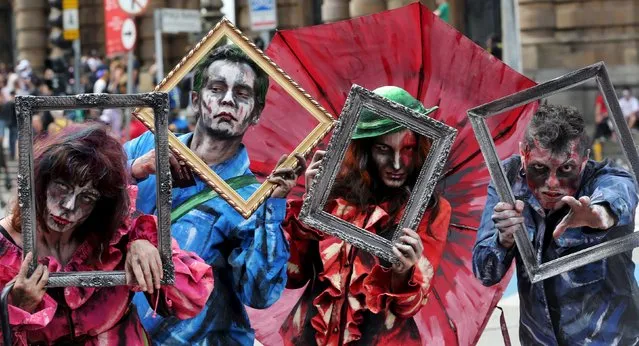
Revellers with their bodies and faces painted attend the "Zombie Walk" parade in Sao Paulo, Brazil, November 2, 2015. (Photo by Paulo Whitaker/Reuters)
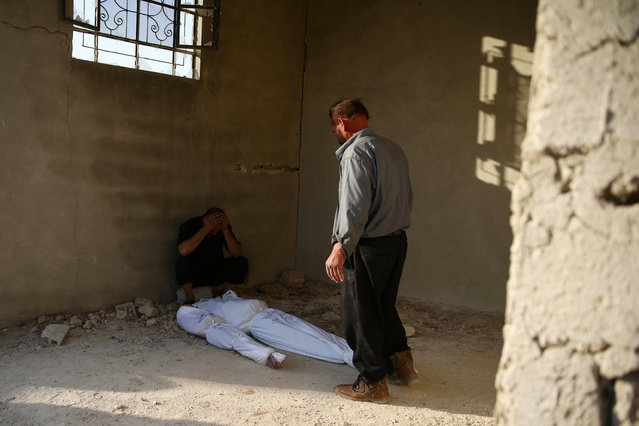
A man reacts over dead bodies prior to burial in a graveyard after shelling in the rebel held besieged town of Douma, eastern Ghouta in Damascus, Syria, October 24, 2016. (Photo by Bassam Khabieh/Reuters)
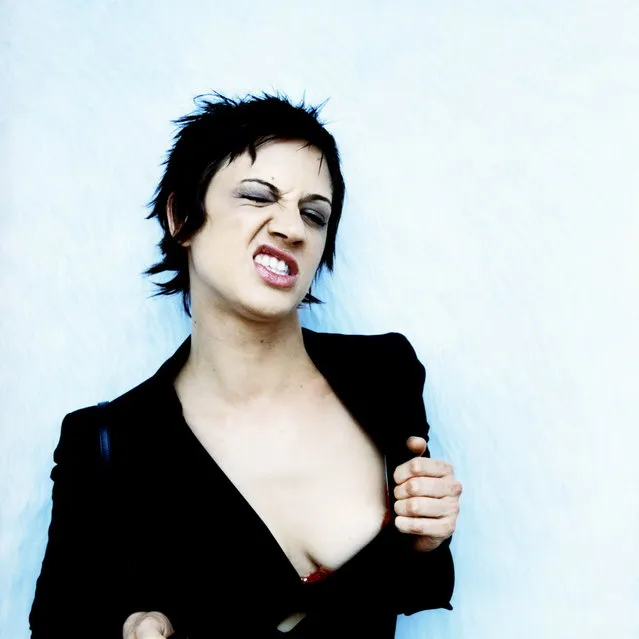
Denis Rouvre is a portraitist, living and working in France. His photos have been nationally and internationally published. Rouvre’s photo series have been widely exhibited in France and abroad. He has also published several books, and his numerous prizes include World Press Photo award, and a Sony World Photography Award. Photo: Asia Argento. (Photo by Denis Rouvre)
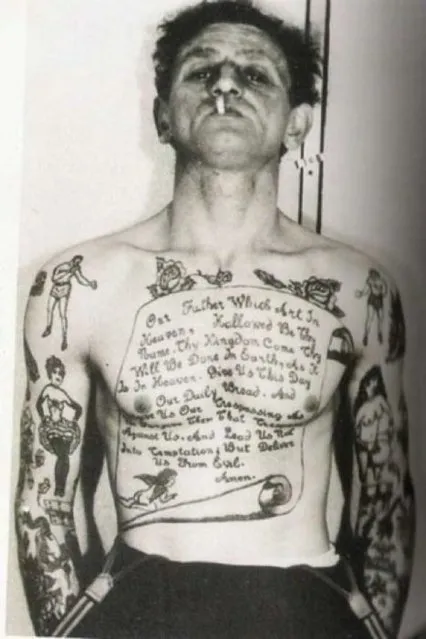
Tattoos are commonly used among criminals to show gang membership and record the wearer's personal history—such as his or her skills, specialties, accomplishments and convictions. They are also used as a means of personal expression. Certain designs have developed recognized coded meanings. The code systems can be quite complex and because of the nature of what they encode, the tattoo designs are not widely recognized.