Loading...
Done
An undated handout photo made available by the Zerynthia Association shows the pupa of an amicta moneiba, a recently discovered species of moth endemic to La Gomera and El Hierro islands in the Canary Islands, Spain (issued 01 July 2020), as those two islands pulled apart from the rest of the Canary Islands 2.5 million years ago. The Institute of Evolutionary Biology of the Spanish National Research Council (CSIC) and the Zerynthia Association have recently discovered two new moth species in El Hierro and La Gomera. (Photo by Yeray Monasterio/Zerynthia/EPA/EFE)

An undated handout photo made available by the Zerynthia Association shows the pupa of an amicta moneiba, a recently discovered species of moth endemic to La Gomera and El Hierro islands in the Canary Islands, Spain (issued 01 July 2020), as those two islands pulled apart from the rest of the Canary Islands 2.5 million years ago. The Institute of Evolutionary Biology of the Spanish National Research Council (CSIC) and the Zerynthia Association have recently discovered two new moth species in El Hierro and La Gomera. (Photo by Yeray Monasterio/Zerynthia/EPA/EFE)
Details
11 Oct 2020 00:01:00
A Cholita (Andean woman) fighter makes a key to their opponent during a wrestling session at the Havana Hotel Cholet in El Alto, outskirts in La Paz, Bolivia on June 29, 2018. (Photo by David Mercado/Reuters)

A Cholita (Andean woman) fighter makes a key to their opponent during a wrestling session at the Havana Hotel Cholet in El Alto, outskirts in La Paz, Bolivia on June 29, 2018. (Photo by David Mercado/Reuters)
Details
09 Jul 2018 00:01:00
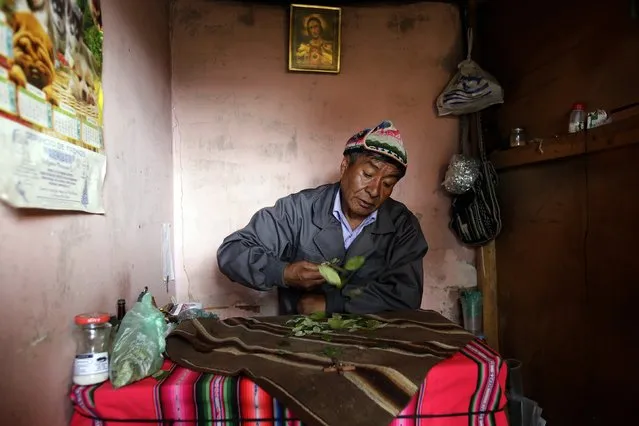
Aymara witchdoctor Ricardo Quispe, also called “Lord of the Lake”, throws coca leaves during a ritual to predict the future, at the witches market of El Alto, on the outskirts of La Paz, December 31, 2014. Dozens of witch doctors tend to a warren of stalls in El Alto, making offerings to give thanks, to promise luck at work or in love, or to call up spirits and banish curses at the end of the year. (Photo by David Mercado/Reuters)

Aymara witchdoctor Ricardo Quispe, also called “Lord of the Lake”, throws coca leaves during a ritual to predict the future, at the witches market of El Alto, on the outskirts of La Paz, December 31, 2014. Dozens of witch doctors tend to a warren of stalls in El Alto, making offerings to give thanks, to promise luck at work or in love, or to call up spirits and banish curses at the end of the year. (Photo by David Mercado/Reuters)
Details
01 Jan 2015 14:05:00
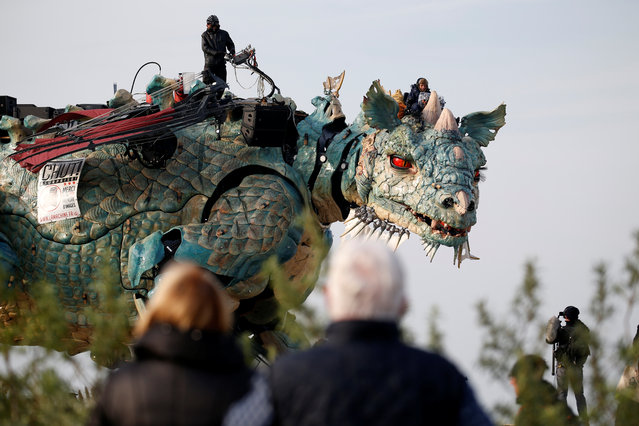
People look at the “Dragon de Calais” by Francois Delaroziere and La compagnie La Machine during a rehearsal in the harbour of Calais, France on October 30, 2019. (Photo by Pascal Rossignol/Reuters)

People look at the “Dragon de Calais” by Francois Delaroziere and La compagnie La Machine during a rehearsal in the harbour of Calais, France on October 30, 2019. (Photo by Pascal Rossignol/Reuters)
Details
02 Nov 2019 00:07:00
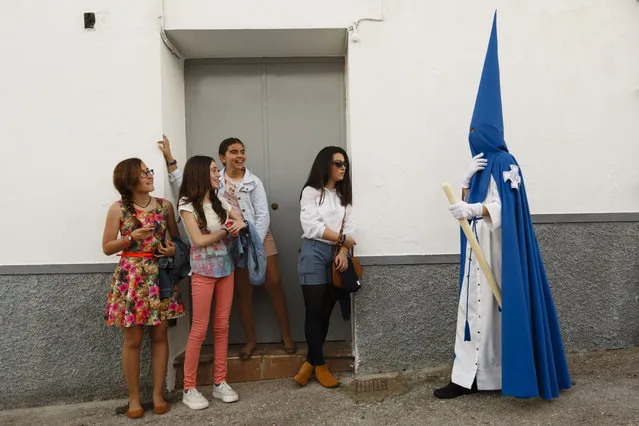
Girls look at a penitent taking part in “Nuestro Senor Atado a la Columna, Maria Santisima de la Paz y San Juan Evangelista” Holy Week procession in Arcos de la Frontera, Spain, Tuesday, March 31, 2015. Hundreds of processions take place throughout Spain during the Easter Holy Week. (Photo by Daniel Ochoa de Olza/AP Photo)

Girls look at a penitent taking part in “Nuestro Senor Atado a la Columna, Maria Santisima de la Paz y San Juan Evangelista” Holy Week procession in Arcos de la Frontera, Spain, Tuesday, March 31, 2015. Hundreds of processions take place throughout Spain during the Easter Holy Week. (Photo by Daniel Ochoa de Olza/AP Photo)
Details
02 Apr 2015 12:55:00
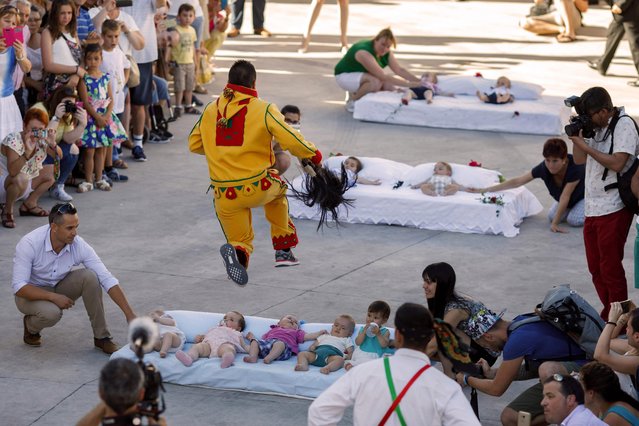
A man dressed up as the devil jumps over babies lying on a mattress in the street during “El Colacho”, the “baby jumping festival” in the village of Castrillo de Murcia, near Burgos on June 18, 2017. Baby jumping (El Colacho) is a traditional Spanish practice dating back to 1620 that takes place annually to celebrate the Catholic feast of Corpus Christi. During the act – known as El Salto del Colacho (the devil's jump) or simply El Colacho – men dressed as the Devil jump over babies born in the last twelve months of the year who lie on mattresses in the street. (Photo by Cesar Manso/AFP Photo)

A man dressed up as the devil jumps over babies lying on a mattress in the street during “El Colacho”, the “baby jumping festival” in the village of Castrillo de Murcia, near Burgos on June 18, 2017. Baby jumping (El Colacho) is a traditional Spanish practice dating back to 1620 that takes place annually to celebrate the Catholic feast of Corpus Christi. During the act – known as El Salto del Colacho (the devil's jump) or simply El Colacho – men dressed as the Devil jump over babies born in the last twelve months of the year who lie on mattresses in the street. (Photo by Cesar Manso/AFP Photo)
Details
20 Jun 2017 07:29:00
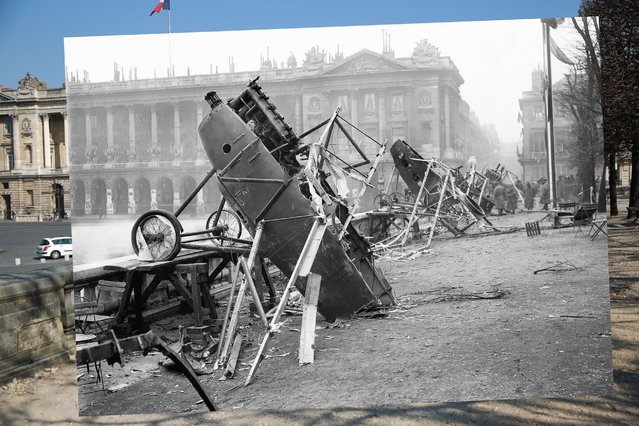
Cars are parked near Place de la Concorde on March 12, 2014 in Paris, France. Inset: World War I, German airplanes at Place de la Concorde in Paris, wrecked by celebrating crowds on the day of the restoration of Alsace-Lorraine, November 18, 1918. (Photo by Peter Macdiarmid/Getty Images)

Cars are parked near Place de la Concorde on March 12, 2014 in Paris, France. Inset: World War I, German airplanes at Place de la Concorde in Paris, wrecked by celebrating crowds on the day of the restoration of Alsace-Lorraine, November 18, 1918. (Photo by Peter Macdiarmid/Getty Images)
Details
01 Aug 2014 12:30:00
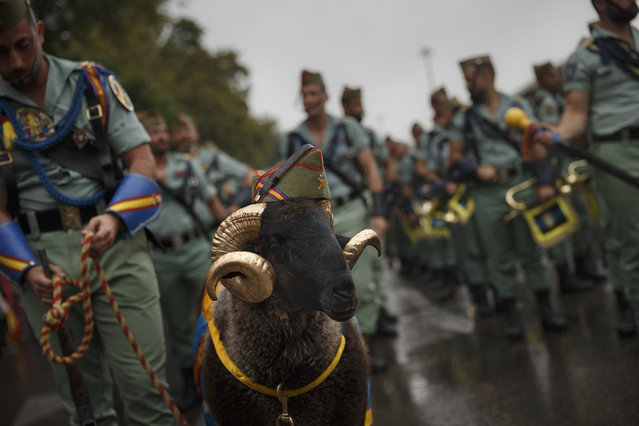
Members of La Legion, an elite unit of the Spanish Army, including a goat they use as a pet wait for the start of a military parade as they celebrate a holiday known as “Dia de la Hispanidad” or Hispanic Day in Madrid, Wednesday, October 12, 2016. (Photo by Daniel Ochoa de Olza/AP Photo)

Members of La Legion, an elite unit of the Spanish Army, including a goat they use as a pet wait for the start of a military parade as they celebrate a holiday known as “Dia de la Hispanidad” or Hispanic Day in Madrid, Wednesday, October 12, 2016. (Photo by Daniel Ochoa de Olza/AP Photo)
Details
13 Oct 2016 11:44:00