Loading...
Done
Some Iraqi candidates for Miss Iraq beauty contest pose in front of the Ishtar Gate at the ancient archaeological site of Babylon, outside the modern city of Hilla, south of the capital Baghdad on December 17, 2015. The beauty contest,  which is the first one in more than 40 years, aims to boost tourism in the city and will take place on December 19, 2015. (Photo by Ahmad Al-Rubaye/AFP Photo)

Some Iraqi candidates for Miss Iraq beauty contest pose in front of the Ishtar Gate at the ancient archaeological site of Babylon, outside the modern city of Hilla, south of the capital Baghdad on December 17, 2015. The beauty contest, which is the first one in more than 40 years, aims to boost tourism in the city and will take place on December 19, 2015. (Photo by Ahmad Al-Rubaye/AFP Photo)
Details
19 Dec 2015 10:25:00
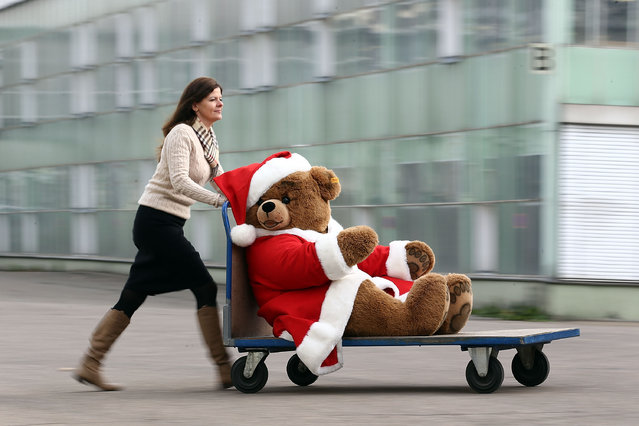
A christmas teddy bear is wheeled along on a trolley at the Steiff stuffed toy factory on November 23, 2012 in Giengen an der Brenz, Germany. Founded by seamstress Margarethe Steiff in 1880, Steiff has been making stuffed teddy bears since the early 20th century ever since her nephew Richard Steiff exhibited the first commercially produced teddy bear in Europe in 1903. Teddy bears are among the most popular children's toys and the company is hoping for a strong Christmas season. (Photo by Thomas Niedermueller)

A christmas teddy bear is wheeled along on a trolley at the Steiff stuffed toy factory on November 23, 2012 in Giengen an der Brenz, Germany. Founded by seamstress Margarethe Steiff in 1880, Steiff has been making stuffed teddy bears since the early 20th century ever since her nephew Richard Steiff exhibited the first commercially produced teddy bear in Europe in 1903. Teddy bears are among the most popular children's toys and the company is hoping for a strong Christmas season. (Photo by Thomas Niedermueller)
Details
27 Nov 2012 11:21:00
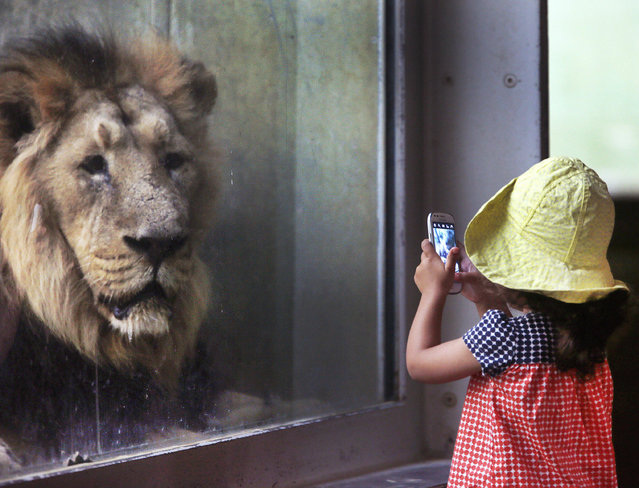
A little girl takes a picture of a lion in the zoo in Frankfurt, Germany, Tuesday, September 13, 2016. (Photo by Michael Probst/AP Photo)

A little girl takes a picture of a lion in the zoo in Frankfurt, Germany, Tuesday, September 13, 2016. (Photo by Michael Probst/AP Photo)
Details
14 Sep 2016 11:01:00
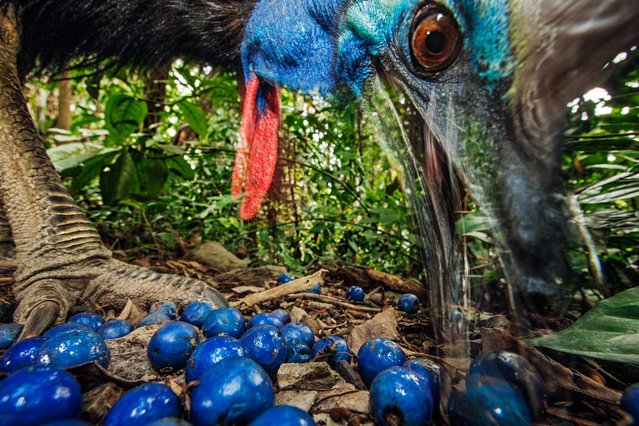
“Cassowaries are large, flightless birds related to emus and (more distantly) to ostriches, rheas, and kiwis”, writes Olivia Judson in the September issue of National Geographic magazine. (Photo by Christian Ziegler/National Geographic)

“Cassowaries are large, flightless birds related to emus and (more distantly) to ostriches, rheas, and kiwis”, writes Olivia Judson in the September issue of National Geographic magazine. How large? People-size: Adult males stand well over five foot five and top 110 pounds. Females are even taller, and can weigh more than 160 pounds. Dangerous when roused, they’re shy and peaceable when left alone. But even birds this big and tough are prey to habitat loss. The dense New Guinea and Australia rain forests where they live have dwindled. Today cassowaries might number 1,500 to 2,000. And because they help shape those same forests – by moving seeds from one place to another – “if they vanish”, Judson writes, “the structure of the forest would gradually change” too. (Photo by Christian Ziegler/National Geographic)
Details
06 Jan 2014 12:21:00