Loading...
Done
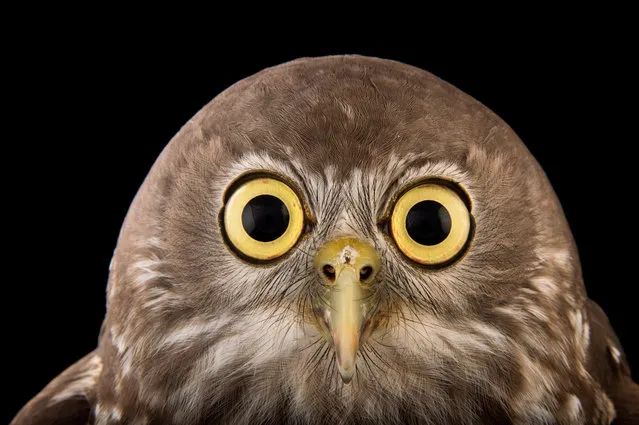
The National Geographic Photo Ark is a travelling exhibition of photographer Joel Sartore’s quest to create a photo archive of biodiversity around the world. So far, Sartore has captured studio portraits of more than 6,000 species – a number that he hopes to double. On 1 July, the ark will open at Melbourne zoo – the first time it has been exhibited in the southern hemisphere. More than 50 portraits will be on display, including many of Australian endangered animals being protected by programs at the zoo itself. These captions have been edited from text supplied by Melbourne zoo. Here: Barking owl. So-named because its call sounds like a barking dog, these birds are native to Australia, Indonesia and Papua New Guinea. In Victoria they are listed as an endangered species, and in 2003 there were estimated to be fewer than 50 breeding pairs. The main threat to the species in Victoria is loss of habitat, especially large trees with hollows in which they can nest and on which many of their prey depend. Apart from a bark, they may utter a chilling scream when they feel threatened. (Photo by Joel Sartore/National Geographic Photo Ark/The Guardian)

The National Geographic Photo Ark is a travelling exhibition of photographer Joel Sartore’s quest to create a photo archive of biodiversity around the world. So far, Sartore has captured studio portraits of more than 6,000 species – a number that he hopes to double. On 1 July, the ark will open at Melbourne zoo – the first time it has been exhibited in the southern hemisphere. More than 50 portraits will be on display, including many of Australian endangered animals being protected by programs at the zoo itself. These captions have been edited from text supplied by Melbourne zoo. Here: Barking owl. (Photo by Joel Sartore/National Geographic Photo Ark/The Guardian)
Details
01 Jul 2017 07:45:00
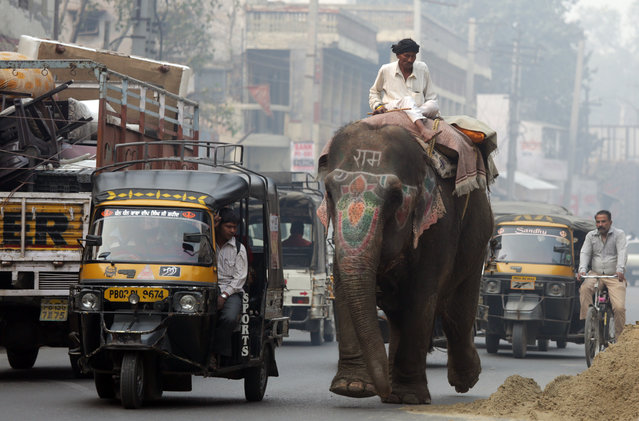
A mahout rides on an elephant in the city of Amritsar, India, 08 November 2015. Such elephants are often accompanied by their caretakers who ask for alms from people in the streets. (Photo by Raminder Pal Singh/EPA)

A mahout rides on an elephant in the city of Amritsar, India, 08 November 2015. Such elephants are often accompanied by their caretakers who ask for alms from people in the streets. (Photo by Raminder Pal Singh/EPA)
Details
10 Nov 2015 08:05:00
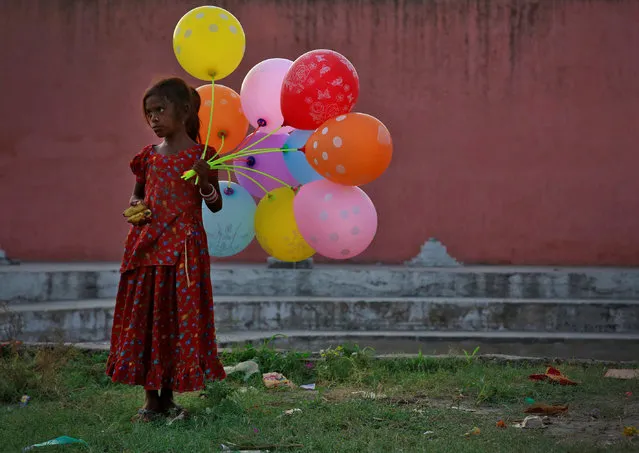
A young girl sells balloons by the Yamuna River as devotees carrying idols of the Hindu god Ganesh, the deity of prosperity, immerse the idol on the last day of the ten-day-long Ganesh Chaturthi festival in Delhi, India, September 15, 2016. (Photo by Cathal McNaughton/Reuters)

A young girl sells balloons by the Yamuna River as devotees carrying idols of the Hindu god Ganesh, the deity of prosperity, immerse the idol on the last day of the ten-day-long Ganesh Chaturthi festival in Delhi, India, September 15, 2016. (Photo by Cathal McNaughton/Reuters)
Details
16 Sep 2016 10:49:00
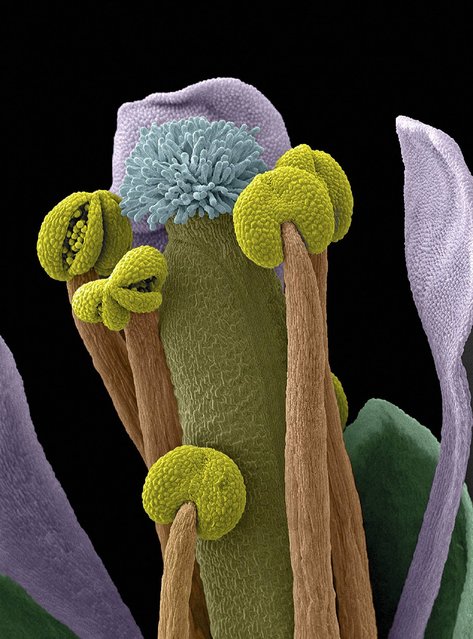
Scanning electron micrograph (SEM) of an Arabidopsis thaliana flower, also commonly known as thale cress. Some of the anthers are open, revealing pollen grains ready for dispersal. Arabidopsis was the first plant to have its entire genome sequenced and is widely used as a model organism in molecular and plant biology. Horizontal width of image is 1200 microns. Magnification 100x. (Photo by Stefan Eberhard/Wellcome Images)

Beautiful, strange and occasionally alarming pictures from the shortlist for this year’s Wellcome image awards – which celebrate the very best in science photography and imaging – from an x-ray of a bat to a micrograph of a kidney stone. The exhibition opens on 12 March at three science centres and the Museum of Science and Industry in Manchester. Photo: Scanning electron micrograph (SEM) of an Arabidopsis thaliana flower, also commonly known as thale cress. Some of the anthers are open, revealing pollen grains ready for dispersal. Arabidopsis was the first plant to have its entire genome sequenced and is widely used as a model organism in molecular and plant biology. Horizontal width of image is 1200 microns. Magnification 100x. (Photo by Stefan Eberhard/Wellcome Images)
Details
11 Mar 2014 05:58:00
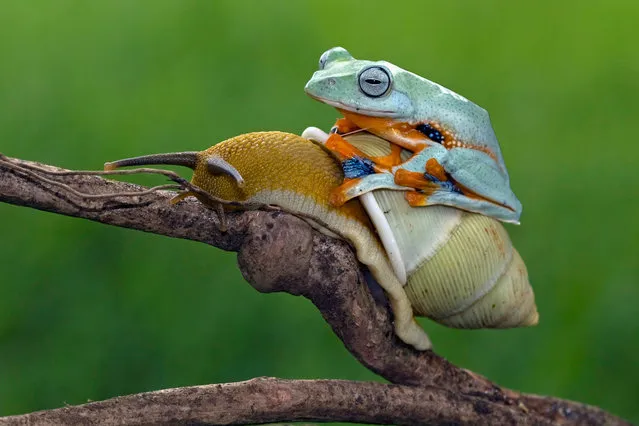
Going nowhere in a hurry, this friendly Javan Tree frog can be seen casually hopping aboard the slow-paced snail who like a lonely highway trucker is only too happy to have the company.  These cute critters chew the fat until froggy reaches his destination and alights at the top of the branch. (Photo by Kurit Afsheen/Media Drum World)

Going nowhere in a hurry, this friendly Javan Tree frog can be seen casually hopping aboard the slow-paced snail who like a lonely highway trucker is only too happy to have the company. These cute critters chew the fat until froggy reaches his destination and alights at the top of the branch. Creative Designer and amateur photographer Kurit Afsheen (34) was able to capture this special sequence while out in his back garden in Ciledug, Indonesia. (Photo by Kurit Afsheen/Media Drum World)
Details
19 Jul 2015 09:17:00
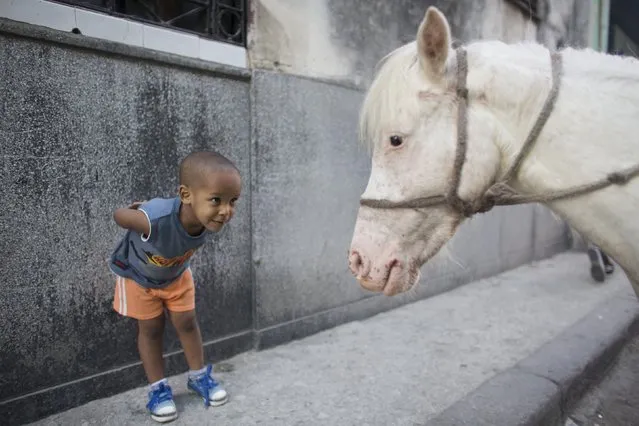
Alexo Carmona, 2, looks at Coco, a two-year-old pony, in downtown Havana, in this March 6, 2015 file photo. Nearly a quarter of a million people follow the Reuters Instagram account – and it's still growing fast. To mark the mid-point of 2015, Reuters has compiled the twenty most-liked pictures so far. This picture was 20th most popular. (Photo by Alexandre Meneghini/Reuters)

Alexo Carmona, 2, looks at Coco, a two-year-old pony, in downtown Havana, in this March 6, 2015 file photo. Nearly a quarter of a million people follow the Reuters Instagram account – and it's still growing fast. To mark the mid-point of 2015, Reuters has compiled the twenty most-liked pictures so far. This picture was 20th most popular. (Photo by Alexandre Meneghini/Reuters)
Details
18 Jul 2015 13:28:00
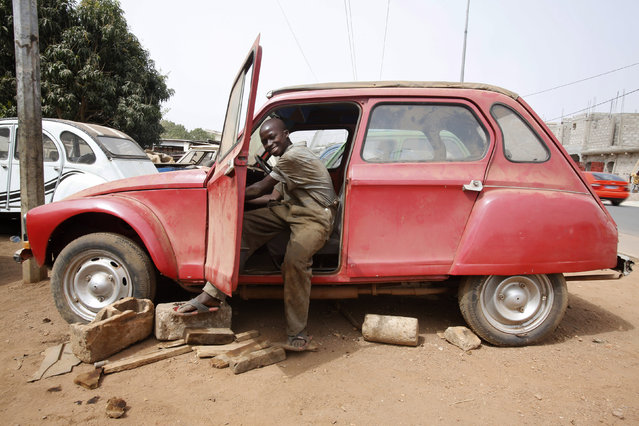
A boy works on a car in Babi Kouakou's car repair garage in Bouake, Ivory Coast February 9, 2016. Babi specialises in restoring old cars. (Photo by Thierry Gouegnon/Reuters)

A boy works on a car in Babi Kouakou's car repair garage in Bouake, Ivory Coast February 9, 2016. Babi specialises in restoring old cars. (Photo by Thierry Gouegnon/Reuters)
Details
13 Feb 2016 08:56:00
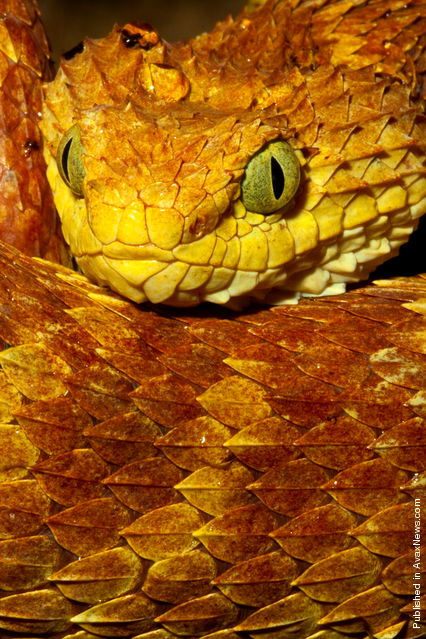
Atheris squamigera

“Atheris is a genus of venomous vipers found only in tropical subsaharan Africa, excluding southern Africa. Confined to rain forest areas, many members have isolated and fragmented distributions. In an interesting example of convergent evolution, they show many similarities to the arboreal pit vipers of Asia and South America”. – Wikipedia

Photo: Atheris squamigera. (Photo by David Williams)
Details
21 Apr 2012 13:14:00