Loading...
Done
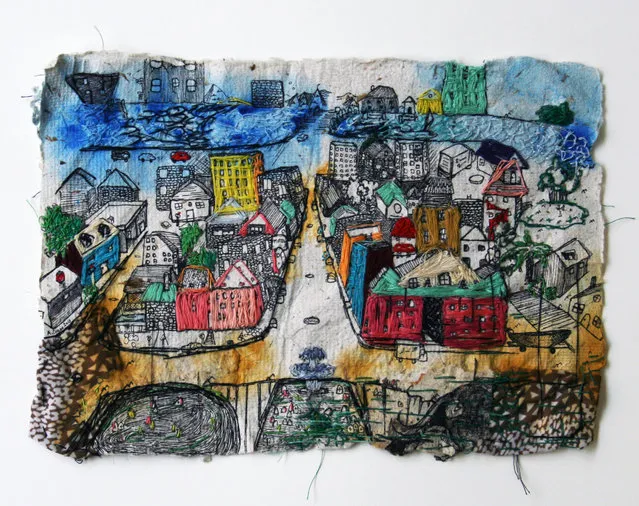
Textile Art By Anny Crane
“I am a fiber and process oriented artist based in Brooklyn, New York. My work utilizes influence from decisions and transitions. I am very interested in the consequences and ripple effects that are caused by choices we make. Most inspiration comes from vague &vivid memories, photographs, hand me down treasures &stories through my family, childhood stories, children’s books &illustrations, and travelling”. – Anny Crane
Details
24 Nov 2016 08:03:00
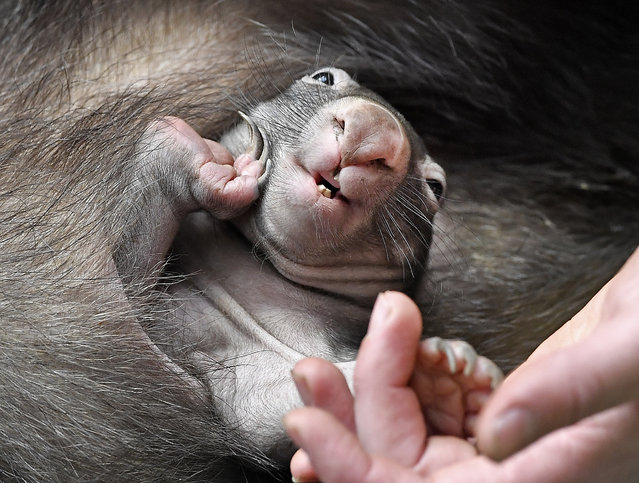
The little new born wombat baby APARI sitting in its mothers pouch at the zoo in Duisburg, Germany, Thursday, March 29, 2018. Wombat mother TINSEL once was found in the pouch of its dead mother on a street in Australia and was raised by zookeepers before she came to Germany. The zoo tried for 40 years in vain to breed a wombat, until APARI was born as the first one last week. (Photo by Martin Meissner/AP Photo)

The little new born wombat baby APARI sitting in its mothers pouch at the zoo in Duisburg, Germany, Thursday, March 29, 2018. Wombat mother TINSEL once was found in the pouch of its dead mother on a street in Australia and was raised by zookeepers before she came to Germany. The zoo tried for 40 years in vain to breed a wombat, until APARI was born as the first one last week. (Photo by Martin Meissner/AP Photo)
Details
01 Apr 2018 00:03:00
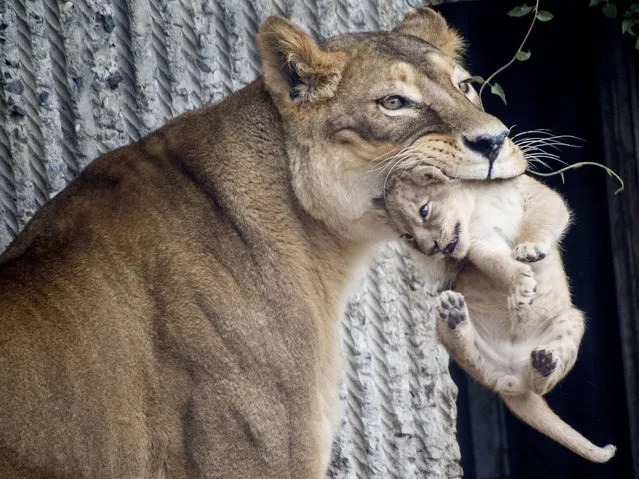
“I think as mothers we are all just trying our best”. – Gisele Bundchen. (Photo by Mads Nissen/AFP Photo)

“I think as mothers we are all just trying our best”. – Gisele Bundchen. (Photo by Mads Nissen/AFP Photo)
Details
31 Mar 2014 09:56:00
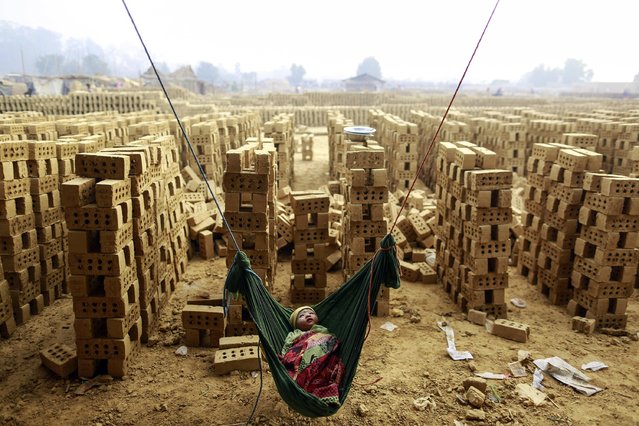
A boy sleeps in a hammock while his mother works at a brick kiln on the outskirts of Yangon February 1, 2015. (Photo by Soe Zeya Tun/Reuters)

A boy sleeps in a hammock while his mother works at a brick kiln on the outskirts of Yangon February 1, 2015. (Photo by Soe Zeya Tun/Reuters)
Details
02 Feb 2015 09:58:00
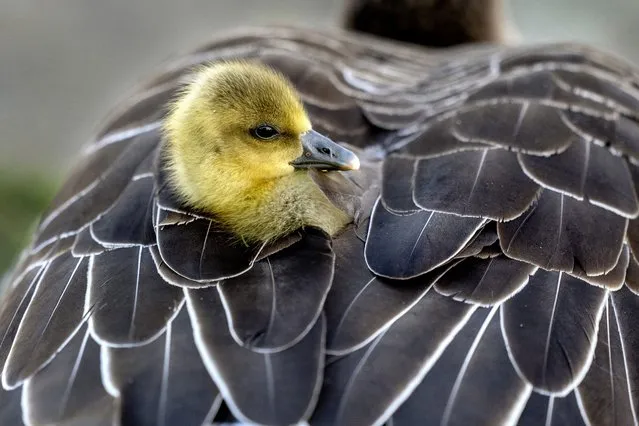
A gosling sits in the plumage of its mother, in a meadow in Frankfurt, Germany, Saturday, April 13, 2024. (Photo by Michael Probst/AP Photo)

A gosling sits in the plumage of its mother, in a meadow in Frankfurt, Germany, Saturday, April 13, 2024. (Photo by Michael Probst/AP Photo)
Details
28 Apr 2024 03:34:00
Book Sculpture by Justin Rowe

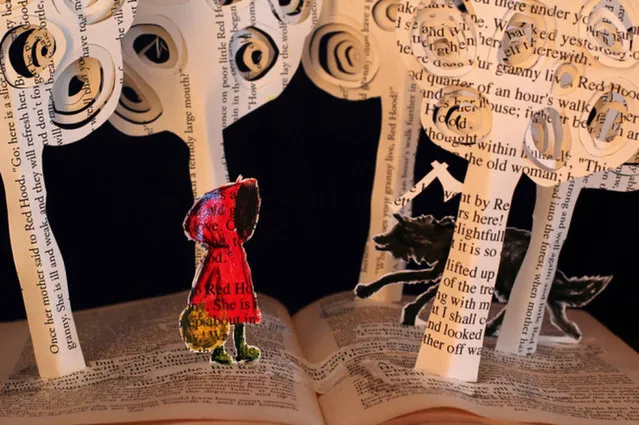
Justin Rowe creates these magical sculptures from hand cut books and found images with the help of just a touch of gum arabic and 24 carat gold or palladium leaf. Some are very much in the realms of fairy stories like the one above, but my favourites are the stories below where Justin’s skill brings the book’s own illustrations to life.
Details
18 Nov 2013 12:58:00
Construction work on the tower began in November 2008. Upon its completion this year the building will stand approximately 632 meters (2,073 ft.) high and will have 121 stories. It is expected to open to the public in 2015. (Photo by Rex Features)

Construction work on the tower began in November 2008. Upon its completion this year the building will stand approximately 632 meters (2,073 ft.) high and will have 121 stories. It is expected to open to the public in 2015. (Photo by Rex Features)
Details
23 Mar 2014 07:33:00
Newborn White-Cheeked Gibbon Nomascus

“Nomascus is the second most speciose genus of gibbons (family Hylobatidae). Originally this genus was a subgenus of Hylobates, and all individuals were considered one species, Hylobates concolor. Species within Nomascus are characterized by 52 chromosomes. Some species are all black, some light with a distinct black tuft of crown fur, and some by distinct, light-colored cheek patches. Nomascus is found from southern China (Yunnan) to southern Vietnam, and also on Hainan Island. One of the genus' species, Nomascus nasutus, has been deemed “the most critically endangered ape species in the world”. All of the species in this genus are endangered or critically endangered”. – Wikipedia

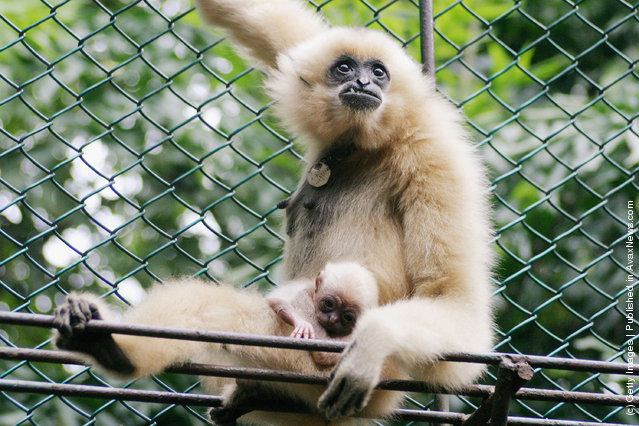
Photo: A newborn White-Cheeked Gibbon clings to its mother in the Nanning Zoo on April 12, 2004 in Nanning, Guangxi province, China. The White-Cheeked Gibbon's natural habitat is Southern China as well as Vietnam and Laos. They are classified as highly endangered and are on the brink of extinction due to poaching and reduction of natural rainforests. (Photo by Getty Images)

Details
12 Aug 2011 11:51:00