Loading...
Done
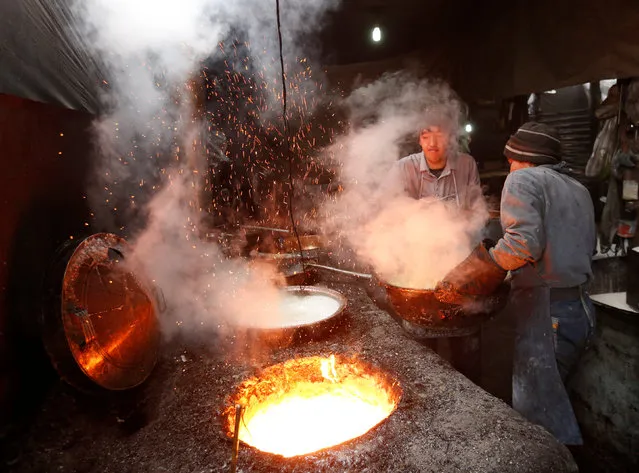
Afghan men work in a small sweets factory in Kabul, Afghanistan January 5, 2017. (Photo by Mohammad Ismail/Reuters)

Afghan men work in a small sweets factory in Kabul, Afghanistan January 5, 2017. (Photo by Mohammad Ismail/Reuters)
Details
11 Jan 2017 14:49:00
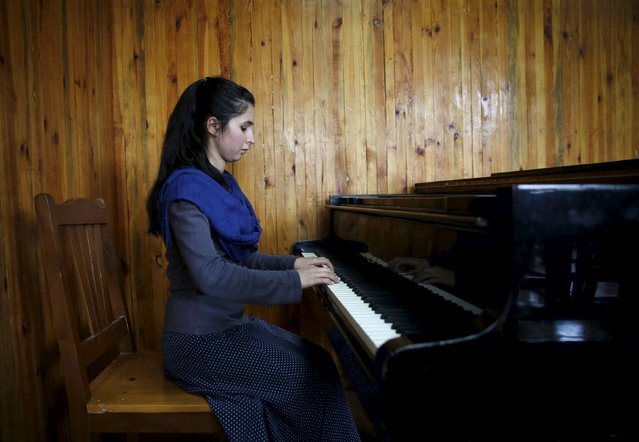
Negin Ekhpulwak, leader of the Zohra orchestra, an ensemble of 35 women, practises on a piano at Afghanistan's National Institute of Music, in Kabul, Afghanistan April 9, 2016. (Photo by Ahmad Masood/Reuters)

Negin Ekhpulwak, leader of the Zohra orchestra, an ensemble of 35 women, practises on a piano at Afghanistan's National Institute of Music, in Kabul, Afghanistan April 9, 2016. Playing instruments was banned under Taliban rule in Afghanistan, and even today, many conservative Muslims frown on most forms of music. Living in an orphanage in the capital, Kabul, 19-year-old Negin Ikhpolwak leads an ensemble of 35 women that plays both Western and Afghan musical instruments. In a country notorious internationally for harsh restrictions on women in most areas of life, Negin's story highlights a double challenge. (Photo by Ahmad Masood/Reuters)
Details
19 Apr 2016 13:47:00
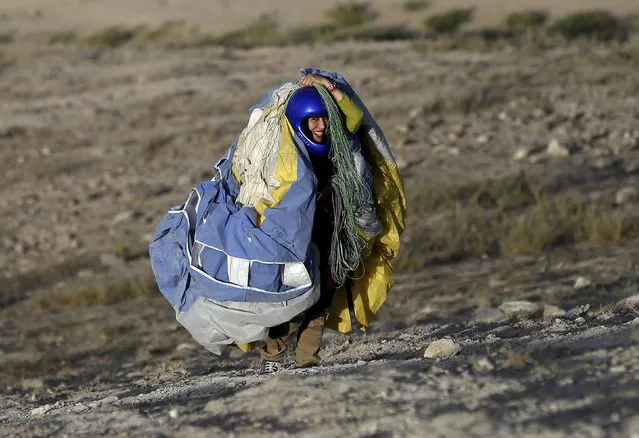
Afghan paraglider Leeda Ozori, 21, walks after practicing in Kabul, Afghanistan September 14, 2015. (Photo by Mohammad Ismail/Reuters)

Afghan paraglider Leeda Ozori, 21, walks after practicing in Kabul, Afghanistan September 14, 2015. She is one of a group of young Afghans taking to the skies of a capital where military helicopters and surveillance balloons are a far more familiar sight. Women in Afghanistan's conservative Muslim society are increasingly entering areas such as education, sports and the workplace, but most still wear the head-to-toe garment, the burqa. (Photo by Mohammad Ismail/Reuters)
Details
23 Sep 2015 08:02:00
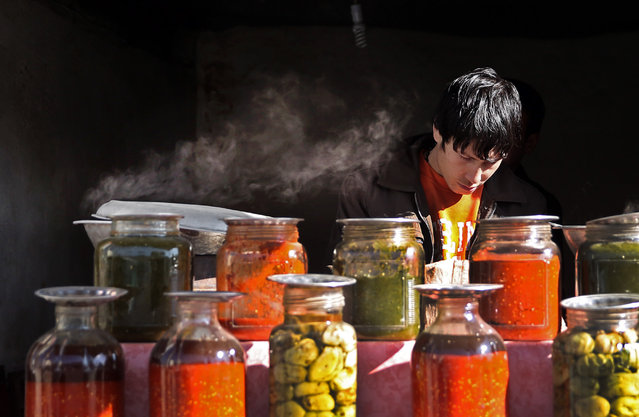
In this Tuesday, December 15, 2015 photo, an Afghan man sells traditional sauces and pickles on a street in Kabul, Afghanistan. (Photo by Massoud Hossaini/AP Photo)

In this Tuesday, December 15, 2015 photo, an Afghan man sells traditional sauces and pickles on a street in Kabul, Afghanistan. (Photo by Massoud Hossaini/AP Photo)
Details
25 Dec 2015 08:03:00
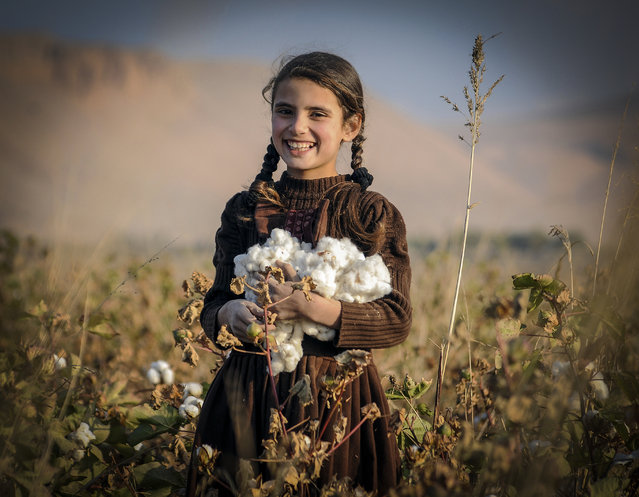
An Afghan girl harvests Cotton buds at a field on the outskirts of Balkh province, Afghanistan, November 15, 2014. (Photo by Sayed Mustafa/EPA)

An Afghan girl harvests Cotton buds at a field on the outskirts of Balkh province, Afghanistan, November 15, 2014. (Photo by Sayed Mustafa/EPA)
Details
22 Nov 2014 13:08:00
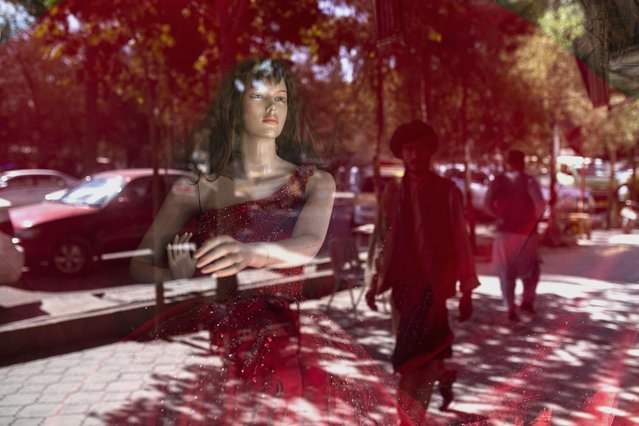
Afghans pass a clothing storein Kabul, Afghanistan, Tuesday, October 12, 2021. (Photo by Ahmad Halabisaz/AP Photo)

Afghans pass a clothing storein Kabul, Afghanistan, Tuesday, October 12, 2021. (Photo by Ahmad Halabisaz/AP Photo)
Details
09 Mar 2022 05:59:00
Queen of the North (created by Emilie Steele and Sebastian Dell’Uva) is one of the more intense rooms, with the bed surrounded by the head and hands of an icy goddess. (Photo by Asaf Kliger/IceHotel/The Guardian)

Founded in 1989, the Icehotel in Swedish Lapland is built from the snow up each year, using ice from the local river. The rooms are designed by international artists and this year feature spacemen and an ice queen. The hotel has 35 suites, featuring ice carvings designed by 36 different artists from 17 countries. (Photo by Asaf Kliger/IceHotel/The Guardian)
Details
20 Dec 2017 07:11:00


“The Trabant is a car that was produced by former East German auto maker VEB Sachsenring Automobilwerke Zwickau in Zwickau, Sachsen. It was the most common vehicle in East Germany, and was also exported to countries both inside and outside the communist bloc. The main selling points was that it had room for four adults and luggage in a compact, light and durable shell and that it was fast (when introduced) and durable. With its mediocre performance, smoky two-stroke engine, and production shortages, the Trabant is often cited as an example of the disadvantages of centralized planning; on the other hand, it is regarded with derisive affection as a symbol of the failed former East Germany and of the fall of communism (in former West Germany, as many East Germans streamed into West Berlin and West Germany in their Trabants after the opening of the Berlin Wall in 1989). It was in production without any significant changes for nearly 30 years with 3,096,099 Trabants produced in total”. – Wikipedia

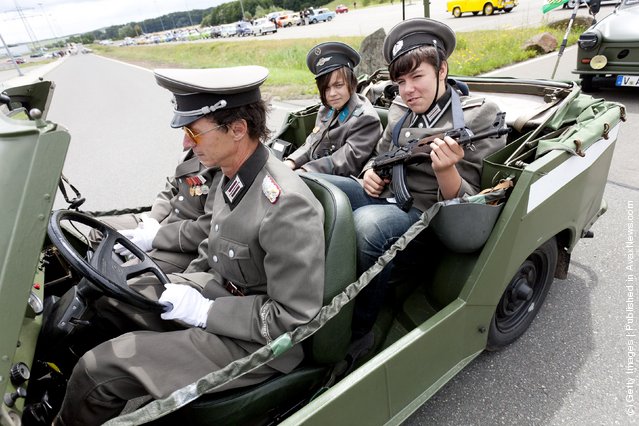
Photo: Enthusiasts weared in uniforms of the former eastern german army trive in a military Trabant car as fans and owners of East German-era Trabant cars gather at the 2011 International Trabantfahrer Treffen (International Trabant Drivers Meeting) on June 26, 2011 in Zwickau, Germany. The Trabant, also known as the Trabi, was among the main cars produced in communist East Germany and built by VEB Sachsenring Automobilwerke in Zwickau for 30 years until 1989. Today the car has cult status for many followers and one company, IndiKar, is even seeking to revive the brand in a modern, electric version. (Photo by Carsten Koall/Getty Images)
Details
27 Jun 2011 12:21:00