Loading...
Done
Pineapple

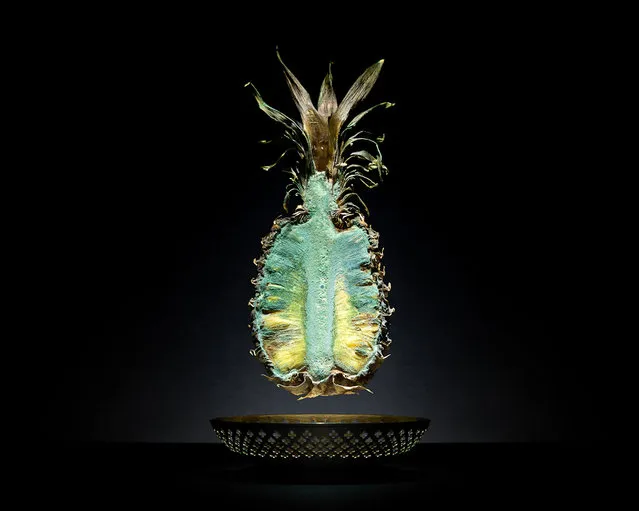
“One Third” – a project on food waste by an Austrian photography Klaus Pichler. According to a UN study one third of the world's food goes to waste – the largest part thereof in the industrialized nations of the global north. Equally, 925 million people around the world are threatened by starvation. The series “One Third” describes the connection between individual wastage of food and globalized food production.

Photo: Pineapple. Place of production: Guayaquil, Ecuador. Cultivation method: Outdoor plantation • Time of harvest: All- season. Transporting distance: 10.666 km (linear distance) • Means of transportation: Aircraft, truck. Carbon footprint (total) per kg: 11,94 kg • Water requirement (total) per kg: 360 l. Price: 2,10 € / kg. (Photo by Klaus Picher)
Details
02 May 2012 11:01:00
US MotoGP rider Nicky Hayden of the Aspar MotoGP team performs a wheelie during third free practice session for the motorcycle GP in Montmelo, Spain, Saturday, June 13, 2015. The Catalunya Grand Prix will take place on Sunday in Montmelo. (AP Photo/Manu Fernandez)

US MotoGP rider Nicky Hayden of the Aspar MotoGP team performs a wheelie during third free practice session for the motorcycle GP in Montmelo, Spain, Saturday, June 13, 2015. The Catalunya Grand Prix will take place on Sunday in Montmelo. (AP Photo/Manu Fernandez)
Details
24 Jun 2015 01:02:00
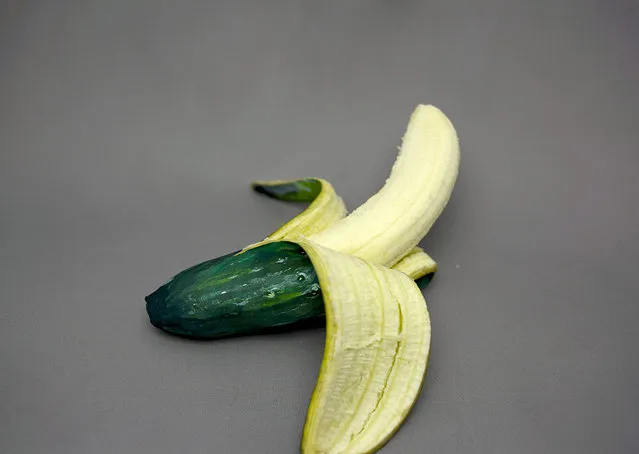
It’s Not What It Seems By Artist Hikaru Cho

Japanese artist Hikaru Cho is already well-known for her bizarre and realistic body paintings, but now the Tokyo-based artist has applied her talent to everyday food items as well. In her playful “It’s Not What It Seems” series, she turns common foods into other kinds of food using only acrylic paint and her extraordinary talent.
Details
22 Mar 2014 11:32:00
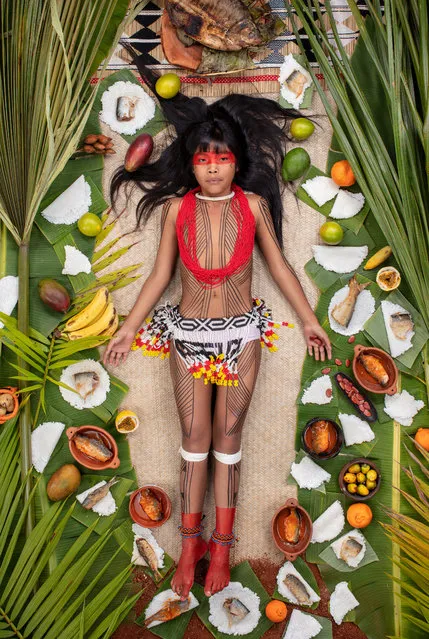
Kawakanih Yawalapiti, 9, Upper Xingu region of Mato Grosso, Brazil, 2018: Kawakanih lives with her tribe, the Yawalapiti, in Xingu national park, a preserve in the Amazon basin of Brazil. The Yawalapiti collect seeds to preserve species unique to their ecosystem, which lies between the rain forest and savannah. Kawakanih’s diet is simple, consisting mainly of fish, cassava, porridge, fruit and nuts. “It takes five minutes to catch dinner”, says Kawakanih. “When you’re hungry, you just go to the river with your net”. (Photo by Gregg Segal/The Guardian)

Photographer Gregg Segal travelled the world to document children and the food they eat in a week. Partly inspired by the increasing problems of childhood obesity, he tracked traditional regional diets as yet unaffected by globalisation, and ironically, found that the healthiest diets were often eaten by the least well off. (Photo by Gregg Segal/The Guardian)
Details
03 Jul 2019 00:03:00
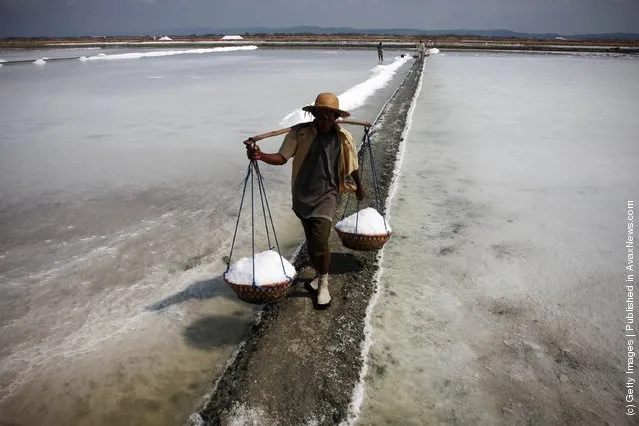
A farmer carries baskets of salt during a harvest in the the salt production process in Sumenep on Madura island, Indonesia

A farmers carries baskets of salt during a harvest in the the salt production process August 13, 2009 in Sumenep on Madura island, Indonesia. (Photo by Ulet Ifansasti/Getty Images)
Details
07 Sep 2011 12:40:00
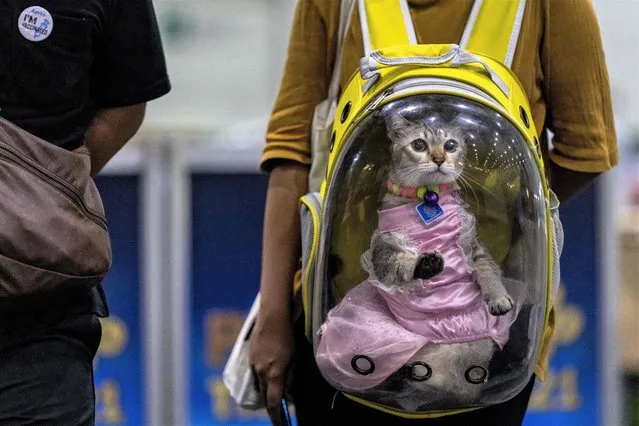
A cat wearing a dress is carried around in a transparent rucksack at the annual Pet Expo Thailand 2021 in Bangkok on November 25, 2021. (Photo by Jack Taylor/AFP Photo)

A cat wearing a dress is carried around in a transparent rucksack at the annual Pet Expo Thailand 2021 in Bangkok on November 25, 2021. (Photo by Jack Taylor/AFP Photo)
Details
10 Dec 2021 09:05:00
Norma Galicia aka “Pirulina” takes part in a demonstration during the commemoration of the International Day for the Elimination of Violence Against Women, in Guatemala City on November 25, 2013. So far this year, 696 women have died due to violent events in Guatemala. (Photo by Johan Ordonez/AFP Photo)

Norma Galicia aka “Pirulina” takes part in a demonstration during the commemoration of the International Day for the Elimination of Violence Against Women, in Guatemala City on November 25, 2013. So far this year, 696 women have died due to violent events in Guatemala. (Photo by Johan Ordonez/AFP Photo)
Details
30 Nov 2013 13:39:00
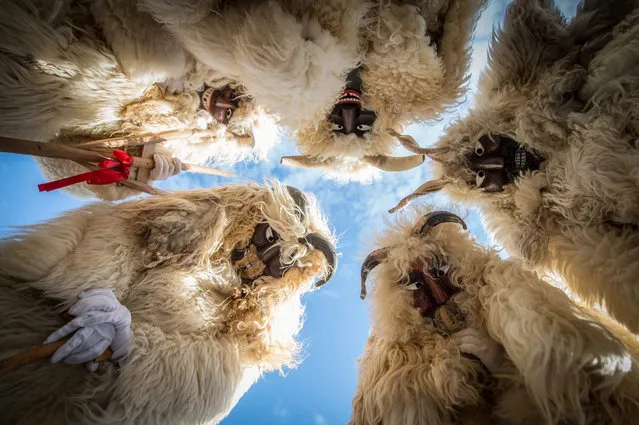
Participants wearing costumes and masks take part in the first day of the traditional carnival parade in Mohacs, Hungary, 23 February 2017. The carnival parade of so-called busos, dressed in costumes with frightening wooden masks and using various noisy wooden rattlers, is traditionally held on the seventh weekend before Easter to drive away winter. (Photo by Sandor Ujvari/EPA)

Participants wearing costumes and masks take part in the first day of the traditional carnival parade in Mohacs, Hungary, 23 February 2017. The carnival parade of so-called busos, dressed in costumes with frightening wooden masks and using various noisy wooden rattlers, is traditionally held on the seventh weekend before Easter to drive away winter. (Photo by Sandor Ujvari/EPA)
Details
25 Feb 2017 10:35:00