Loading...
Done
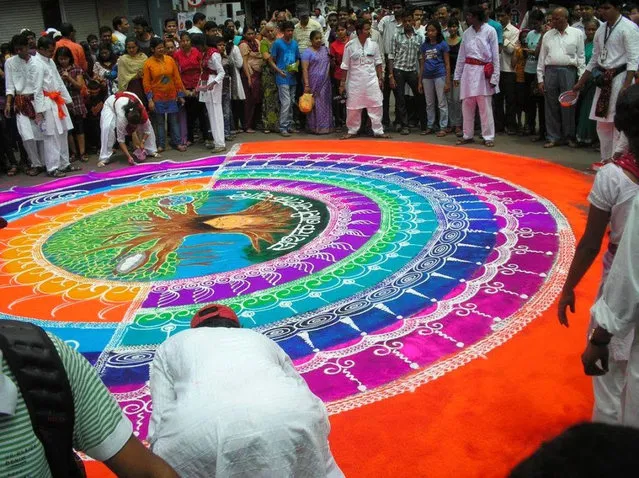
Rangoli Folk Art From India

Rangoli, also known as kolam or Muggu, is a folk art from India in which patterns are created on the floor in living rooms or courtyards using materials such as colored rice, dry flour, colored sand or flower petals. It is usually made during Diwali, Onam, Pongal and other Indian festivals. They are meant to be sacred welcoming areas for the Hindu deities. The ancient symbols have been passed down through the ages, from each generation to the next, keeping both the art form and the tradition alive. Similar practices are followed in different Indian states: in Tamil Nadu, there is Kolam in Tamil Nadu; Mandana in Rajasthan; Chaookpurna in Chhattisgarh; Alpana in West Bengal; Aripana in Bihar; Chowk pujan in Uttar Pradesh; Muggu in Andhra Pradesh and others.
Details
16 Jun 2014 10:37:00


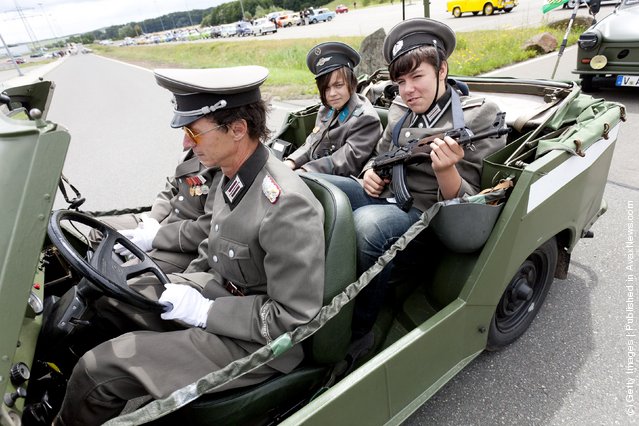
“The Trabant is a car that was produced by former East German auto maker VEB Sachsenring Automobilwerke Zwickau in Zwickau, Sachsen. It was the most common vehicle in East Germany, and was also exported to countries both inside and outside the communist bloc. The main selling points was that it had room for four adults and luggage in a compact, light and durable shell and that it was fast (when introduced) and durable. With its mediocre performance, smoky two-stroke engine, and production shortages, the Trabant is often cited as an example of the disadvantages of centralized planning; on the other hand, it is regarded with derisive affection as a symbol of the failed former East Germany and of the fall of communism (in former West Germany, as many East Germans streamed into West Berlin and West Germany in their Trabants after the opening of the Berlin Wall in 1989). It was in production without any significant changes for nearly 30 years with 3,096,099 Trabants produced in total”. – Wikipedia

Photo: Enthusiasts weared in uniforms of the former eastern german army trive in a military Trabant car as fans and owners of East German-era Trabant cars gather at the 2011 International Trabantfahrer Treffen (International Trabant Drivers Meeting) on June 26, 2011 in Zwickau, Germany. The Trabant, also known as the Trabi, was among the main cars produced in communist East Germany and built by VEB Sachsenring Automobilwerke in Zwickau for 30 years until 1989. Today the car has cult status for many followers and one company, IndiKar, is even seeking to revive the brand in a modern, electric version. (Photo by Carsten Koall/Getty Images)

Details
27 Jun 2011 12:21:00
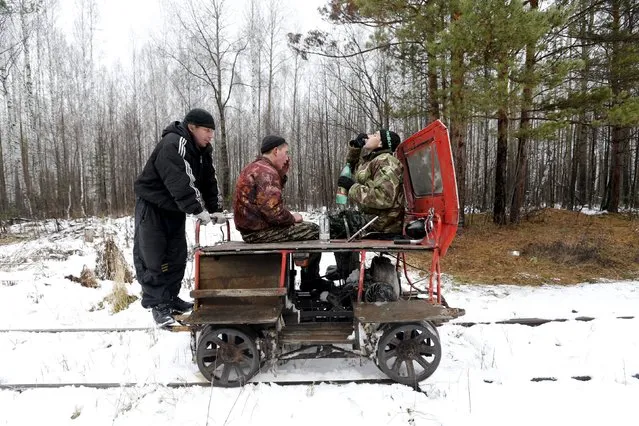
(L-R) A man nicknamed "Barcelona", Alexey Bolotov and Alexey Jakushin drink vodka as they travel by a pioneer motorised railcar on their way to Kalach, Sverdlovsk region, Russia October 18, 2015. The "pioneer," a light auxiliary rail vehicle, is a popular form of transport among people who live along the Alapayevsk railway. (Photo by Maxim Zmeyev/Reuters)

(L-R) A man nicknamed "Barcelona", Alexey Bolotov and Alexey Jakushin drink vodka as they travel by a pioneer motorised railcar on their way to Kalach, Sverdlovsk region, Russia October 18, 2015. The "pioneer," a light auxiliary rail vehicle, is a popular form of transport among people who live along the Alapayevsk railway. In a remote corner of the Urals region at the end of a narrow-gauge railway is Kalach, population about a dozen. Three decades ago 600 people called the village home, but the local forestry industry suffered as the former Soviet Union imploded and people moved away in search of work. In Kalach today there are no telephones, no mobile reception and only a few hours of electricity a day. (Photo by Maxim Zmeyev/Reuters)
Details
15 Nov 2015 08:06:00
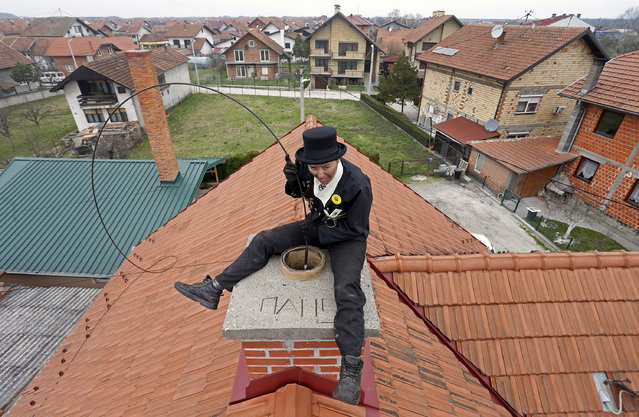
Dajana Djuric, 25, who has worked as a chimney sweep since the age of six, cleans a chimney in Brcko, Bosnia and Herzegovina. Picture taken March 3, 2016. (Photo by Dado Ruvic/Reuters)

Dajana Djuric, 25, who has worked as a chimney sweep since the age of six, cleans a chimney in Brcko, Bosnia and Herzegovina. Dajana Djuric, believed to be the only female chimney sweep in Bosnia and Herzegovina, has to contend with perilous roofs in the depth of winter. (Photo by Dado Ruvic/Reuters)
Details
09 Mar 2016 13:07:00
A street artist dances tango in Buenos Aires, Argentina, Tuesday, January 20, 2015. Tango is a partner dance that originated in the 1890's along the Rio de la Plata, the border between Uruguay and Argentina. UNESCO approved in 2009, a joint proposal by the two nations to include the dance in its Intangible Cultural Heritage List. (Photo by Rodrigo Abd/AP Photo)

A street artist dances tango in Buenos Aires, Argentina, Tuesday, January 20, 2015. Tango is a partner dance that originated in the 1890's along the Rio de la Plata, the border between Uruguay and Argentina. UNESCO approved in 2009, a joint proposal by the two nations to include the dance in its Intangible Cultural Heritage List. (Photo by Rodrigo Abd/AP Photo)
Details
23 Jan 2015 12:56:00
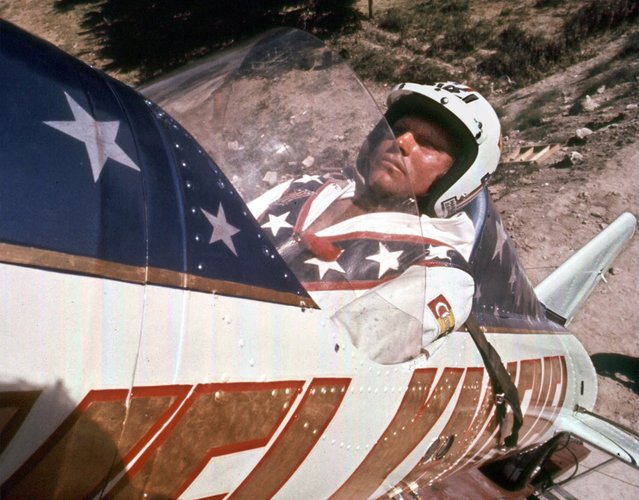
Evel Knievel is shown in his rocket before his failed attempt at a highly promoted 3/4-mile leap across Snake River Canyon in Twin Falls, Idaho, on September 8, 1974. The jump failed when the parachute on his rocket malfunctioned, opening prematurely. Knievel was uninjured. (Photo by AP Photo)

Evel Knievel is shown in his rocket before his failed attempt at a highly promoted 3/4-mile leap across Snake River Canyon in Twin Falls, Idaho, on September 8, 1974. The jump failed when the parachute on his rocket malfunctioned, opening prematurely. Knievel was uninjured. (Photo by AP Photo)
Details
09 Sep 2015 12:49:00
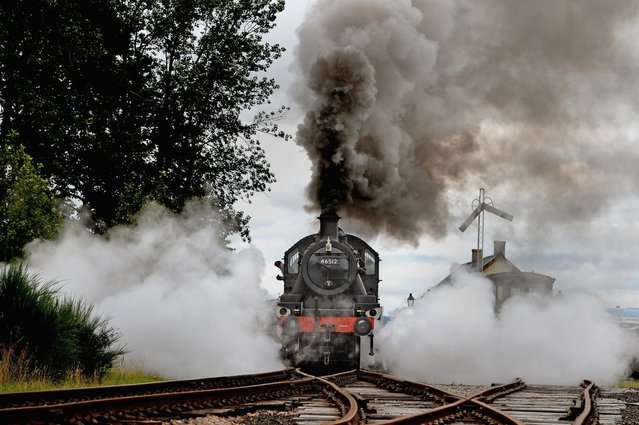
Henry Leese drives a 1952 British Rail Ivatt number 46512 at Strathspey Steam Railway on August 27, 2013 in Aviemore,Scotland. This year marks the 150th anniversary of the Highland Main Line built as a transportation link to the South for lairds and landowners living in northern Scotland. (Photo by Jeff J. Mitchell/Getty Images)

Henry Leese drives a 1952 British Rail Ivatt number 46512 at Strathspey Steam Railway on August 27, 2013 in Aviemore,Scotland. This year marks the 150th anniversary of the Highland Main Line built as a transportation link to the South for lairds and landowners living in northern Scotland. (Photo by Jeff J. Mitchell)
Details
03 Sep 2013 10:36:00
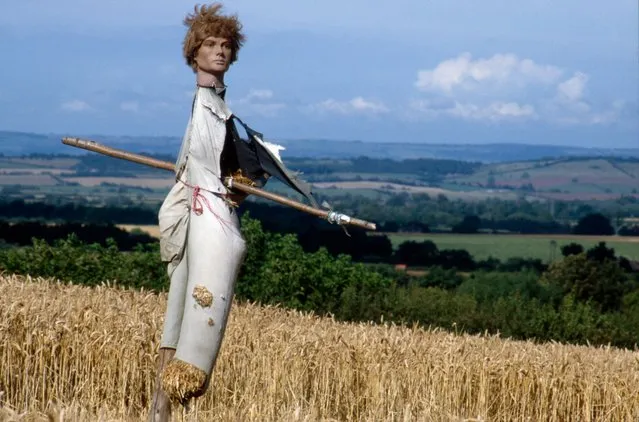
“The ripening crops eloquently signify that the scarecrow’s work is done. Few remain to see their task fulfilled because if they become entangled in the harvesting machinery it causes serious damage”. (Photo by Colin Garratt)

When Colin Garratt went to photograph the traditional sentinels of the British countryside, he found they ranged from the dapper to the downright sinister. “They are not from the anaesthetised world of the craft fair”, says Colin Garratt, “but are the direct descendants of the ancient spectres which have haunted the landscape for centuries”. The Scarecrow Exhibition is at Geddes Gallery, London, from 25 to 30 March. (Photo by Colin Garratt)
Details
29 Mar 2016 11:46:00