Loading...
Done
Tridacna Gigas, or Giant Clams

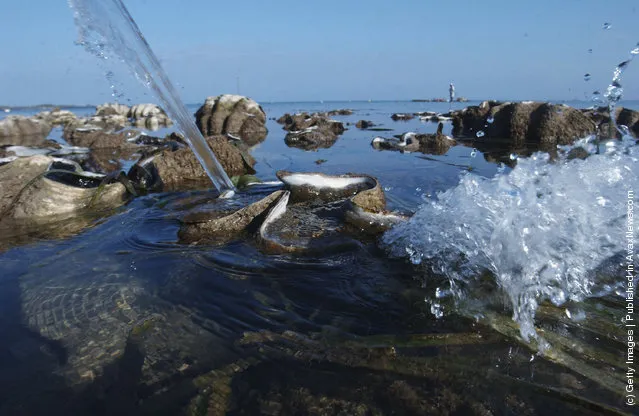
“The giant clam, Tridacna gigas (known as pā’ua in Cook Islands Māori), is the largest living bivalve mollusc. T. gigas is one of the most endangered clam species. It was mentioned as early as 1825 in scientific reports. One of a number of large clam species native to the shallow coral reefs of the South Pacific and Indian oceans, they can weigh more than 200 kilograms (440 lb) measure as much as 120 cm (47 in) across, and have an average lifespan in the wild of 100 years or more”. – Wikipedia

Photo: Tridacna Gigas, or Giant Clams spew water as a traditional fisherman passes by a small sanctuary on January 23, 2004 near Bolinao in the Northern Philippines. The clams, prime builders for coral reefs and providing shelter for spawning fish and other marine life, are exposed by low tides in the sanctuary. Overfishing and pollution throughout the country are not only threatening food security, but are also starting to choke one of the few working clam sanctuaries in the world. (Photo by David Greedy/Getty Images)
Details
01 Oct 2011 13:10:00
Monks take a tiger out of its cage for an afternoon walk at the Wat Pa Luangta Bua monastery in Kanchanaburi, Thailand

Monks take a tiger out of its cage for an afternoon walk June 5, 2001 at the Wat Pa Luangta Bua monastery in Kanchanaburi, Thailand. (Photo by Paula Bronstein/Getty Images)
Details
06 Dec 2011 13:13:00
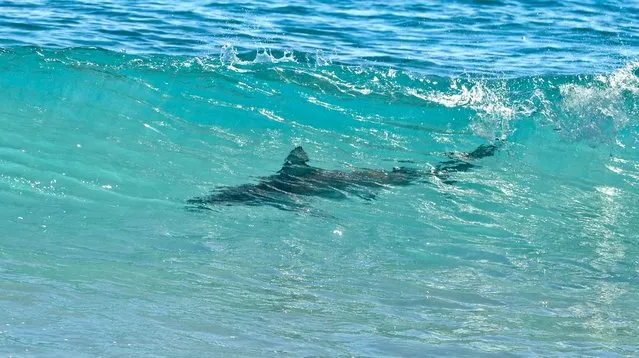
A spinner shark swims just offshore on Midtown Beach in Palm Beach on Tuesday. (Photo by Jeffrey Langlois/Palm Beach Daily News)

Several beaches along South Florida's Atlantic coast line were closed after thousands of sharks were seen migrating in the waters. The sharks were migrating from Boca Raton to Jupiter since the beginning of March, marine biologists told NBC Miami. Photo: A spinner shark swims just offshore on Midtown Beach in Palm Beach on Tuesday. (Photo by Jeffrey Langlois/Palm Beach Daily News)
Details
10 Mar 2013 09:39:00
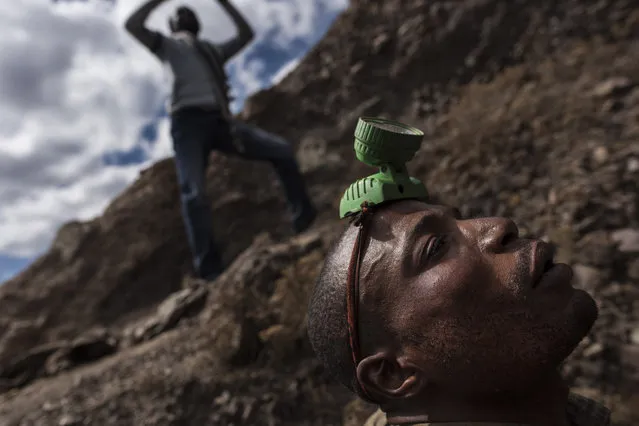
A “creuseur”, or digger, a plastic lantern on his head, readies to enter a copper and cobalt mine in Kawama, Democratic Republic of Congo on June 8, 2016. Cobalt is used in the batteries for electric cars and mobile phones. Working conditions are dangerous, often with no safety equipment or structural support for the tunnels. The diggers say they are paid on average US$2-3/day. (Photo by Michael Robinson Chavez/The Washington Post)

A “creuseur”, or digger, a plastic lantern on his head, readies to enter a copper and cobalt mine in Kawama, Democratic Republic of Congo on June 8, 2016. Cobalt is used in the batteries for electric cars and mobile phones. Working conditions are dangerous, often with no safety equipment or structural support for the tunnels. The diggers say they are paid on average US$2-3/day. (Photo by Michael Robinson Chavez/The Washington Post)
Details
30 Dec 2016 10:29:00
A competitor poses on the catwalk during the Miss Bumbum Brazil 2016 pageant in Sao Paulo, Brazil on November 9, 2016. (Photo by Miguel Schincariol/AFP Photo)

A competitor poses on the catwalk during the Miss Bumbum Brazil 2016 pageant in Sao Paulo, Brazil on November 9, 2016. Fifteen candidates compete in the annual pageant to select Brazil' s sexiest female rear end. (Photo by Miguel Schincariol/AFP Photo)
Details
11 Nov 2016 08:35:00


Ernie Lotinga, looking terrified as a gun is pointed in his face, in a scene from the play “My Wife's Family”, at the Garrick Theatre, London. (Photo by Sasha/Getty Images). 24th February 1941
Details
04 Apr 2011 09:29:00
Models wear creations as part of the Dolce & Gabbana women's Spring Summer 2024 collection presented in Milan, Italy, Saturday, September 23, 2023. (Photo by Antonio Calanni/AP Photo)

Models wear creations as part of the Dolce & Gabbana women's Spring Summer 2024 collection presented in Milan, Italy, Saturday, September 23, 2023. (Photo by Antonio Calanni/AP Photo)
Details
23 Nov 2024 04:59:00
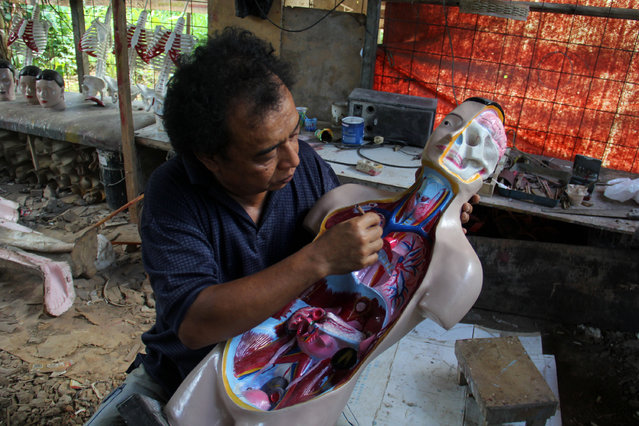
A craftsman works on making human anatomy mannequins on April 23, 2014 in Depok, West Java, Indonesia. The mannequins are made from fiberglass and will be used in schools, hospitals and laboratories. (Photo by Nurcholis Anhari Lubis/Getty Images)

A craftsman works on making human anatomy mannequins on April 23, 2014 in Depok, West Java, Indonesia. The mannequins are made from fiberglass and will be used in schools, hospitals and laboratories. (Photo by Nurcholis Anhari Lubis/Getty Images)
Details
24 Apr 2014 08:54:00