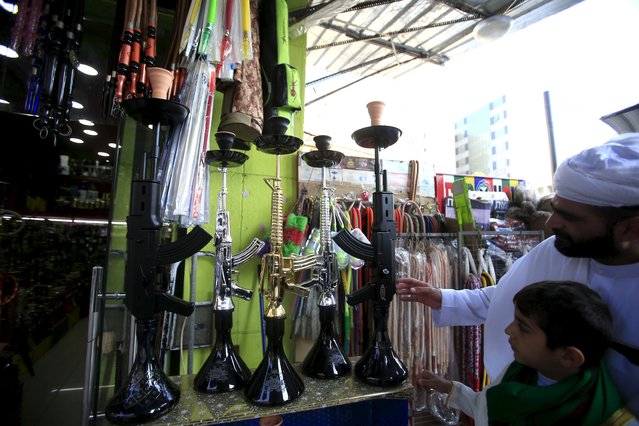
People inspect hookahs shaped like rifles on display for sale in a souk at the port city of Sidon, southern Lebanon, December 23, 2015. (Photo by Ali Hashisho/Reuters)
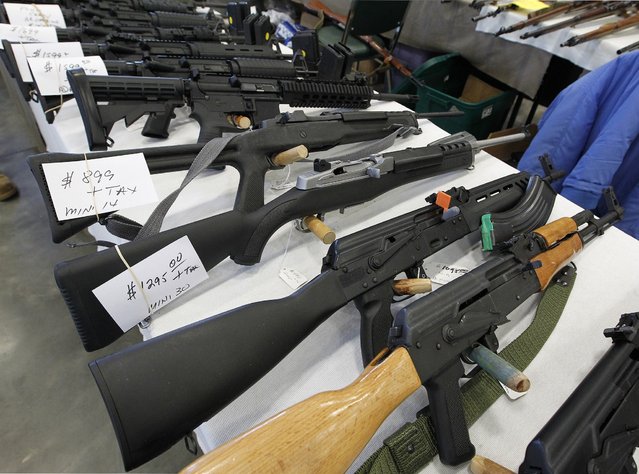
A large variety of weapons were for sale at the Washington County Fairgrounds Gun Show that drew thousands of people over the weekend, on March 22, 2013. (Photo by Gary Porter)
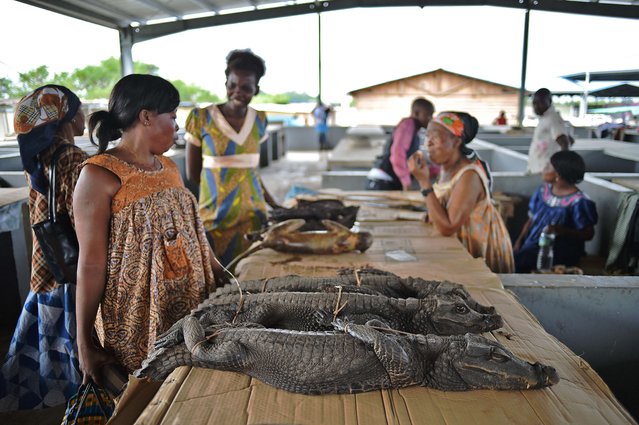
Shoppers walk past crocodiles for sale at a market in Bata on February 3, 2015. Markets in Equatorial Guinea sell a variety of animals including pangolins, monkeys and crocodiles as food. (Photo by Carl De Souza/AFP Photo)
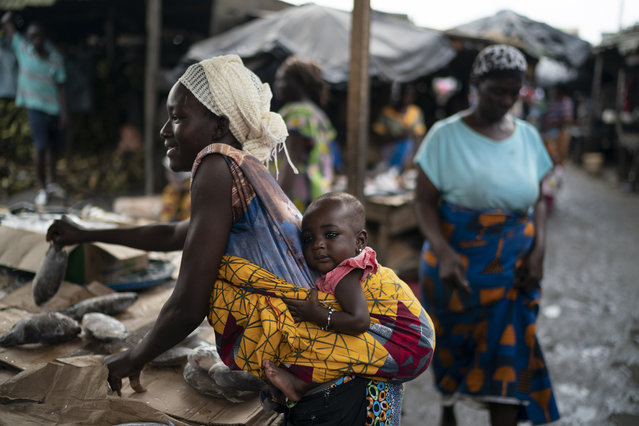
A woman carries her baby as she places fishes for sale at a market in Abobo neighborhood, in the suburbs of Abidjan, Ivory Coast, Sunday, November 1, 2020. (Photo by Leo Correa/AP Photo)
Pedestrians and workers pass an upside down car art installation in a car park on the South Bank in London, February 19, 2015. British artist Alex Chinneck's illusory piece, entitled “Pick yourself up and pull yourself together”, and on display in the working car park for a week, sees a Vauxhall car suspended upside down, appearing to be gripping onto a peeled back length of tarmac. (Photo by Toby Melville/Reuters)
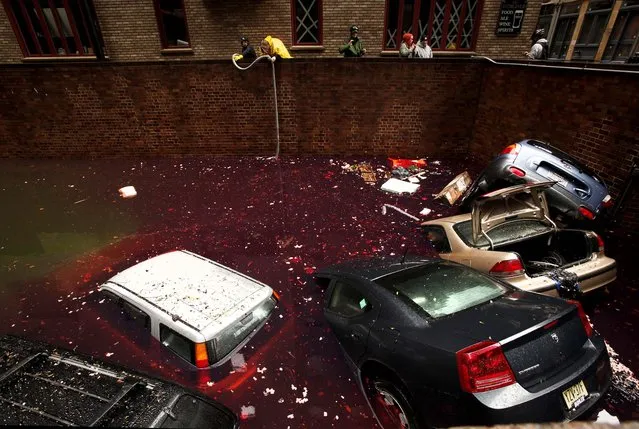
Cars float up from a car garage in a mixture of storm water and gasoline in lower Manhattan as workers begin the process of pumping out the mess. (Photo by Carolyn Cole/Los Angeles Times/MCT)
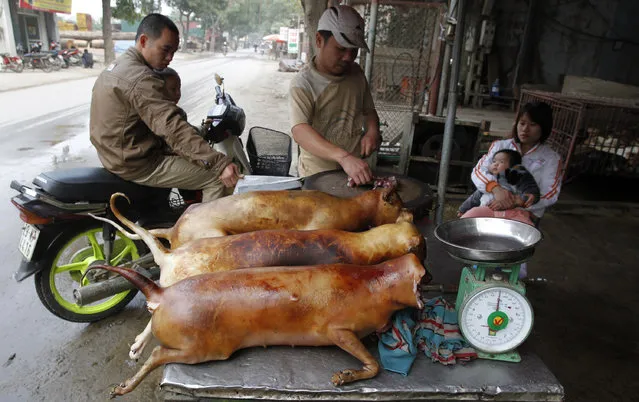
A vendor (C) cuts slaughtered dogs for sale at his roadside stall in Duong Noi village, outside Hanoi December 16, 2011. While animal rights activists have condemned eating dog meat as cruel treatment of the animals, it is still an accepted popular delicacy for some Vietnamese, as well in some other Asian countries. Duong Noi is well-known as a dog-meat village, where hundreds of dogs are killed each day for sale as popular traditional food. Dog-eating as a custom is rooted in Vietnam and was developed as a result of poverty. One kilogram of dog meat costs about 130,000 dongs ($6.2). (Photo by Reuters/Kham)