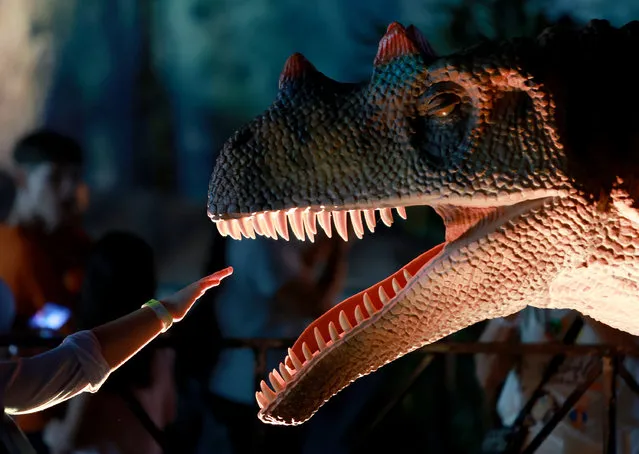
A hand reaches out to touch a dinosaur during the “Jurassic Quest” experience at Broward County Convention Center on July 08, 2022 in Fort Lauderdale, Florida. (Photo by Joe Raedle/Getty Images)
Participants during the Whitby Krampus Run street parade in Whitby, Yorkshire on Saturday, December 3, 2022, which celebrates the Krampus, a horned creature which accompanies Saint Nicholas on his rounds. (Photo by Danny Lawson/PA Images/Profimedia)
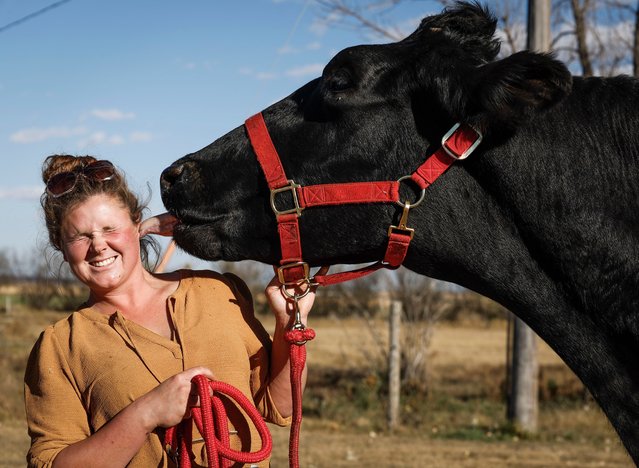
Jasmine Entz gets a kiss from her Guinness Book of World Record-breaking 8-year-old Holstein steer called “Beef”, who weighs 2,400 pounds and stands nearly two meters (6 feet) tall, on her ranch in Vulcan County, Alberta, Canada, on Friday, September 26, 2025. (Photo by Jeff McIntosh/The Canadian Press via AP Photo)
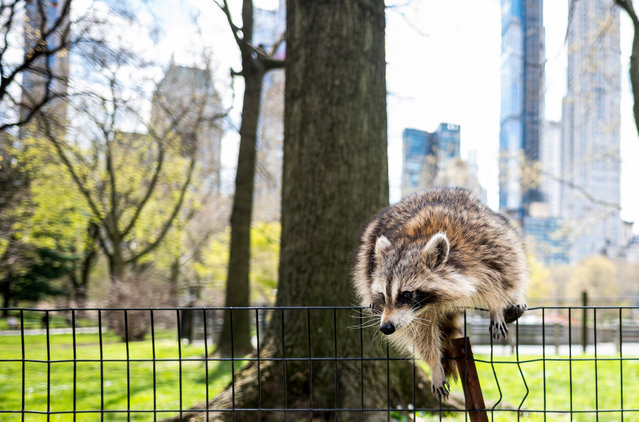
A racoon jumps over a fence in almost deserted Central Park in Manhattan on April 16, 2020 in New York City. Gone are the softball games, horse-drawn carriages and hordes of tourists. In their place, pronounced birdsong, solitary walks and renewed appreciation for Central Park's beauty during New York's coronavirus lockdown. The 843-acre (341-hectare) park – arguably the world's most famous urban green space – normally bustles with human activity as winter turns to spring, but this year due to Covid-19 it's the wildlife that is coming out to play. (Photo by Johannes Eisele/AFP Photo)
Los Angeles Rams cheerleaders celebrate on the field with the confetti after the Rams 20-17 victory over the San Francisco 49ers in a NFC championship football game at SoFi Stadium in Inglewood on Sunday, January 30, 2022. (Photo by Gary A. Vasquez/USA TODAY Sports)
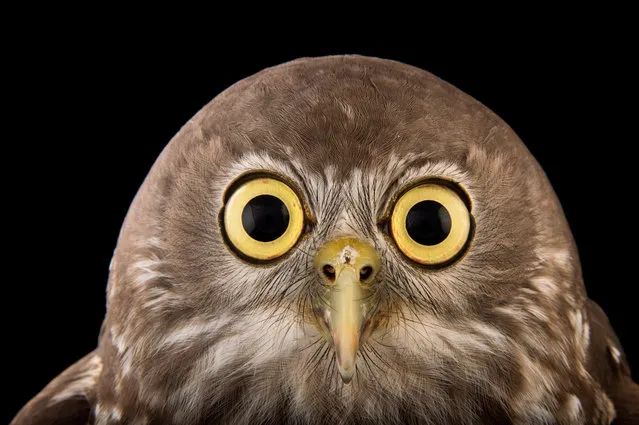
The National Geographic Photo Ark is a travelling exhibition of photographer Joel Sartore’s quest to create a photo archive of biodiversity around the world. So far, Sartore has captured studio portraits of more than 6,000 species – a number that he hopes to double. On 1 July, the ark will open at Melbourne zoo – the first time it has been exhibited in the southern hemisphere. More than 50 portraits will be on display, including many of Australian endangered animals being protected by programs at the zoo itself. These captions have been edited from text supplied by Melbourne zoo. Here: Barking owl. (Photo by Joel Sartore/National Geographic Photo Ark/The Guardian)
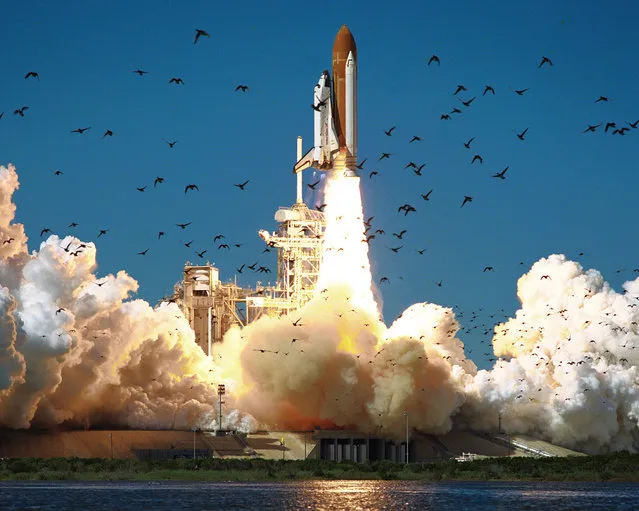
A wide-angle view shows the ascent of the shuttle Challenger on January 28, 1986. In the seconds after ignition, the rocket engines' hot blast began the process of destruction. (Photo by NASA)
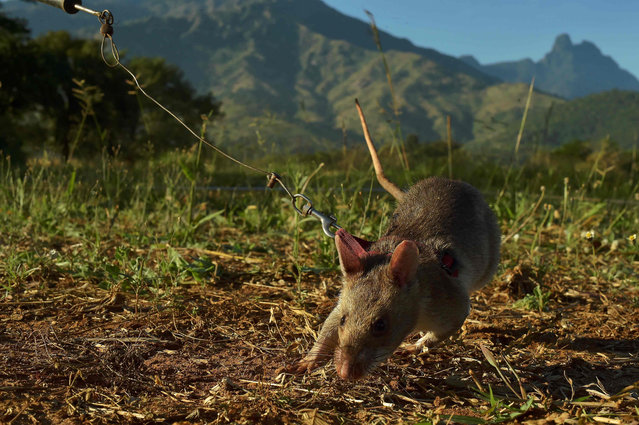
An African giant pouched rat sniffs for traces of landmine explosives at APOPO's training facility in Morogoro on June 17, 2016. APOPO trains the rats to detect both tuberculosis and landmines at its facility. Every year landmines kill or maim thousands of people worldwide. The trained rats sniff for explosive and so are able to detect the presence of landmines far faster than conventional methods which involve metal detection. (Photo by Carl De Souza/AFP Photo)