Loading...
Done
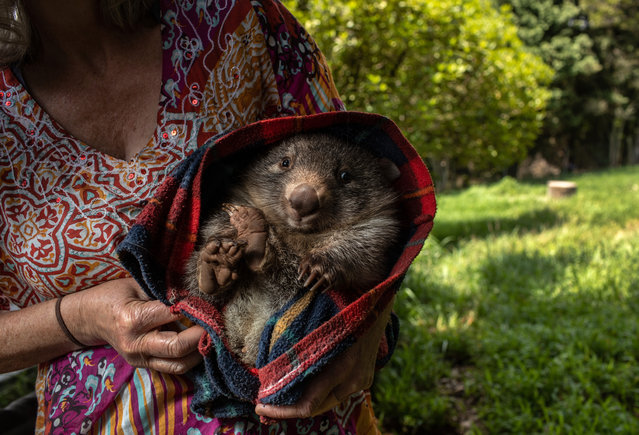
A wildlife caregiver holds an orphaned wombat at the Native Wildlife Rescue center on January 29, 2020 in Robertson, Australia. The center has taken in many burned kangaroos and wallabies injured in recent bushfires. Wombat orphans are often rescued from the pouch of their mothers struck by vehicles. (Photo by John Moore/Getty Images)

A wildlife caregiver holds an orphaned wombat at the Native Wildlife Rescue center on January 29, 2020 in Robertson, Australia. The center has taken in many burned kangaroos and wallabies injured in recent bushfires. Wombat orphans are often rescued from the pouch of their mothers struck by vehicles. (Photo by John Moore/Getty Images)
Details
16 Feb 2020 00:03:00
A farmer harvests the lotus roots at a lotus pond in the Lingjiaohu Village of Nanxian County, Yiyang City, Central China's Hunan Province on April 26, 2023. Farmers in Lingjiaohu Village of Nanxian County have recently been busy with harvesting lotus roots. (Photo by Xinhua News Agency/Rex Features/Shutterstock)

A farmer harvests the lotus roots at a lotus pond in the Lingjiaohu Village of Nanxian County, Yiyang City, Central China's Hunan Province on April 26, 2023. Farmers in Lingjiaohu Village of Nanxian County have recently been busy with harvesting lotus roots. (Photo by Xinhua News Agency/Rex Features/Shutterstock)
Details
29 Apr 2023 04:47:00
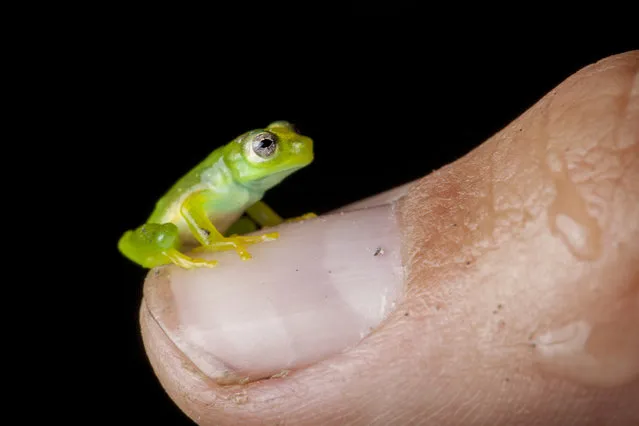
Miniature glass frog. (Photo by Robin Moore)

Thousands of species of amphibians are endangered and hundreds have already disappeared, but in recent years, a team of scientists and conservationists have re-discovered some of these “lost” species and uncovered previously unknown varieties. Here: Miniature glass frog. (Photo by Robin Moore)
Details
10 Oct 2014 12:55:00


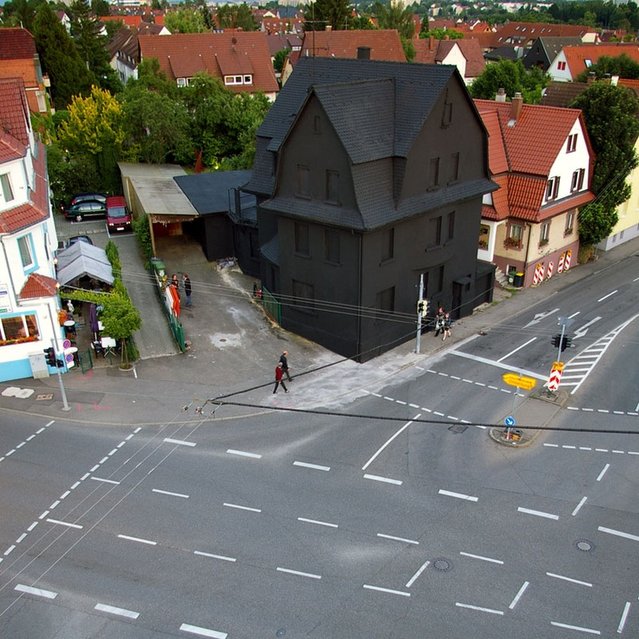
Haus in Schwarz (House in Black) was a 2008 public art piece by artists Erik Sturm and Simon Jung (previously) in the city center of Möhringen, Germany. The piece was meant as a farewell to the building which was slated for demolition, with the matte black paint acting as a sort of final curtain to an exterior that had recently been used by numerous street artists, shown bellow.
Details
10 Oct 2013 11:47:00
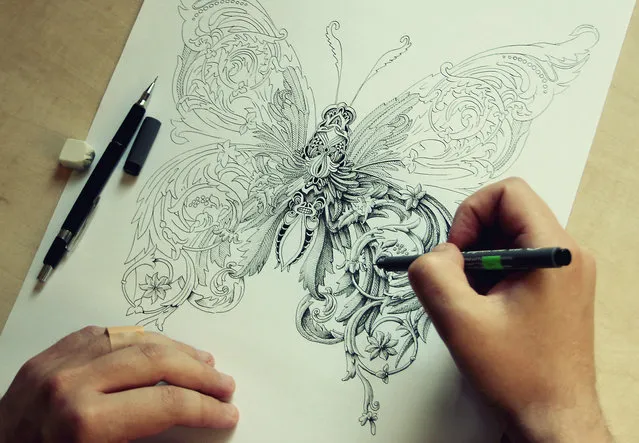
Line Art By Alex Konahin

Latvia-based graphic artist and illustrator Alex Konahin recently completed work on a new series of ornate. The illustrations were made using pens and india ink in his distinctive style that makes used of ornate scrolls and intricate floral designs.
Details
12 Dec 2013 12:43:00


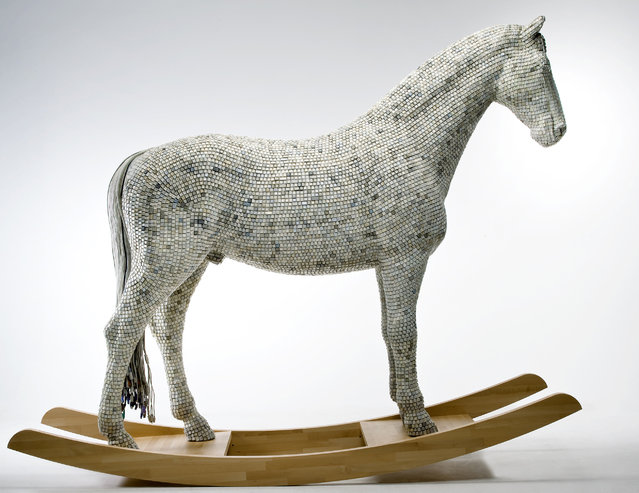
“Hedonism(y) Trojaner” is a sculpture of a horse that is made out of resin and recycled computer keys and cables. The sculpture references the Trojan Horse of myth (and more recently, computing) and was created by Nuremberg, Germany-based artist Babis Pangiotidis.
Details
07 Dec 2012 14:58:00
1924:  Vladimir Ilyich Lenin lying in state in the Kremlin

Photo: Vladimir Ilyich Lenin (1870 – 1924) lying in state in the Kremlin. (Photo by Hulton Archive/Getty Images). 1924

Important! For the same article in Russian language click here.

Something quite intriguing is happening within Russian-speaking internet during the last few – should you type a fully academic inquiry (at least, according to Russian academic requirements) in national search engines for "Lenin's mausoleum" – the first thing you get (even in top 10 searches) is website pages talking about black magic and occult. Website authors view this construction differently, but unconditionally agree on one thing: the mausoleum of the "leader of the world proletariat” – the essence of a magical artifact, a sort of “energy vampire”. It was built with a certain purpose: to drain the energy out of miserable Soviet citizens on one hand; and to poison the anthroposphere of one-sixth part of the earth with its vibes (the exact territory that was occupied by the former Soviet Union), depriving the Russian people of will to resist on the other hand. Complete nonsense? No doubt. Nevertheless, an intriguing one. Well, probably because some oddities do exist in mausoleum's history. These oddities are the thing we are going to discuss this time. First, let me refresh you memory on the subject.
Details
16 Oct 2011 11:27:00
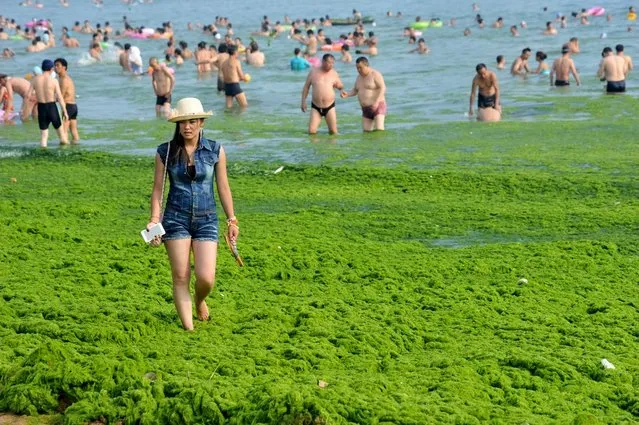
Tourists play at a beach covered by a thick layer of green algae on July 3, 2013 in Qingdao, China. A large quantity of non-poisonous green seaweed, enteromorpha prolifera, hit the Qingdao coast in recent days. More than 20,000 tons of such seaweed has been removed from the city's beaches. (Photo by ChinaFotoPress/ChinaFotoPress)

Tourists play at a beach covered by a thick layer of green algae on July 3, 2013 in Qingdao, China. A large quantity of non-poisonous green seaweed, enteromorpha prolifera, hit the Qingdao coast in recent days. More than 20,000 tons of such seaweed has been removed from the city's beaches. (Photo by China Foto Press)
Details
04 Jul 2013 11:01:00