Loading...
Done


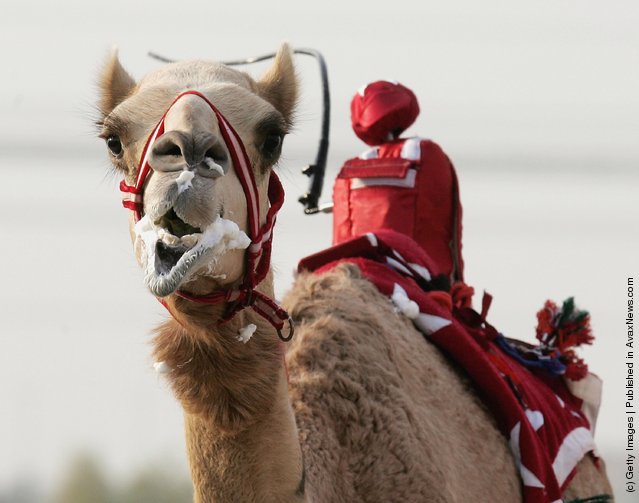
A camel foams at the mouth as he is whipped by a robot jockey during a race at Nad al-Sheba on December 6, 2006 in Dubai, United Arab Emirates. This is the first season that robotic jockeys have been used to race camels in Dubai. Controversially children from India were used to ride the camels in past seasons. These robot jockeys costing 15000GBP and up, were designed in Geneva and include shock absorbers and GPS tracking systems. The camel's owners control them from their speeding four wheel drives at the side of the track. (Photo by Chris Jackson/Getty Images)
Details
01 May 2011 09:01:00
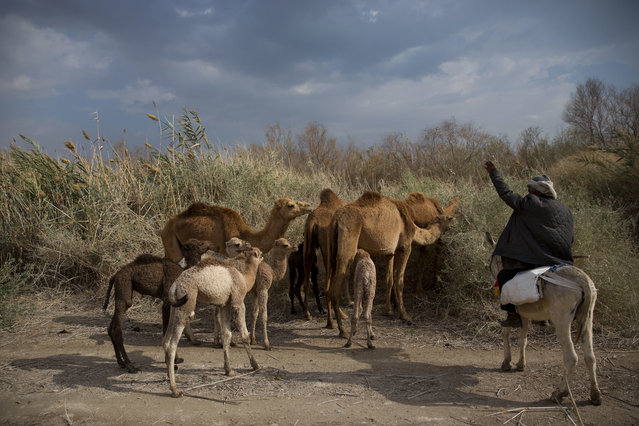
In this Sunday, February 18, 2018 photo, Palestinian camel herder Salem Rashaideh, leads the way for the camels in the territory of Israeli Kibbutz Kalya, near the Dead Sea in the West Bank. (Phoro by Oded Balilty/AP Photo)

In this Sunday, February 18, 2018 photo, Palestinian camel herder Salem Rashaideh, leads the way for the camels in the territory of Israeli Kibbutz Kalya, near the Dead Sea in the West Bank. For three months a year, in the winter time Bedouin Arab herders take their 130 camels to graze on the shores of the Dead Sea, at the lowest place on Earth. (Phoro by Oded Balilty/AP Photo)
Details
19 Mar 2018 00:03:00
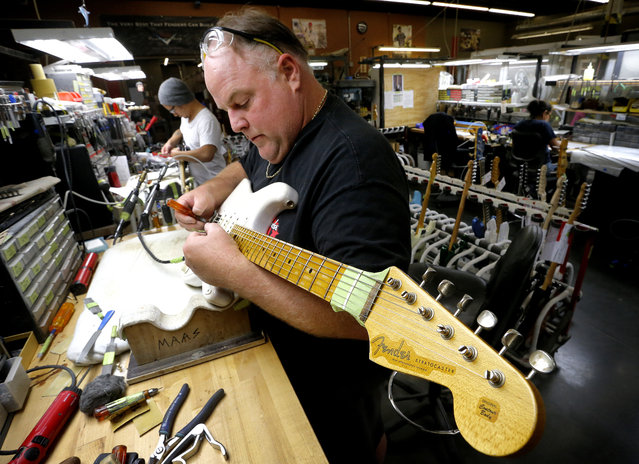
A finished Fender Stratocaster is adjusted by Kenneth Maas in the Fender Custom Shop in Corona, Calif. on Tuesday, October 15, 2013. Leo Fender developed the instrument in a small workshop in Fullerton, Calif. six decades ago. (Photo by Matt York/AP Photo)

“Jimi Hendrix made it shriek. Buddy Holly made it swing. Stevie Ray Vaughn made it snarl. Some of the most legendary guitarists in music history have elicited unforgettable sounds from the Fender Stratocaster, the distinctive double-cutaway guitar born in a small Fullerton, Calif., workshop 60 years ago this month”. – Associated Press. Photo: A finished Fender Stratocaster is adjusted by Kenneth Maas in the Fender Custom Shop in Corona, Calif. on Tuesday, October 15, 2013. Leo Fender developed the instrument in a small workshop in Fullerton, Calif. six decades ago. (Photo by Matt York/AP Photo)
Details
22 Apr 2014 10:52:00
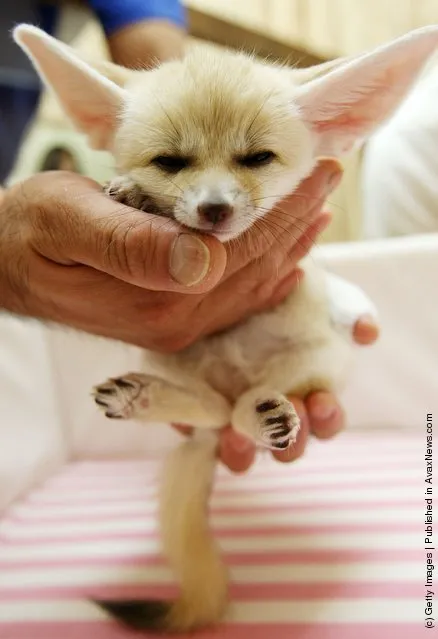
Baby Fennec Fox

“The fennec fox is a small nocturnal fox found in the Sahara of North Africa. Its most distinctive feature is unusually large ears. The name “fennec” comes from the Arabic word for fox, and the species name zerda has a Greek origin that refers to its habitat. The fennec is the smallest species of canid in the world; coat, ears and kidney functions have adapted to a high-temperature, low-water, desert environment. In addition, its hearing is sensitive enough to hear prey moving underground”. – Wikipedia

Photo: A Baby Fennec is seen at Sunshine International Aquarium on June 24, 2009 in Tokyo, Japan. The small nocturnal fox babies were born on May 17 2009. (Photo by Junko Kimura/Getty Images)
Details
16 Sep 2011 12:02:00
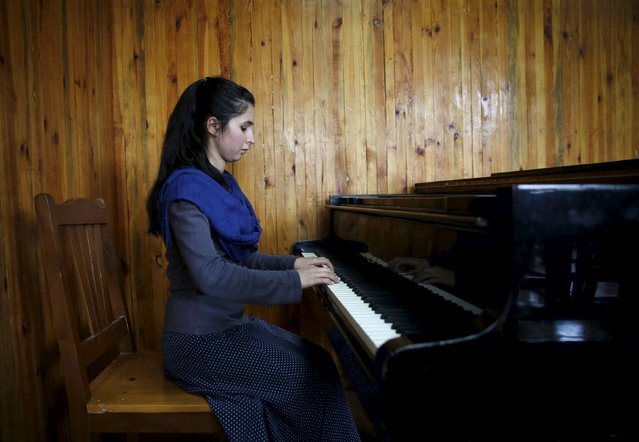
Negin Ekhpulwak, leader of the Zohra orchestra, an ensemble of 35 women, practises on a piano at Afghanistan's National Institute of Music, in Kabul, Afghanistan April 9, 2016. (Photo by Ahmad Masood/Reuters)

Negin Ekhpulwak, leader of the Zohra orchestra, an ensemble of 35 women, practises on a piano at Afghanistan's National Institute of Music, in Kabul, Afghanistan April 9, 2016. Playing instruments was banned under Taliban rule in Afghanistan, and even today, many conservative Muslims frown on most forms of music. Living in an orphanage in the capital, Kabul, 19-year-old Negin Ikhpolwak leads an ensemble of 35 women that plays both Western and Afghan musical instruments. In a country notorious internationally for harsh restrictions on women in most areas of life, Negin's story highlights a double challenge. (Photo by Ahmad Masood/Reuters)
Details
19 Apr 2016 13:47:00
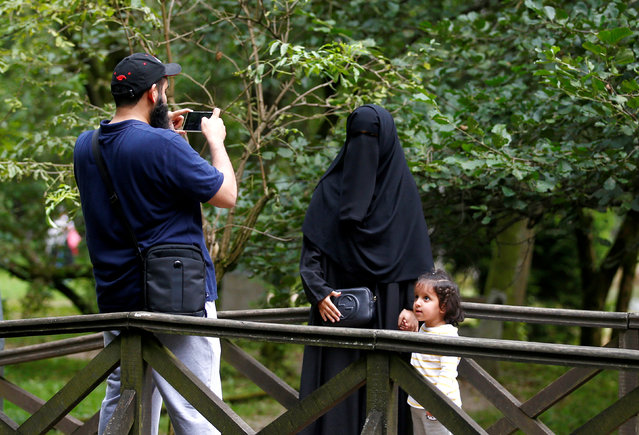
Tourists from the Middle East take pictures at Vrelo Bosne nature park in Ilidza near Sarajevo, Bosnia and Herzegovina, August 19, 2016. (Photo by Dado Ruvic/Reuters)

Tourists from the Middle East take pictures at Vrelo Bosne nature park in Ilidza near Sarajevo, Bosnia and Herzegovina, August 19, 2016. They discovered mountainous Bosnia, where half the population is Muslim, after the Arab Spring which destabilized many traditional holiday destinations such as Libya, Tunisia and Egypt. (Photo by Dado Ruvic/Reuters)
Details
25 Aug 2016 09:37:00
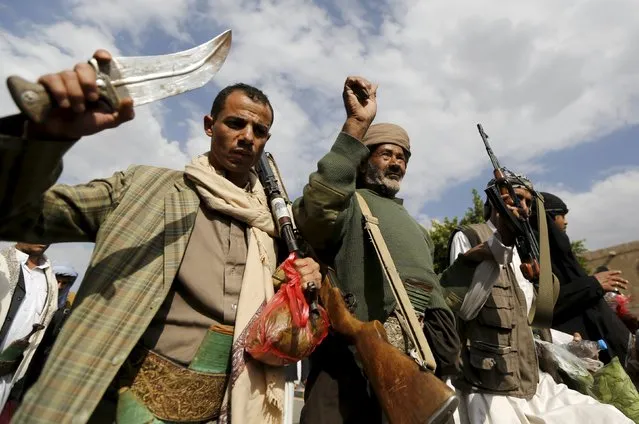
Houthi followers perform the traditional Baraa dance ahead of a demonstration against the Saudi-led air strikes in Yemen's capital Sanaa August 24, 2015. (Photo by Khaled Abdullah/Reuters)

Houthi followers perform the traditional Baraa dance ahead of a demonstration against the Saudi-led air strikes in Yemen's capital Sanaa August 24, 2015. The nothern-based Houthis, a Shi'ite Muslim group, took control of Sanaa last September. Arab countries intervened in the conflict in March to halt a Houthi advance into the south which caused the Saudi-backed government to flee to Riyadh from its refuge in the southern port of Aden. (Photo by Khaled Abdullah/Reuters)
Details
25 Aug 2015 10:19:00
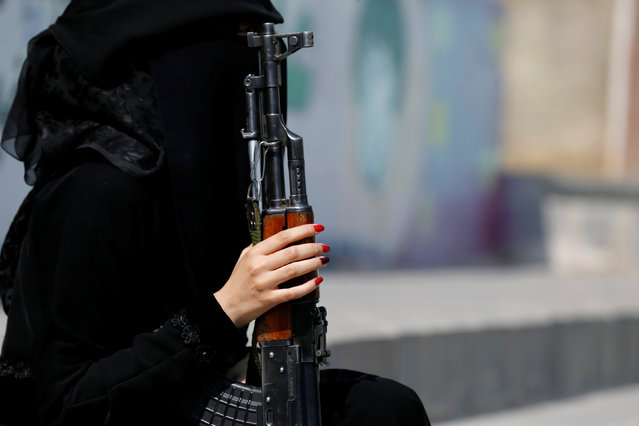
A woman loyal to the Houthi movement holds a rifle as she takes part in a parade to show support to the movement in Sanaa, Yemen September 6, 2016. Dressed in the head to toe garments which obscured their faces, the female fighters brandished machine guns, rocket launchers and grenades. The women also wore hats as they showed support for the Shiite Houthi rebels. The Saudi-led Arab coalition launched a military campaign against the Houthis and their allies in March 2015. It was after the rebels closed in on Gulf-backed President Abedrabbo Mansour Hadi in his southern refuge of Aden, forcing him into exile. The female protesters have pledged to remain supportive and do whatever they can to back the ongoing resistance against the kingdom. Yemen is in the grip of its most severe crisis in years, and is on the brink of civil war. (Photo by Khaled Abdullah/Reuters)

A woman loyal to the Houthi movement holds a rifle as she takes part in a parade to show support to the movement in Sanaa, Yemen September 6, 2016. The Saudi-led Arab coalition launched a military campaign against the Huthis and their allies in March 2015, after the rebels closed in on Gulf-backed President Abedrabbo Mansour Hadi in his southern refuge of Aden, forcing him into exile. (Photo by Khaled Abdullah/Reuters)
Details
07 Sep 2016 10:24:00