Loading...
Done
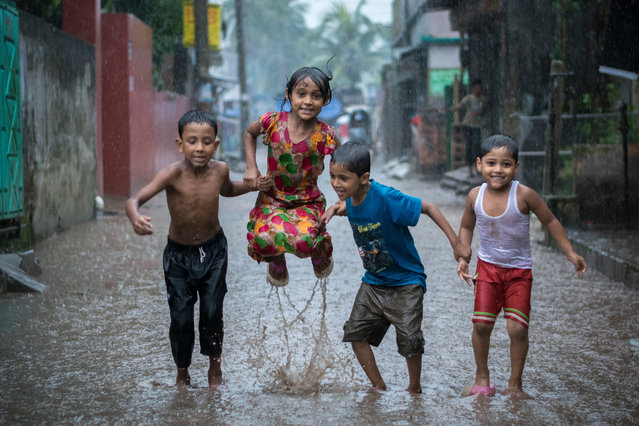
Happiness on a Rainy Day by Fardin Oyan, Bangladesh. Winner of the young environmental photographer of the year. Many children in Bangladesh love to bathe and play in the rain. The country, which is flat and occupied by the huge Ganges-Brahmaputra Delta, is exposed to floods, especially during monsoon season. (Photo by Fardin Oyan/2018 Ciwem environmental photographer of the year 2018)

Happiness on a Rainy Day by Fardin Oyan, Bangladesh. Winner of the young environmental photographer of the year. Many children in Bangladesh love to bathe and play in the rain. The country, which is flat and occupied by the huge Ganges-Brahmaputra Delta, is exposed to floods, especially during monsoon season. (Photo by Fardin Oyan/2018 Ciwem environmental photographer of the year 2018)
Details
24 Sep 2018 00:03:00
Andrey Karr from Western Riders Slacklines at sunset above big waves in Nazare, Portugal on December 27, 2017. (Photo by Aidan Williams/National Geographic Travel Photographer of the Year Contest)

Andrey Karr from Western Riders Slacklines at sunset above big waves in Nazare, Portugal on December 27, 2017. (Photo by Aidan Williams/National Geographic Travel Photographer of the Year Contest)
Details
14 May 2018 00:03:00
Tardigrades (commonly known as waterbears or moss piglets). (Photo by SPL/East News)

“Tardigrades (commonly known as waterbears or moss piglets) are small, water-dwelling, segmented animals with eight legs. Tardigrades were first discovered in 1773 by Johann August Ephraim Goeze, who called them kleiner Wasserbär, meaning “little water bear” in German. The name Tardigrada means “slow walker” and was given by Lazzaro Spallanzani in 1777. The name water bear comes from the way they walk, reminiscent of a bear's gait. The biggest adults may reach a body length of 1.5 millimetres (0.059 in), the smallest below 0.1 mm. Freshly hatched tardigrades may be smaller than 0.05 mm”. – Wikipedia. Photo: Tardigrades. (Photo by SPL/East News)
Details
26 Sep 2012 09:55:00
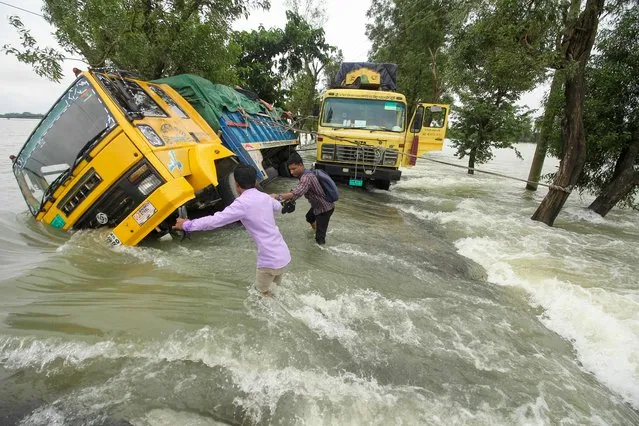
People wade past stranded trucks on a flooded street in Sunamganj on June 21, 2022. Floods are a regular menace to millions of people in low-lying Bangladesh, but experts say climate change is increasing their frequency, ferocity and unpredictability. (Photo by Mamun Hossain/AFP Photo)

People wade past stranded trucks on a flooded street in Sunamganj on June 21, 2022. Floods are a regular menace to millions of people in low-lying Bangladesh, but experts say climate change is increasing their frequency, ferocity and unpredictability. (Photo by Mamun Hossain/AFP Photo)
Details
01 Jul 2022 02:36:00
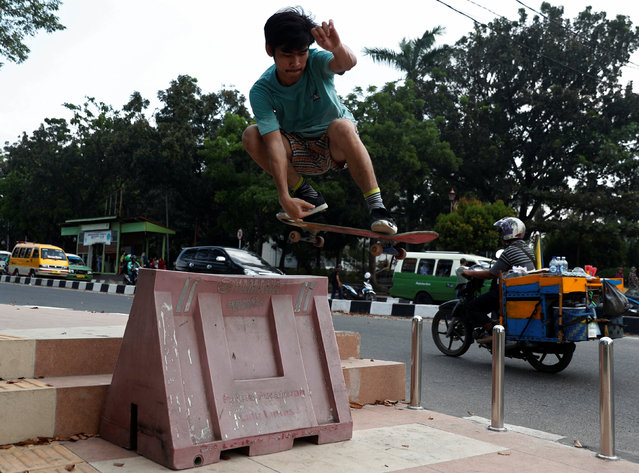
A youth skates next to a road in Palembang, South Sumatra, Indonesia on August 15, 2018. (Photo by Edgar Su/Reuters)

A youth skates next to a road in Palembang, South Sumatra, Indonesia on August 15, 2018. (Photo by Edgar Su/Reuters)
Details
27 Nov 2018 00:05:00
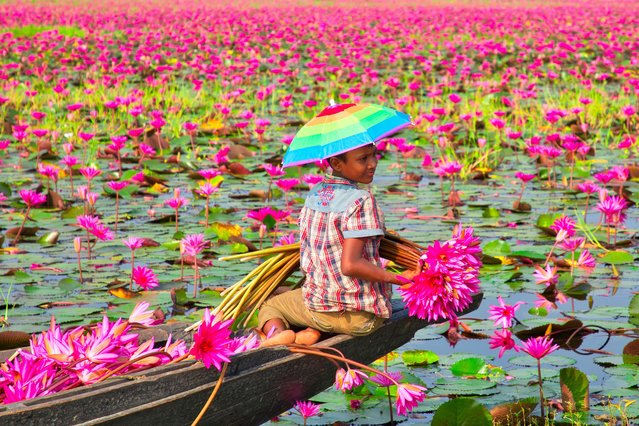
A young farmer harvests water lilies from a canal in Barisal, Bangladesh on October 12, 2019, where the flowers cover the 10,000-acre waterway, to take to nearby markets. (Photo by Azim Khan Ronnie/Caters News Agency)

A young farmer harvests water lilies from a canal in Barisal, Bangladesh on October 12, 2019, where the flowers cover the 10,000-acre waterway, to take to nearby markets. (Photo by Azim Khan Ronnie/Caters News Agency)
Details
27 Dec 2019 00:01:00
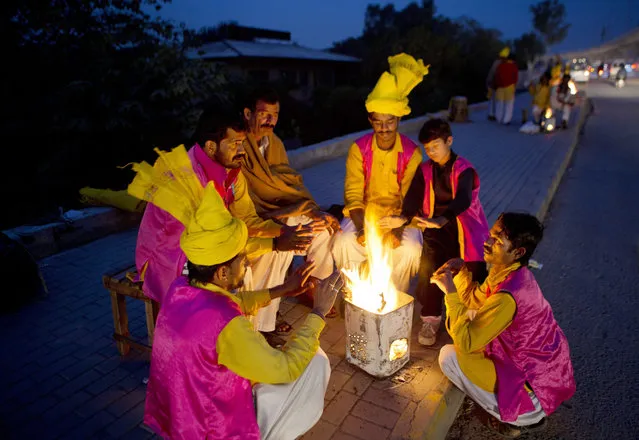
Pakistani street performers sit around fire waiting for customers on a chilly evening in Rawalpindi, Pakistan, Wednesday, November 11, 2015. Some parts of Pakistan are facing a harsh winter. (Photo by B. K. Bangash/AP Photo)

Pakistani street performers sit around fire waiting for customers on a chilly evening in Rawalpindi, Pakistan, Wednesday, November 11, 2015. Some parts of Pakistan are facing a harsh winter. (Photo by B. K. Bangash/AP Photo)
Details
01 Dec 2015 08:02:00
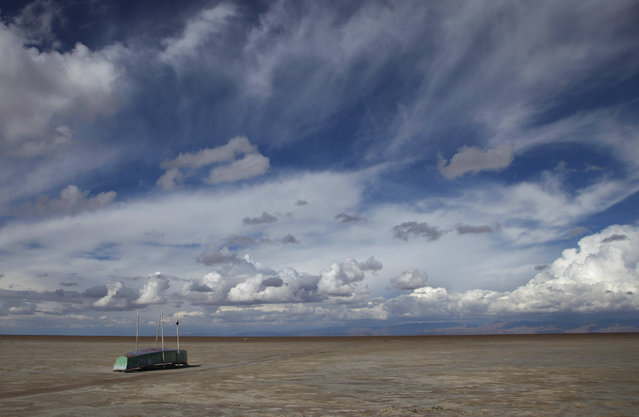
In this January 12, 2016 photo, an abandoned boat lies on the dried up lake bed of Lake Poopo, on the outskirts of Untavi, Bolivia. Drought caused by the recurrent El Nino meteorological phenomenon is considered the main driver of the lake's demise. Along with glacial melting, authorities say another factor is the diversion of water from Poopo's tributaries, mostly for mining but also for agriculture. (Photo by Juan Karita/AP Photo)

In this January 12, 2016 photo, an abandoned boat lies on the dried up lake bed of Lake Poopo, on the outskirts of Untavi, Bolivia. Drought caused by the recurrent El Nino meteorological phenomenon is considered the main driver of the lake's demise. Along with glacial melting, authorities say another factor is the diversion of water from Poopo's tributaries, mostly for mining but also for agriculture. (Photo by Juan Karita/AP Photo)
Details
21 Jan 2016 12:33:00