Loading...
Done
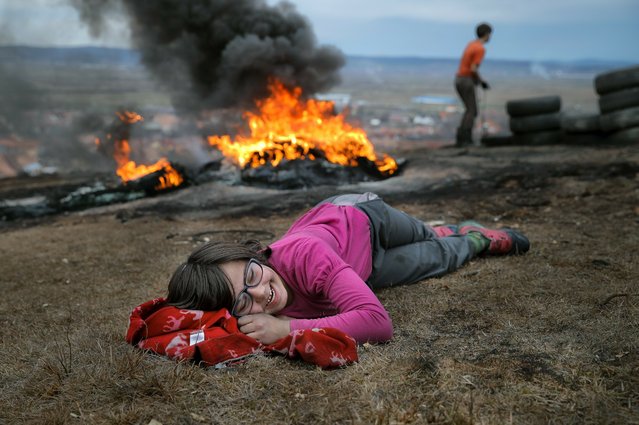
In this photo taken on Sunday, March 10, 2019, a little girl laughs during a ritual marking the upcoming Clean Monday, the beginning of the Great Lent, 40 days ahead of Orthodox Easter, on the hills surrounding the village of Poplaca, in central Romania's Transylvania region. Romanian villagers burn piles of used tires then spin them in the Transylvanian hills in a ritual they believe will ward off evil spirits as they begin a period of 40 days of abstention, when Orthodox Christians cut out meat, fish, eggs, and dairy. (Photo by Vadim Ghirda/AP Photo)

In this photo taken on Sunday, March 10, 2019, a little girl laughs during a ritual marking the upcoming Clean Monday, the beginning of the Great Lent, 40 days ahead of Orthodox Easter, on the hills surrounding the village of Poplaca, in central Romania's Transylvania region. Romanian villagers burn piles of used tires then spin them in the Transylvanian hills in a ritual they believe will ward off evil spirits as they begin a period of 40 days of abstention, when Orthodox Christians cut out meat, fish, eggs, and dairy. (Photo by Vadim Ghirda/AP Photo)
Details
01 Jun 2019 00:03:00
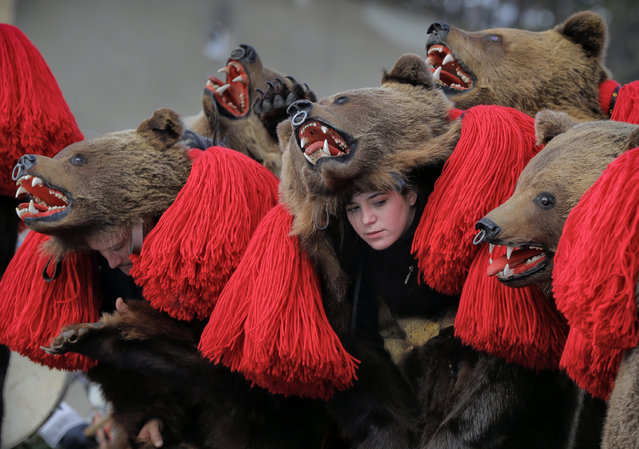
People wearing bear fur costumes dance during the annual bear ritual gathering in Comanesti, Romania, Friday, December 30, 2016. In pre-Christian rural traditions, dancers wearing colored costumes or animal furs, toured from house to house in villages singing and dancing to ward off evil, in the present the tradition has moved to Romania's cities too, where dancers travel to perform the ritual for money. (Photo by Vadim Ghirda/AP Photo)

People wearing bear fur costumes dance during the annual bear ritual gathering in Comanesti, Romania, Friday, December 30, 2016. In pre-Christian rural traditions, dancers wearing colored costumes or animal furs, toured from house to house in villages singing and dancing to ward off evil, in the present the tradition has moved to Romania's cities too, where dancers travel to perform the ritual for money. (Photo by Vadim Ghirda/AP Photo)
Details
31 Dec 2016 09:51:00
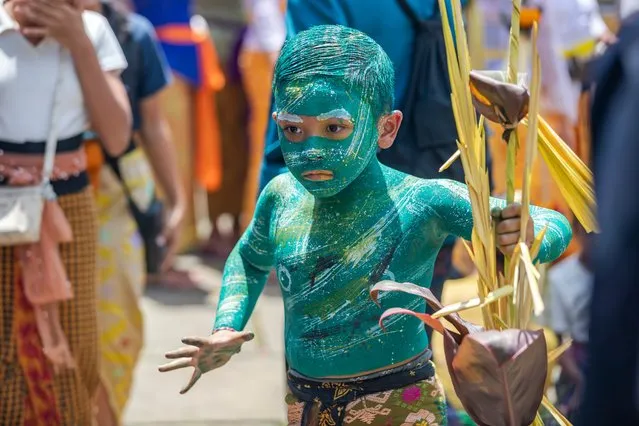
A child with his body and face painted prepares to attend the sacred Ngerebeg ritual at the Tegallalang village in Gianyar, Bali, Indonesia, 03 April 2024. The sacred Ngerebeg ritual takes place every six months and it is mainly aimed at driving all evil spirits out of the villages. During the ritual, the participants paint their bodies in various colors and patterns to join the procession across the village. (Photo by Made Nagi/EPA/EFE)

A child with his body and face painted prepares to attend the sacred Ngerebeg ritual at the Tegallalang village in Gianyar, Bali, Indonesia, 03 April 2024. The sacred Ngerebeg ritual takes place every six months and it is mainly aimed at driving all evil spirits out of the villages. During the ritual, the participants paint their bodies in various colors and patterns to join the procession across the village. (Photo by Made Nagi/EPA/EFE)
Details
18 Apr 2024 05:17:00
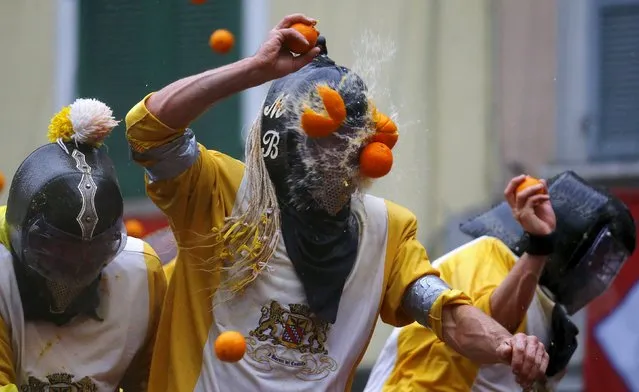
A participant is hit by an orange during an annual carnival battle in the northern Italian town of Ivrea February 7, 2016. Dressed up as Middle Age kings' guards, a group of men ride in a horse-drawn carriage and pelt “foot soldiers” with oranges as thousands of people gather to re-enact a Middle Age battle when the townsfolk of Ivrea overthrew an evil king. In a strange twist, instead of swords and cross bows, these days the weapons of choice are oranges. (Photo by Stefano Rellandini/Reuters)

A participant is hit by an orange during an annual carnival battle in the northern Italian town of Ivrea February 7, 2016. Dressed up as Middle Age kings' guards, a group of men ride in a horse-drawn carriage and pelt “foot soldiers” with oranges as thousands of people gather to re-enact a Middle Age battle when the townsfolk of Ivrea overthrew an evil king. In a strange twist, instead of swords and cross bows, these days the weapons of choice are oranges. (Photo by Stefano Rellandini/Reuters)
Details
08 Feb 2016 12:03:00
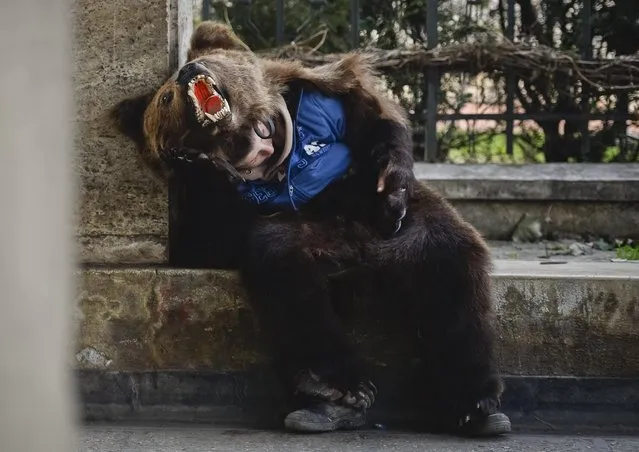
Florin Bors, aged 8 from Bacau, northern Romania, wearing a bear fur takes a break from performing a holiday season ritual in Bucharest, Romania, Tuesday, December 16, 2014. In pre-Christian rural traditions, dancers wearing colored costumes or animal furs, touring house to house in villages singing and dancing to ward off evil. (Photo by Octav Ganea/AP Photo/Mediafax)

Florin Bors, aged 8 from Bacau, northern Romania, wearing a bear fur takes a break from performing a holiday season ritual in Bucharest, Romania, Tuesday, December 16, 2014. In pre-Christian rural traditions, dancers wearing colored costumes or animal furs, touring house to house in villages singing and dancing to ward off evil. In recent years following the economic downturn in Romania, a European Union member since 2007, the tradition has moved to Romania's cities where dancers travel to perform the ritual for money. (Photo by Octav Ganea/AP Photo/Mediafax)
Details
20 Dec 2014 12:07:00
Students of Rabindrabharati University apply colour dust or Gulal on each other during a celebration the festival of colour Holi in Kolkata, Eastern India, 23 March 2024. Holi, also known as the Festival of Colors, is an ancient Hindu festival symbolizing the victory of good over evil and marking the arrival of spring. It is observed with joyful gatherings during which revelers cover each other in colored powders. (Photo by Piyal Adhikary/EPA/EFE)

Students of Rabindrabharati University apply colour dust or Gulal on each other during a celebration the festival of colour Holi in Kolkata, Eastern India, 23 March 2024. Holi, also known as the Festival of Colors, is an ancient Hindu festival symbolizing the victory of good over evil and marking the arrival of spring. It is observed with joyful gatherings during which revelers cover each other in colored powders. (Photo by Piyal Adhikary/EPA/EFE)
Details
05 Jul 2025 03:40:00
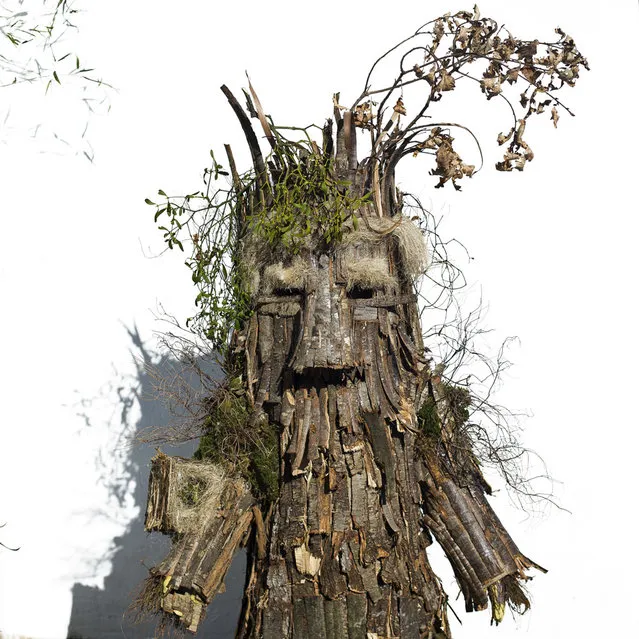
A man dressed as a  “Trapajon”, representing entities of nature, poses for a picture after taking part in the Vijanera Festival in Silio, northern Spain, Sunday, Jan. 6, 2013. The Vijanera masquerade, of pre-Roman origin, is the first carnival of the year in Europe symbolizing the triumph of good over evil and involving the participation of crowds of residents wearing different masks, animal skins and brightly colored clothing with its own complex function and symbolism and becoming the living example of the survival of archaic cults to nature. (Photo by Daniel Ochoa de Olza/AP Photo)

A man dressed as a “Trapajon”, representing entities of nature, poses for a picture after taking part in the Vijanera Festival in Silio, northern Spain, Sunday, Jan. 6, 2013. The Vijanera masquerade, of pre-Roman origin, is the first carnival of the year in Europe symbolizing the triumph of good over evil and involving the participation of crowds of residents wearing different masks, animal skins and brightly colored clothing with its own complex function and symbolism and becoming the living example of the survival of archaic cults to nature. (Photo by Daniel Ochoa de Olza/AP Photo)
Details
19 Jan 2013 13:01:00
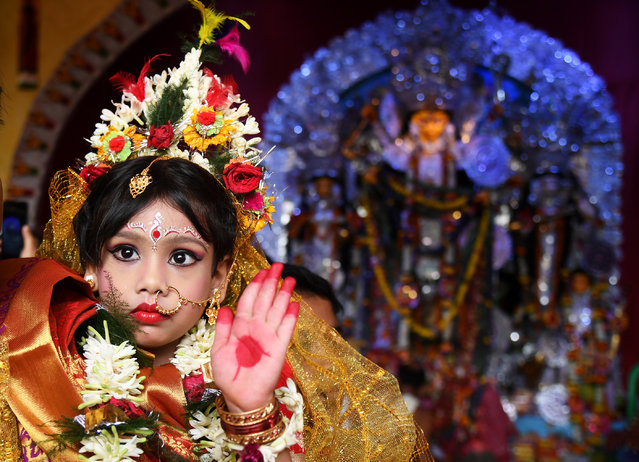
An Indian priest worships six-year-old Hindu girl Anushka Chetterjee (C) dressed as the Hindu goddess Durga at a “pandal” for the celebrations of the “Durga Puja” festival in Kolkata on September 28, 2017. The five-day Durga Puja festival, which commemorates the slaying of the demon king Mahishasur by the goddess Durga, marks the triumph of good over evil. (Photo by Dibyangshu Sarkar/AFP Photo)

An Indian priest worships six-year-old Hindu girl Anushka Chetterjee dressed as the Hindu goddess Durga at a “pandal” for the celebrations of the “Durga Puja” festival in Kolkata on September 28, 2017. The five-day Durga Puja festival, which commemorates the slaying of the demon king Mahishasur by the goddess Durga, marks the triumph of good over evil. (Photo by Dibyangshu Sarkar/AFP Photo)
Details
01 Oct 2017 06:52:00