Loading...
Done
Residents carry a slaughtered pig with a bamboo pole as they walk home on a street, which was shut to traffic due to ice, in Leishan county, Guizhou province January 31, 2015. Blizzards and icy rain that lasted for several days at the end of January have disrupted traffic, collapsed houses and decimated crops in central Chinese provinces, Xinhua News Agency reported. (Photo by Reuters/Stringer)

Residents carry a slaughtered pig with a bamboo pole as they walk home on a street, which was shut to traffic due to ice, in Leishan county, Guizhou province January 31, 2015. Blizzards and icy rain that lasted for several days at the end of January have disrupted traffic, collapsed houses and decimated crops in central Chinese provinces, Xinhua News Agency reported. (Photo by Reuters/Stringer)
Details
07 Feb 2015 14:03:00
This undated photo provided by NOAA in May 2018 shows aurora australis near the South Pole Atmospheric Research Observatory in Antarctica. When a hole in the ozone formed over Antarctica, countries around the world in 1987 agreed to phase out several types of ozone-depleting chemicals called chlorofluorocarbons (CFCs). Production was banned, emissions fell and the hole shriveled. But according to a study released on Wednesday, May 16, 2018, scientists say since 2013, there’s more of a banned CFC going into the atmosphere. (Photo by Patrick Cullis/NOAA via AP Photo)

This undated photo provided by NOAA in May 2018 shows aurora australis near the South Pole Atmospheric Research Observatory in Antarctica. When a hole in the ozone formed over Antarctica, countries around the world in 1987 agreed to phase out several types of ozone-depleting chemicals called chlorofluorocarbons (CFCs). Production was banned, emissions fell and the hole shriveled. But according to a study released on Wednesday, May 16, 2018, scientists say since 2013, there’s more of a banned CFC going into the atmosphere. (Photo by Patrick Cullis/NOAA via AP Photo)
Details
15 Aug 2018 00:05:00
A runner takes part in the International World's coldest marathon at minus 53 degrees (–63.4 Fahrenheit) near Oymyakon, the republic of Sakha, also known as Yakutia, Russian Far East, Saturday, January 22, 2022. Sixty five runners, including athletes from the United Arab Emirates, United States and Belarus, started the run at extremely low temperature in Oymyakon, Yakutia's Pole of Cold. The international team of men and women ran full distance and half-marathon. (Photo by Ivan Nikiforov/AP Photo)

A runner takes part in the International World's coldest marathon at minus 53 degrees (–63.4 Fahrenheit) near Oymyakon, the republic of Sakha, also known as Yakutia, Russian Far East, Saturday, January 22, 2022. Sixty five runners, including athletes from the United Arab Emirates, United States and Belarus, started the run at extremely low temperature in Oymyakon, Yakutia's Pole of Cold. The international team of men and women ran full distance and half-marathon. (Photo by Ivan Nikiforov/AP Photo)
Details
03 Feb 2022 07:25:00
Masked dancers perform a ritualistic dance at Kathmandu Durbar Square during the procession of erecting a sacred pole locally called “Ya: Shi”, marking the formal start of Indra Jatra dedicated to rain god Indra in Kathmandu, Nepal, on September 15, 2024. The festival lasts for eight days with singing, mask dancing, and other rituals. Indra Jatra festival falls on the fourth day of the waxing moon in the month of Bhadra as per the lunar calendar. Legends say that the Indra Jatra festival observes the victory of the gods over the demons to release Jayanta, the son of Lord Indra. Indra, the god of rain, is worshiped in this festival primarily celebrated by the Newar communities following both Hinduism and Buddhism. (Photo by Subaas Shrestha/NurPhoto/Rex Features/Shutterstock)

Masked dancers perform a ritualistic dance at Kathmandu Durbar Square during the procession of erecting a sacred pole locally called “Ya: Shi”, marking the formal start of Indra Jatra dedicated to rain god Indra in Kathmandu, Nepal, on September 15, 2024. (Photo by Subaas Shrestha/NurPhoto/Rex Features/Shutterstock)
Details
24 Sep 2024 03:27:00
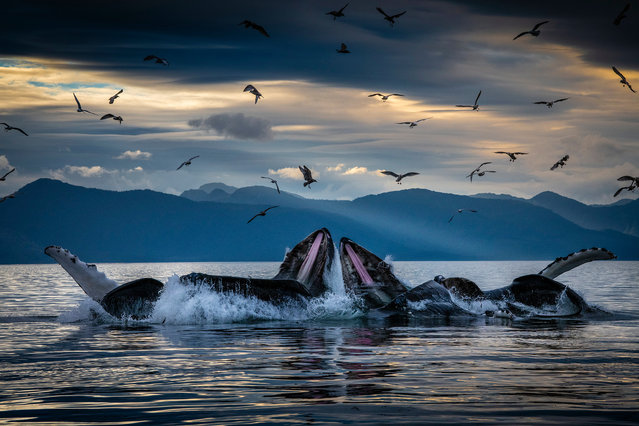
“Secrets of the Whales”. Skerry’s photographs celebrate the lives and culture of whales, illuminating recent research and their diverse behaviours. His latest work focuses on four key species: sperm whales, humpbacks, orca and beluga whales. Humpback whales bubble-net feeding off the coast of Alaska. They work cooperatively to feed on herring by blowing a perfect ring of bubbles underwater to form a net encircling the fish. The whales then swim up through the centre of the bubble net with their mouths open. (Photo by Brian Skerry/National Geographic Photo/Visa pour l'Image)

“Secrets of the Whales”. Skerry’s photographs celebrate the lives and culture of whales, illuminating recent research and their diverse behaviours. His latest work focuses on four key species: sperm whales, humpbacks, orca and beluga whales. Humpback whales bubble-net feeding off the coast of Alaska. They work cooperatively to feed on herring by blowing a perfect ring of bubbles underwater to form a net encircling the fish. The whales then swim up through the centre of the bubble net with their mouths open. (Photo by Brian Skerry/National Geographic Photo/Visa pour l'Image)
Details
04 Sep 2021 09:02:00
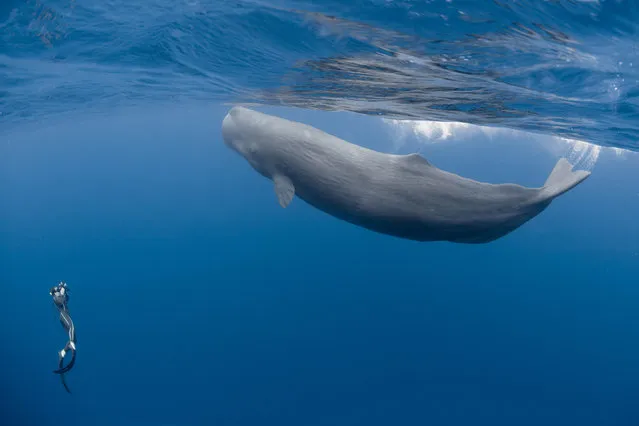
These images show the unique bond a group of free divers formed with gigantic sperm whales. Swimming just inches away from the huge mammals, the divers are dwarfed in size, made to look like specks in comparison. The photos were taken by renowned underwater photographers Alexandre Roubaud and Alexandre Voyer, who are based in Paris but travel the world to capture such stunning imagery. Here: a diver with a sperm whales. (Photo by Alexandre Roubaud/Alexandre Voyer/Caters News)

These images show the unique bond a group of free divers formed with gigantic sperm whales. Swimming just inches away from the huge mammals, the divers are dwarfed in size, made to look like specks in comparison. The photos were taken by renowned underwater photographers Alexandre Roubaud and Alexandre Voyer, who are based in Paris but travel the world to capture such stunning imagery. Here: a diver with a sperm whales. (Photo by Alexandre Roubaud/Alexandre Voyer/Caters News)
Details
16 Nov 2015 08:06:00
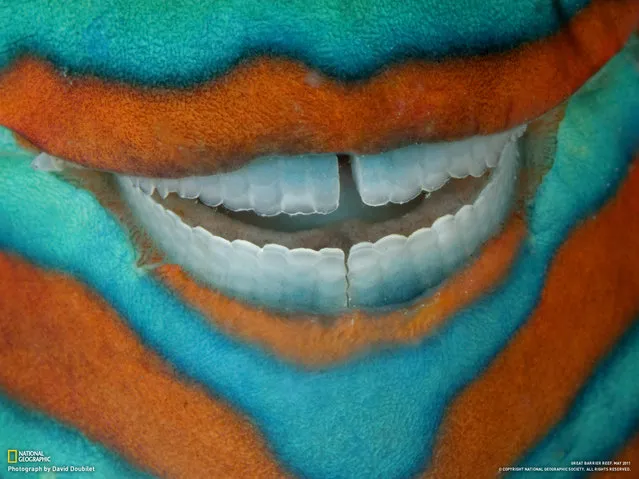
Photographers: David Doubilet

“David Doubilet (born 28 November 1946) is a well known underwater photographer known primarily for his work published in National Geographic Magazine. He was born in New York and started taking photos underwater at the young age of 12. He started with a Brownie Hawkeye in a rubber anesthesiologist's bag to keep the water out of the camera. During his summer holidays, he spent his time along the New Jersey coast. He later worked as a diver and photographer for the Sandy Hook Marine Laboratories in New Jersey. He also spent much time in the Caribbean. While a dive instructor in the Bahamas he found his motivation to capture the beauty of the sea and everything in it”. – Wikipedia. (Photo by David Doubilet/National Geographic)
Details
16 May 2012 12:21:00
Synchronized Swimming Turtles

These talented turtles have been "snapped" performing for the camera as they practice their synchronized swimming routine. Photographed underwater by Monste Grillo, 36, from Tenerife, Spain, the turtles are seen swimming in unison as well as touching fins as they circle towards the surface. After spending hours in the water off the coast of the Canary Islands in 2012, the photographs capture the gentle nature of the creatures as well as giving a fascinating glimpse into their behavior in the wild. (CATERS NEWS)
Details
22 Aug 2013 15:56:00