Loading...
Done
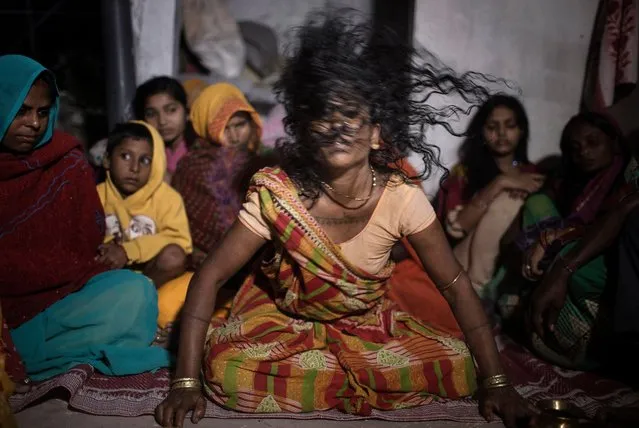
Marani Devi Chaudhary (C), aged 40, performs a ritual in front of shaman Paltan Yadav (unseen) at her home in Rajaur village in Dhanusha district, Nepal, 02 November 2017. The shaman identified Marani Devi to be possessed by their lineage god who was dissatisfied by their worship is thought by the family to have caused them misfortune and is even feared lead to their death. Therefore Marani Devi spent 1,500 USD to perform a healing ritual at the Ghost Festival held at the banks of Kamala River in Dhanusha district two days later. Every family or community has their own sacred god, called 'Kuldevta' in Nepali which means family deity or lineage god. Only family members or people within communities of the same caste can worship to the deity. They have their own rules and regulations of worship which varies from one family and community to another. Being unable to follow the rules and regulations or carry out worship is believed to cause misfortune. (Photo by Narendra Shrestha/EPA/EFE)

Marani Devi Chaudhary (C), aged 40, performs a ritual in front of shaman Paltan Yadav (unseen) at her home in Rajaur village in Dhanusha district, Nepal, 02 November 2017. The shaman identified Marani Devi to be possessed by their lineage god who was dissatisfied by their worship is thought by the family to have caused them misfortune and is even feared lead to their death. (Photo by Narendra Shrestha/EPA/EFE)
Details
17 Nov 2017 06:53:00
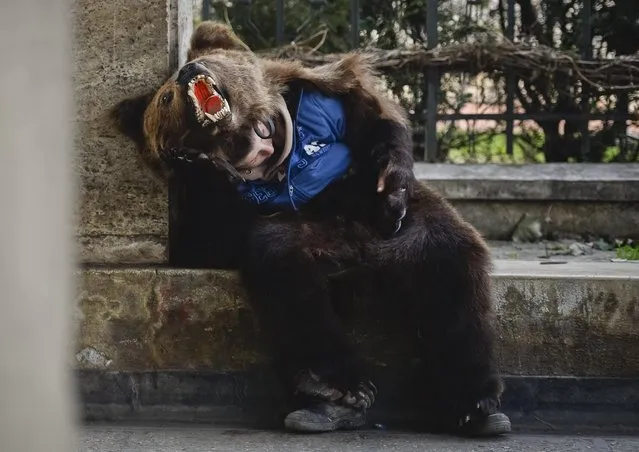
Florin Bors, aged 8 from Bacau, northern Romania, wearing a bear fur takes a break from performing a holiday season ritual in Bucharest, Romania, Tuesday, December 16, 2014. In pre-Christian rural traditions, dancers wearing colored costumes or animal furs, touring house to house in villages singing and dancing to ward off evil. (Photo by Octav Ganea/AP Photo/Mediafax)

Florin Bors, aged 8 from Bacau, northern Romania, wearing a bear fur takes a break from performing a holiday season ritual in Bucharest, Romania, Tuesday, December 16, 2014. In pre-Christian rural traditions, dancers wearing colored costumes or animal furs, touring house to house in villages singing and dancing to ward off evil. In recent years following the economic downturn in Romania, a European Union member since 2007, the tradition has moved to Romania's cities where dancers travel to perform the ritual for money. (Photo by Octav Ganea/AP Photo/Mediafax)
Details
20 Dec 2014 12:07:00
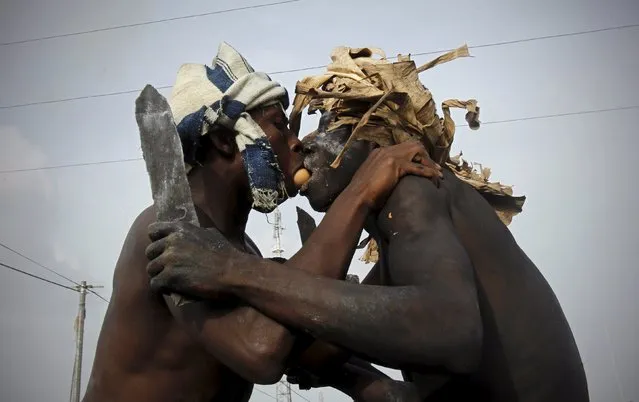
Participants pass an egg using their mouths during a religious ritual as they play the role of traditional fighters in a parade during the Popo (Mask) Carnival of Bonoua, in the east of Abidjan, April 18, 2015. The carnival has its origins in the changes that Aboure youths in Bonoua introduced to the annual festival of yams. (Photo by Luc Gnago/Reuters)

Participants pass an egg using their mouths during a religious ritual as they play the role of traditional fighters in a parade during the Popo (Mask) Carnival of Bonoua, in the east of Abidjan, April 18, 2015. The carnival has its origins in the changes that Aboure youths in Bonoua introduced to the annual festival of yams. (Photo by Luc Gnago/Reuters)
Details
20 Apr 2015 13:36:00
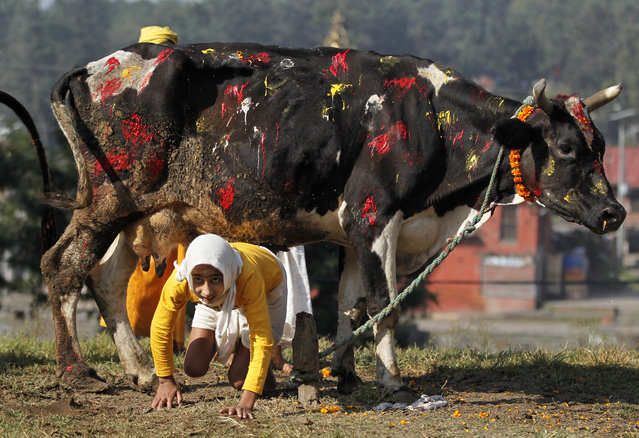
A young Hindu priest crawls under a cow as part of worship rituals during Tihar festival in Kathmandu, Nepal, Sunday, October 30, 2016. Cows are considered sacred to Hindus and are worshipped during Tihar festival, one of the most important Hindu festivals dedicated to the Goddess of wealth Laxmi. (Photo by Niranjan Shrestha/AP Photo)

A young Hindu priest crawls under a cow as part of worship rituals during Tihar festival in Kathmandu, Nepal, Sunday, October 30, 2016. Cows are considered sacred to Hindus and are worshipped during Tihar festival, one of the most important Hindu festivals dedicated to the Goddess of wealth Laxmi. (Photo by Niranjan Shrestha/AP Photo)
Details
31 Oct 2016 11:25:00
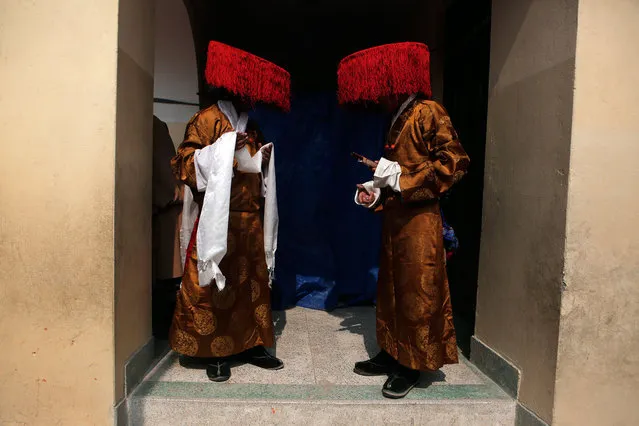
Tibetan men get ready to perform a traditional dance during a special prayer ceremony on the third day of the Tibetan New Year celebrations in Kathmandu, Nepal, Wednesday, March 1, 2017. Tibetans follow this ritual called “sangtsol” to ask for good luck in the new year. (Photo by Niranjan Shrestha/AP Photo)

Tibetan men get ready to perform a traditional dance during a special prayer ceremony on the third day of the Tibetan New Year celebrations in Kathmandu, Nepal, Wednesday, March 1, 2017. Tibetans follow this ritual called “sangtsol” to ask for good luck in the new year. (Photo by Niranjan Shrestha/AP Photo)
Details
03 Mar 2017 00:01:00
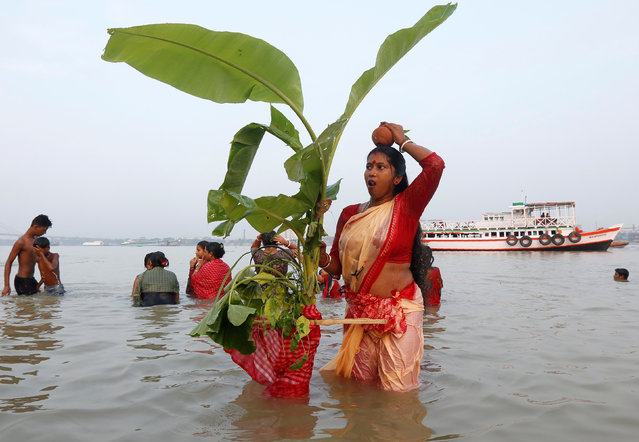
A Hindu devotee ululates as she holds a banana tree trunk after taking a dip in the waters of the Ganges river during a ritual as part of the Durga Puja festival in Kolkata, India, September 27, 2017. (Photo by Rupak De Chowdhuri/Reuters)

A Hindu devotee ululates as she holds a banana tree trunk after taking a dip in the waters of the Ganges river during a ritual as part of the Durga Puja festival in Kolkata, India, September 27, 2017. (Photo by Rupak De Chowdhuri/Reuters)
Details
05 Oct 2017 07:14:00
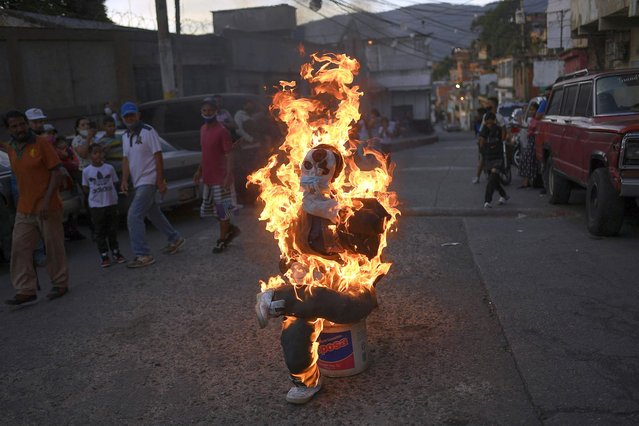
An effigy representing Judas Iscariot burns as some people wearing masks watch during Holy Week in the Catia neighborhood of Caracas, Venezuela, Sunday, April 4, 2021. The Burning of Judas is an Easter-time ritual in many communities, where an effigy of Judas Iscariot is hanged on Good Friday, then burned on Easter Sunday. (Photo by Matias Delacroix/AP Photo)

An effigy representing Judas Iscariot burns as some people wearing masks watch during Holy Week in the Catia neighborhood of Caracas, Venezuela, Sunday, April 4, 2021. The Burning of Judas is an Easter-time ritual in many communities, where an effigy of Judas Iscariot is hanged on Good Friday, then burned on Easter Sunday. (Photo by Matias Delacroix/AP Photo)
Details
22 Apr 2021 09:53:00
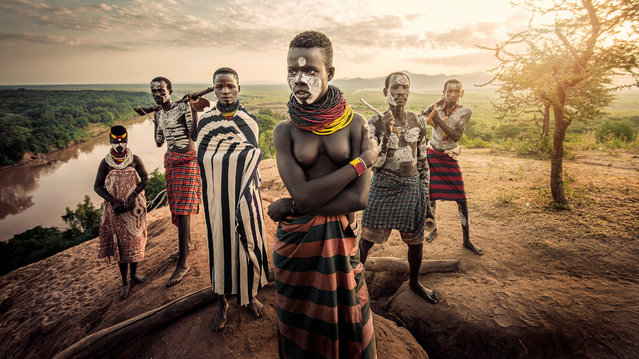
“People of the River”. This is a Karo tribe family; father, mother, two sisters and two brothers. The tribe, who live along the Omo River in east Africa, incorporate rich symbolism into their rituals by using ornate body art, headdresses and body scarification to express beauty and significance. (Photo by Jatenipat Ketpradit/International Portrait Photographer of the Year)

“People of the River”. This is a Karo tribe family; father, mother, two sisters and two brothers. The tribe, who live along the Omo River in east Africa, incorporate rich symbolism into their rituals by using ornate body art, headdresses and body scarification to express beauty and significance. (Photo by Jatenipat Ketpradit/International Portrait Photographer of the Year)
Details
04 Jul 2021 09:39:00