Loading...
Done
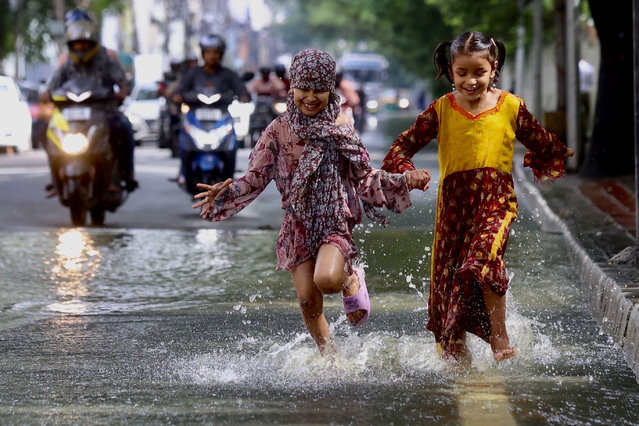
Childrens play in the waterlogged streets following heavy rain in Bangalore, India, 21 October 2024. India Meteorological Department (IMD), weather department issued an orange alert amid intermittent rain. Due to heavy rains in Bangalore, schools are shut down today, and private offices have asked their employees to work from home, and several trees are uprooted. This comes owing to a well-marked low-pressure area over central parts of the south Bay of Bengal. (Photo by Jagadeesh N.V./EPA)

Childrens play in the waterlogged streets following heavy rain in Bangalore, India, 21 October 2024. India Meteorological Department (IMD), weather department issued an orange alert amid intermittent rain. Due to heavy rains in Bangalore, schools are shut down today, and private offices have asked their employees to work from home, and several trees are uprooted. This comes owing to a well-marked low-pressure area over central parts of the south Bay of Bengal. (Photo by Jagadeesh N.V./EPA)
Details
02 Nov 2024 02:47:00
A young worshipper holds a lotus flower as Buddhist monks gather at Wat Arun Buddhist temple during Asaha Bucha day in Bangkok on July 20, 2024. (Photo by Chanakarn Laosarakham/AFP Photo)

A young worshipper holds a lotus flower as Buddhist monks gather at Wat Arun Buddhist temple during Asaha Bucha day in Bangkok on July 20, 2024. (Photo by Chanakarn Laosarakham/AFP Photo)
Details
08 Aug 2024 05:47:00
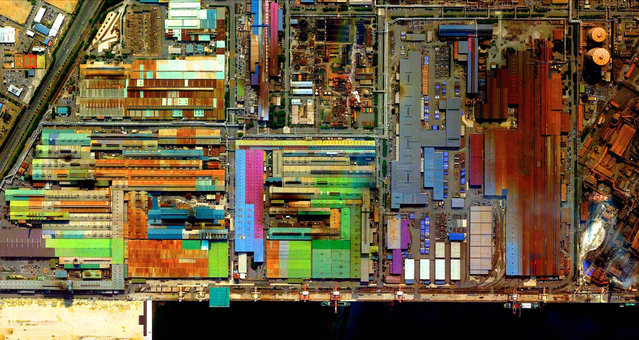
Industrial Sector, Tokai, Japan. (Photo by Benjamin Grant/Digital Globe/Caters News)

This series of pictures shot by satellite, show the man-made world as astronauts see it. Artist Benjamin Grant uses Google Earth to find the most compelling satellite images of human civilization. The stunning pictures of sprawling metropolises and vast reservoirs are sometimes unidentifiable until zoomed in. In order to find an extraordinary picture in the practically endless supply of satellite data, Benjamin focuses on the themes of current events or environmental issues. Here: Industrial Sector, Tokai, Japan. (Photo by Benjamin Grant/Digital Globe/Caters News)
Details
04 Feb 2015 12:21:00
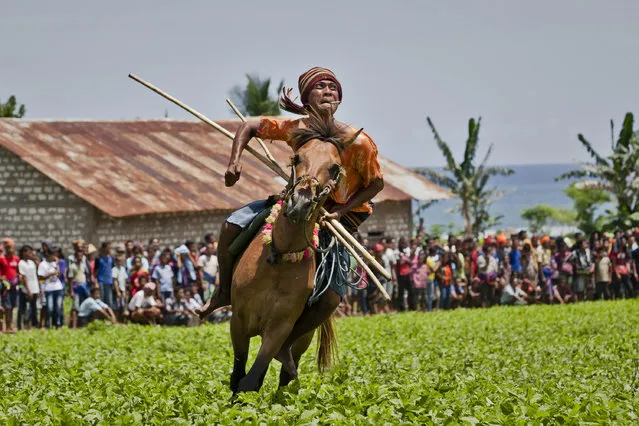
A Pasola rider reacts after throwing his spear during the Pasola war festival at Ratenggaro village on March 22, 2014 in Sumba Island, Indonesia. The Pasola Festival is an important annual event to welcome the new harvest season, which coincides with the arrival of  “Nyale” sea worms during February or March each year. Pasola, an ancient ritual fighting game, involves two teams of men on horseback charging towards each other while trying to hit their rivals with “pasol” javelins and avoid being hit themselves. (Photo by Ulet Ifansasti/Getty Images)

A Pasola rider reacts after throwing his spear during the Pasola war festival at Ratenggaro village on March 22, 2014 in Sumba Island, Indonesia. The Pasola Festival is an important annual event to welcome the new harvest season, which coincides with the arrival of “Nyale” sea worms during February or March each year. Pasola, an ancient ritual fighting game, involves two teams of men on horseback charging towards each other while trying to hit their rivals with “pasol” javelins and avoid being hit themselves. (Photo by Ulet Ifansasti/Getty Images)
Details
25 Mar 2014 07:54:00
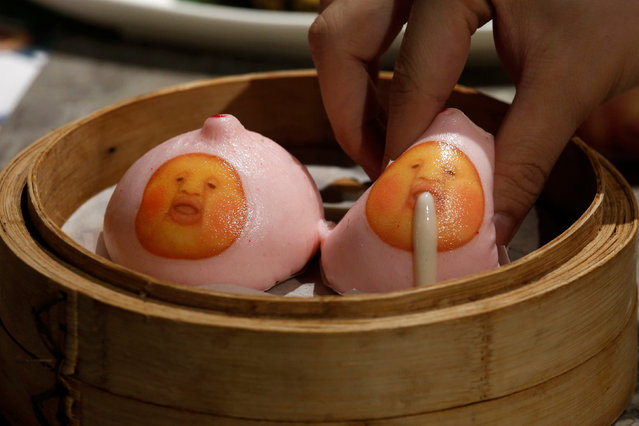
A milk custard bun made to resemble one of the popular Japanese “Kobitos” characters is squeezed during a display for the photographer at Dim Sum Icon restaurant in Hong Kong, China July 25, 2016. A dim sum restaurant in Hong Kong encourages diners to play with their food, and the result will either disgust or delight you. At Dim Sum Icon customers can squeeze a strange creature to poo or vomit on their plate before eating it. Hungry punters poke a hole into the mouth – or the rear – of the dim sum with a chopstick, squeeze it and watch the brown or white cream ooze out. (Photo by Bobby Yip/Reuters)

A milk custard bun made to resemble one of the popular Japanese “Kobitos” characters is squeezed during a display for the photographer at Dim Sum Icon restaurant in Hong Kong, China July 25, 2016. A dim sum restaurant in Hong Kong encourages diners to play with their food, and the result will either disgust or delight you. At Dim Sum Icon customers can squeeze a strange creature to poo or vomit on their plate before eating it. Hungry punters poke a hole into the mouth – or the rear – of the dim sum with a chopstick, squeeze it and watch the brown or white cream ooze out. The unique dim sums are made with a face to resemble Japanese Kobitos characters. (Photo by Bobby Yip/Reuters)
Details
31 Jul 2016 11:25:00
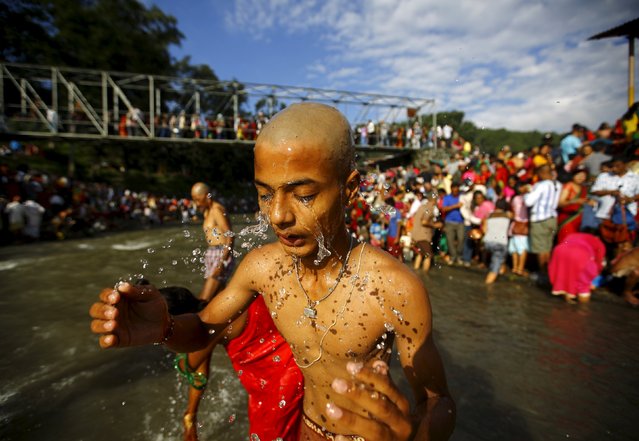
A Hindu devotee performs a ritual on Bagmati River during Kuse Aunse (Father's Day) at Gokarna Temple in Kathmandu, Nepal September 13, 2015. (Photo by Navesh Chitrakar/Reuters)

A Hindu devotee performs a ritual on Bagmati River during Kuse Aunse (Father's Day) at Gokarna Temple in Kathmandu, Nepal September 13, 2015. Hindus all over the country, whose fathers have passed away, come to the temple for worship, holy dips, and to present offerings on this occasion. (Photo by Navesh Chitrakar/Reuters)
Details
14 Sep 2015 13:20:00
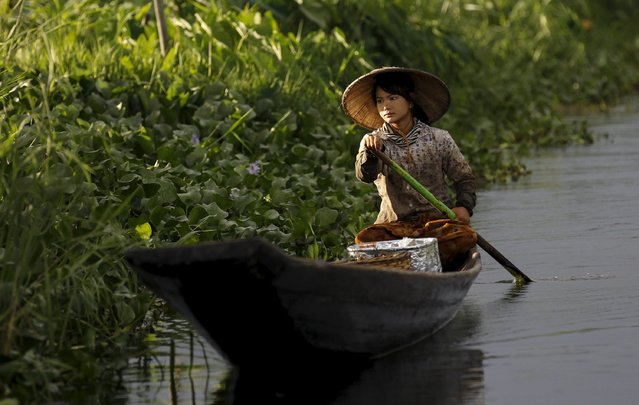
A woman rows her boat as she harvests tomatoes on Inle lake, in Myanmar's Shan State September 4, 2015. (Photo by Soe Zeya Tun/Reuters)

A woman rows her boat as she harvests tomatoes on Inle lake, in Myanmar's Shan State September 4, 2015. Inle is one of the country's most popular tourist sites. (Photo by Soe Zeya Tun/Reuters)
Details
06 Sep 2015 13:37:00
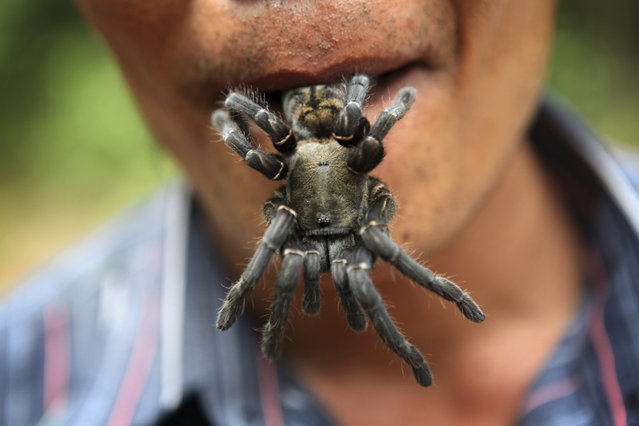
A Cambodian tuk tuk driver and guide with a tarantula in his mouth shortly after is was dug from the ground on June 7, 2010 in Skuon, Kampong Cham Province, Cambodia. The trade for spiders and other insects as food and for medicinal purposes has been in effect since the 1970's in Cambodia but only very recently have tourists been finding a way to see where the spiders are hunted in the nearby countryside. One guide, who can be found in Kampong Cham Town has started offering tours to tourists who can find him. (Photo by Tim Whitby/Getty Images)

A Cambodian tuk tuk driver and guide with a tarantula in his mouth shortly after is was dug from the ground on June 7, 2010 in Skuon, Kampong Cham Province, Cambodia. The trade for spiders and other insects as food and for medicinal purposes has been in effect since the 1970's in Cambodia but only very recently have tourists been finding a way to see where the spiders are hunted in the nearby countryside. One guide, who can be found in Kampong Cham Town has started offering tours to tourists who can find him. (Photo by Tim Whitby/Getty Images)
Details
04 Sep 2016 09:27:00