Loading...
Done
A woman poses for a picture as bunches of paprika hang on the walls of her house to dry in the village of Donja Lakosnica, Serbia October 6, 2016. Donja Lokosnica is the Serbian “capital of paprika”, since almost all of the 1300 inhabitants are involved in growing paprika. As autumn approaches, the whole village turns red, because of many threads of dried peppers, that hang around Lokosnica, waiting for their winter use. Each of these paprika threads is handmade, still dried according to traditional techniques, assisted solely by the sun and fresh air. (Photo by Marko Djurica/Reuters)

A woman poses for a picture as bunches of paprika hang on the walls of her house to dry in the village of Donja Lakosnica, Serbia October 6, 2016. Donja Lokosnica is the Serbian “capital of paprika”, since almost all of the 1300 inhabitants are involved in growing paprika. As autumn approaches, the whole village turns red, because of many threads of dried peppers, that hang around Lokosnica, waiting for their winter use. Each of these paprika threads is handmade, still dried according to traditional techniques, assisted solely by the sun and fresh air. (Photo by Marko Djurica/Reuters)
Details
08 Oct 2016 12:04:00
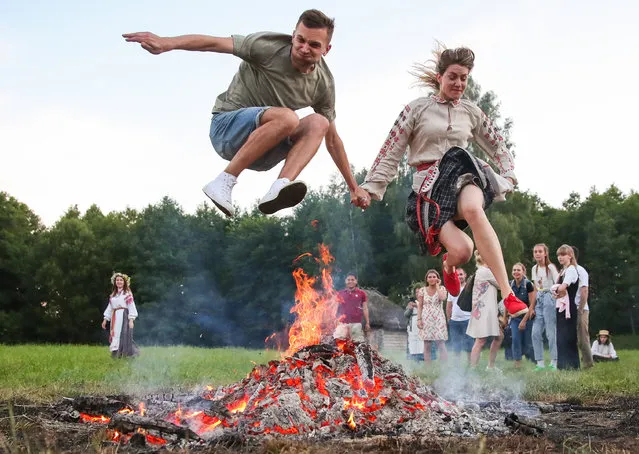
A man and a woman jump over a bonfire during Ivan Kupala Day celebrations held by the Belarusian State Museum of Folk Architecture and Rural Lifestyle in the village of Ozertso near Minsk, Belarus on July 4, 2020. Ivan Kupala Day, also known as Ivana-Kupala or Kupala Night, is a traditional pagan holiday celebrated in eastern Slavic cultures. Various rituals are traditionally performed on Kupala Night, including making flower wreaths, fortune-telling, jumping over bonfires, and burning a wheel-like effigy symbolizing the sun. (Photo by Natalia Fedosenko/TASS)

A man and a woman jump over a bonfire during Ivan Kupala Day celebrations held by the Belarusian State Museum of Folk Architecture and Rural Lifestyle in the village of Ozertso near Minsk, Belarus on July 4, 2020. Ivan Kupala Day, also known as Ivana-Kupala or Kupala Night, is a traditional pagan holiday celebrated in eastern Slavic cultures. Various rituals are traditionally performed on Kupala Night, including making flower wreaths, fortune-telling, jumping over bonfires, and burning a wheel-like effigy symbolizing the sun. (Photo by Natalia Fedosenko/TASS)
Details
07 Jul 2020 00:07:00
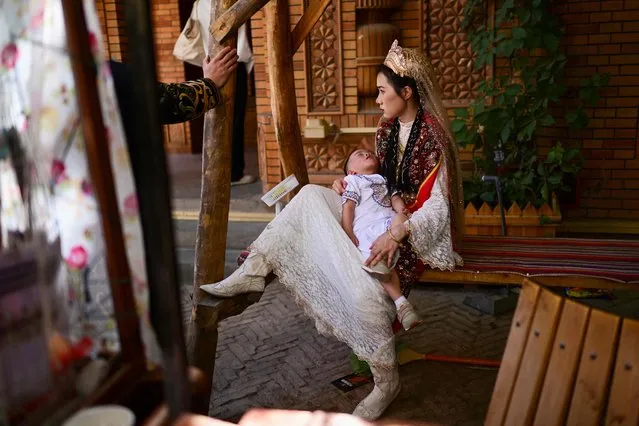
This photo taken on July 13, 2023 shows a woman wearing traditional Uyghur attire posing for photos in the Old Kashgar tourist area in China's northwestern Xinjiang region. Chinese travellers throng the bazaars of old Kashgar, munching mutton kebabs and soaking up heavily commodified Uyghur culture – part of a government push to remould troubled Xinjiang into a tourism paradise. (Photo by Pedro Pardo/AFP Photo)

This photo taken on July 13, 2023 shows a woman wearing traditional Uyghur attire posing for photos in the Old Kashgar tourist area in China's northwestern Xinjiang region. Chinese travellers throng the bazaars of old Kashgar, munching mutton kebabs and soaking up heavily commodified Uyghur culture – part of a government push to remould troubled Xinjiang into a tourism paradise. (Photo by Pedro Pardo/AFP Photo)
Details
27 Sep 2023 02:44:00
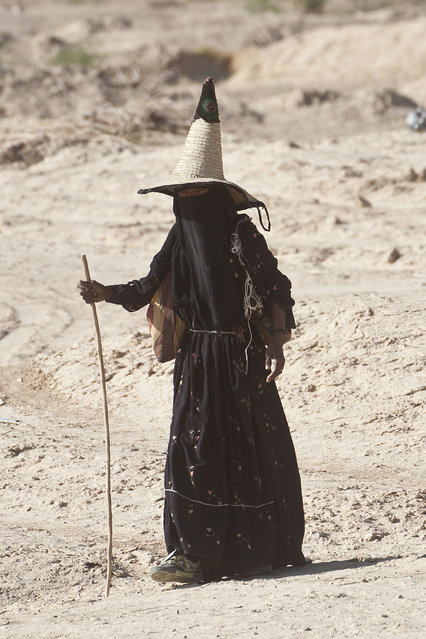
Wadi Hadhramaut, Hadhramaut Governorate, Yemen: women in abayas and traditional straw hats – conical witches hats, known as madhalla. (Photo by Eric Lafforgue)

“Hadhramaut (Hadhramout, Hadramawt or Ḥaḍramūt) is the formerly independent Qu'aiti state and Kathiri sultanate encompassing a historical region of the south Arabian Peninsula along the Gulf of Aden in the Arabian Sea, extending eastwards from Yemen to the borders of the Dhofar region of Oman. The name of the region is currently retained in the smaller Hadhramaut Governorate of the Republic of Yemen. The people of Hadhramaut are called Hadhramis and speak Hadhrami Arabic”. – Wikipedia

Photo: Wadi Hadhramaut, Hadhramaut Governorate, Yemen: A woman in abayas and traditional straw hats - conical witches hats, known as madhalla. (Photo by Eric Lafforgue)
Details
08 Jan 2013 11:45:00
A woman is helped with adorning her hair with jewelry, part of the traditional clothing known as “Pollera”, before the annual Thousand Polleras parade in Las Tablas, in the province of Los Santos January 10, 2015. According to local residents, the Pollera dates back to the 18th century and was worn by the Spanish lower classes. (Photo by Carlos Jasso/Reuters)

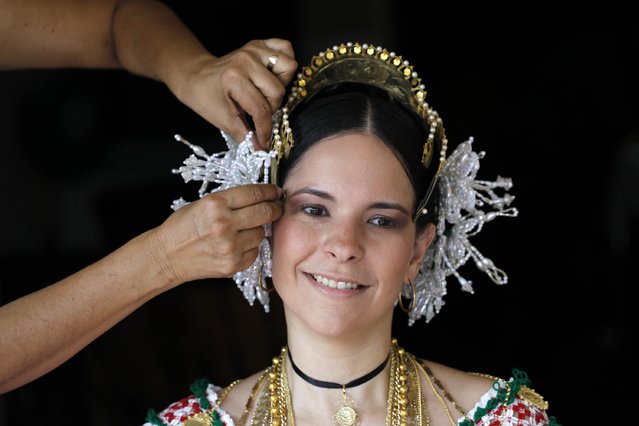
A woman is helped with adorning her hair with jewelry, part of the traditional clothing known as “Pollera”, before the annual Thousand Polleras parade in Las Tablas, in the province of Los Santos January 10, 2015. According to local residents, the Pollera dates back to the 18th century and was worn by the Spanish lower classes. Today, it has become the Panamanian national costume. The dress is made entirely by hand and the jewellery worn is pure gold and worth thousands of dollars. (Photo by Carlos Jasso/Reuters)
Details
12 Jan 2015 15:46:00
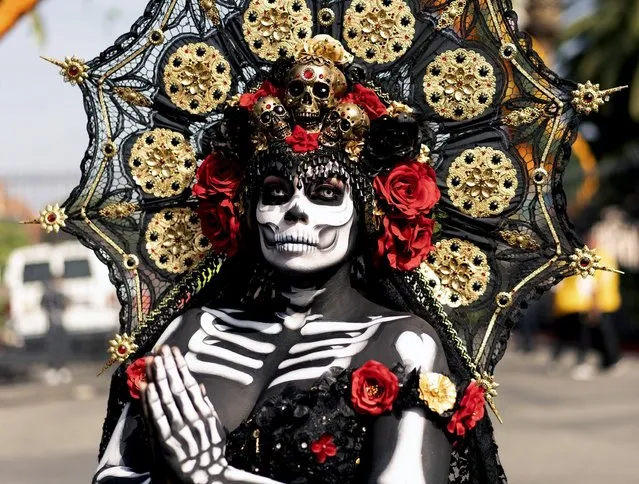
Dressed in traditional make-up and costume a woman participates in the celebration for the Day of the Dead or Día de los Muertos at the Hollywood Forever Cemetery in Los Angeles on Saturday, October 30, 2021. Day of the Dead, is a Mexican holiday where families welcome back the souls of their deceased relatives for a brief reunion that includes food, drink and celebration. (Photo by Richard Vogel/AP Photo)

Dressed in traditional make-up and costume a woman participates in the celebration for the Day of the Dead or Día de los Muertos at the Hollywood Forever Cemetery in Los Angeles on Saturday, October 30, 2021. Day of the Dead, is a Mexican holiday where families welcome back the souls of their deceased relatives for a brief reunion that includes food, drink and celebration. (Photo by Richard Vogel/AP Photo)
Details
09 Nov 2021 07:28:00
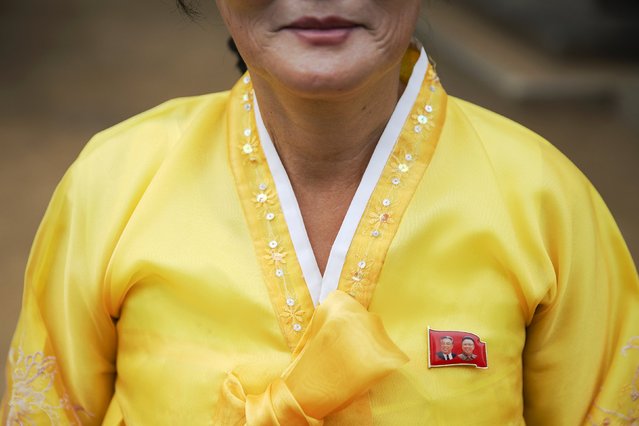
A woman in traditional clothes wears a pin showing North Korea's founder Kim Il-sung (L) and former leader Kim Jong-il, on her dress as she welcomes foreign reporters to a temple during a government organised tour just outside Pyongyang October 8, 2015. North Korea is getting ready to celebrate the 70th anniversary of the founding of its ruling Workers' Party of Korea on October 10. (Photo by Damir Sagolj/Reuters)

A woman in traditional clothes wears a pin showing North Korea's founder Kim Il-sung (L) and former leader Kim Jong-il, on her dress as she welcomes foreign reporters to a temple during a government organised tour just outside Pyongyang October 8, 2015. North Korea is getting ready to celebrate the 70th anniversary of the founding of its ruling Workers' Party of Korea on October 10. (Photo by Damir Sagolj/Reuters)
Details
11 Oct 2015 08:04:00
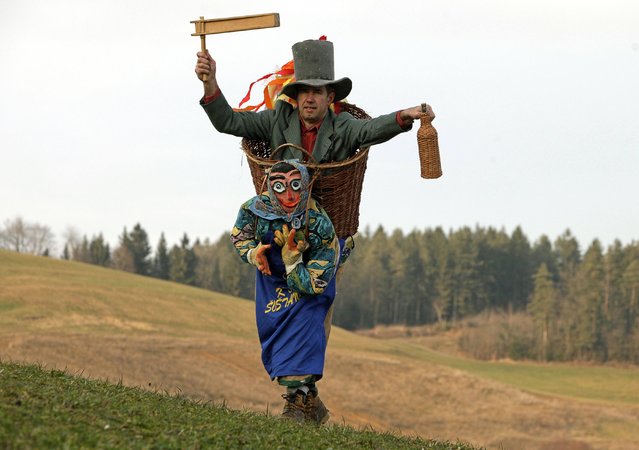
A man wearing a native costume named “Woman Carrying Husband” poses ahead of the Carnival in Sostanj January 15, 2015. (Photo by Srdjan Zivulovic/Reuters)

A man wearing a native costume named “Woman Carrying Husband” poses ahead of the Carnival in Sostanj January 15, 2015. Slovenians and members of various ethnological groups celebrate the annual carnival, also known locally as Pust, by wearing traditional masks and costumes to symbolically “chase away” the winter. Prust runs from February 7 to 17 this year. (Photo by Srdjan Zivulovic/Reuters)
Details
08 Feb 2015 12:07:00