A portrait of Kazakh historical figure Ablai Khan is projected on a building in downtown Astana, Kazakhstan, October 8, 2015. (Photo by Shamil Zhumatov/Reuters)
Commuters by with the buildings of the banking district in background in Frankfurt, Germany, Thursday, February 6, 2020. (Photo by Michael Probst/AP Photo)
In the hours 41-year-old Ralph Savelsberg is not working as a physicist for the Dutch Ministry of Defence, he is recreating classic vehicles in everyones favourite bricks. Ralph said: Building a LEGO set is fun, but I've always preferred to build my own models. Here: “Ghostbusters”. (Photo by Ralph Savelsberg/Caters News)
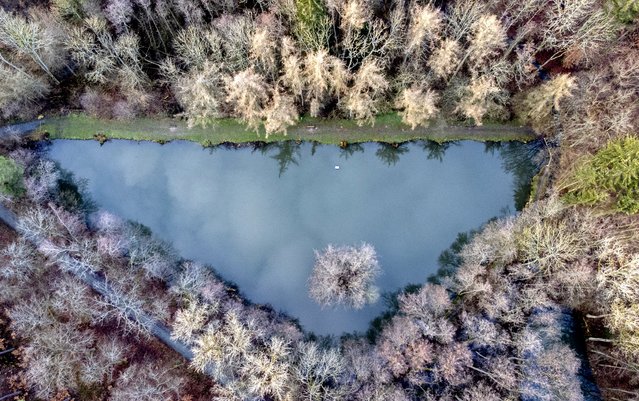
A tree stands in a lake in Usingen near Frankfurt, Germany, Wednesday, March 22, 2023, the World Water Day. World Water Day was established in 1992 by the United Nations to spread awareness about the water condition all over the world. (Photo by Michael Probst/AP Photo)
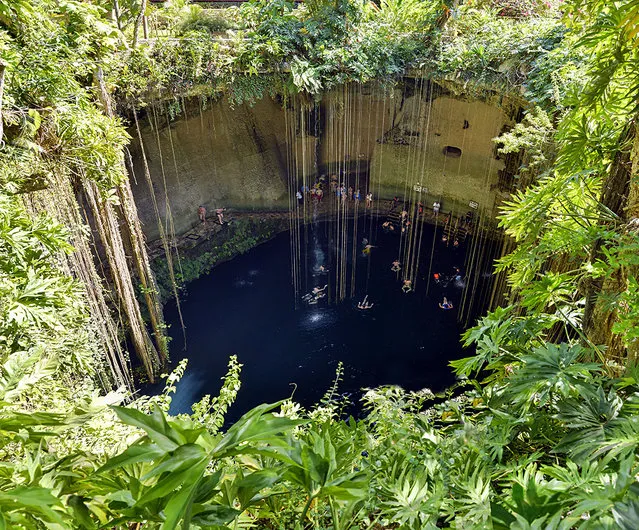
A cenote is a natural phenomenon, a sinkhole in the Earth’s surface. The Yucatan Peninsula in Mexico has an estimated 7,000 cenotes because it is primarily made up of porous limestone. For millions of years, rainfall slowly ate away at the limestone and a huge system of underground caves and caverns was formed. Many filled with water from rain or from the underground water table. When the roof of a water filled cave collapses, a cenote is born. The water found in a cenote may be fresh water, salt water, or both. Structurally it may be completely open, like a lake, almost completely closed with just a small opening at the top, or somewhere in between.