Loading...
Done
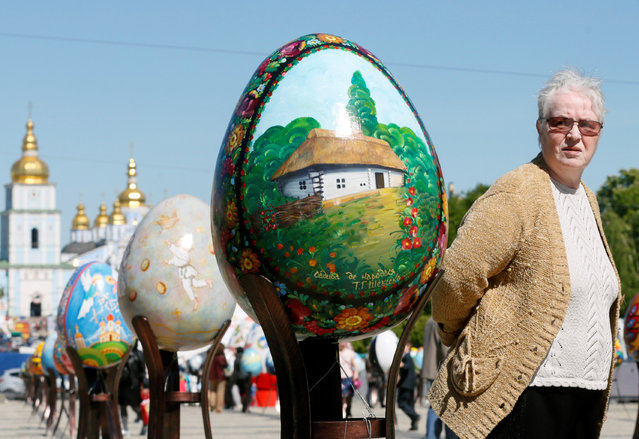
A woman looks at traditional Ukrainian Easter eggs “Pysanka”, installed as part of the upcoming celebrations of Easter, in central Kiev, Ukraine, April 29, 2016. A pysanka is a Ukrainian Easter egg, decorated with traditional Ukrainian folk designs using a wax-resist (batik) method. The word pysanka comes from the verb pysaty, “to write”, as the designs are not painted on, but written with beeswax. Many other eastern European ethnic groups decorate eggs using wax resist for Easter. These include the Belarusians, Bulgarians, Croats, Czechs, Hungarians, Lithuanians, Poles, Romanians, Serbs, Slovaks, Slovenes and Sorbs. (Photo by Valentyn Ogirenko/Reuters)

A woman looks at traditional Ukrainian Easter eggs “Pysanka”, installed as part of the upcoming celebrations of Easter, in central Kiev, Ukraine, April 29, 2016. A pysanka is a Ukrainian Easter egg, decorated with traditional Ukrainian folk designs using a wax-resist (batik) method. The word pysanka comes from the verb pysaty, “to write”, as the designs are not painted on, but written with beeswax. Many other eastern European ethnic groups decorate eggs using wax resist for Easter. These include the Belarusians, Bulgarians, Croats, Czechs, Hungarians, Lithuanians, Poles, Romanians, Serbs, Slovaks, Slovenes and Sorbs. (Photo by Valentyn Ogirenko/Reuters)
Details
30 Apr 2016 09:00:00
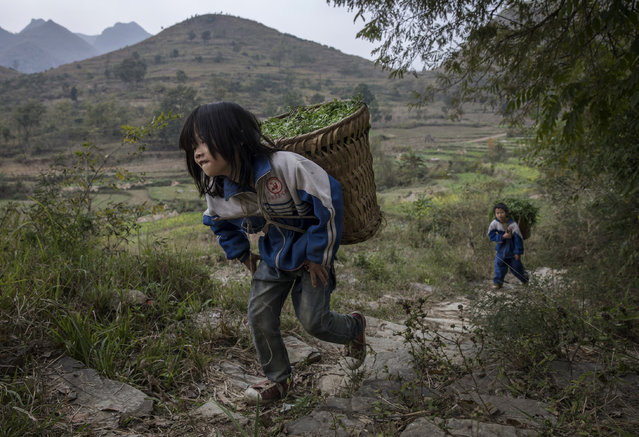
“Left behind” children Luo Hongni, 11 (L) and brother  Luo Gan,10, carry flowers to be used as feed while doing chores in the fields on December 18, 2016 in Anshun, China. (Photo by Kevin Frayer/Getty Images)

“Left behind” children Luo Hongni, 11 (L) and brother Luo Gan,10, carry flowers to be used as feed while doing chores in the fields on December 18, 2016 in Anshun, China. Like millions of Chinese children, the four Luo siblings are being raised by their grandparents in rural China as their parents left to find work in urban areas. (Photo by Kevin Frayer/Getty Images)
Details
18 Feb 2017 00:03:00
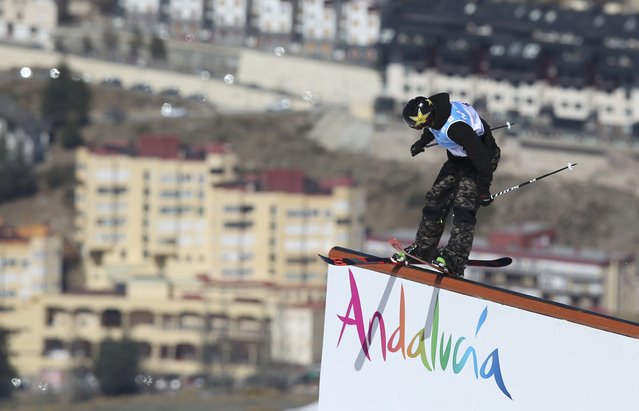
US freestyler, gold medalist Mcrae Williams competes during the men' s SlopeStyle (SS) finals at the FIS Snowboard and Freestyle Ski World Championships 2017 in Sierra Nevada on March 19, 2017. (Photo by Albert Gea/Reuters)

US freestyler, gold medalist Mcrae Williams competes during the men' s SlopeStyle (SS) finals at the FIS Snowboard and Freestyle Ski World Championships 2017 in Sierra Nevada on March 19, 2017. (Photo by Albert Gea/Reuters)
Details
20 Mar 2017 09:56:00
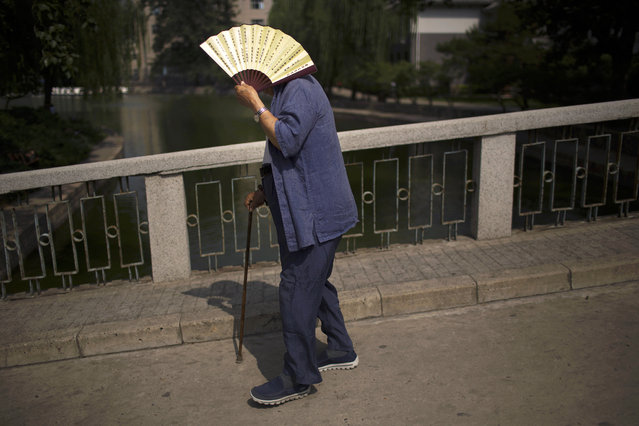
An elderly man uses a fan to shade himself from the sun as he walks in a public park in Beijing, Tuesday, June 7, 2016. Thursday marks the Duanwu Festival, a public holiday in China celebrated with outdoor activities including dragon boat races. (Photo by Mark Schiefelbein/AP Photo)

An elderly man uses a fan to shade himself from the sun as he walks in a public park in Beijing, Tuesday, June 7, 2016. Thursday marks the Duanwu Festival, a public holiday in China celebrated with outdoor activities including dragon boat races. (Photo by Mark Schiefelbein/AP Photo)
Details
08 Jun 2016 10:13:00
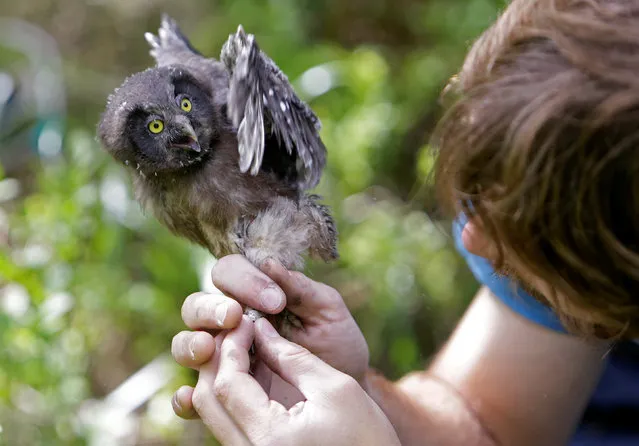
Scientist Jiri Sindelar checks a ring of a Boreal owl chick outside the “Smart Nest Box”, which allows the study of birds by using mounted cameras, in a forest near the village of Mikulov, Czech Republic, June 18, 2016. (Photo by David W. Cerny/Reuters)

Scientist Jiri Sindelar checks a ring of a Boreal owl chick outside the “Smart Nest Box”, which allows the study of birds by using mounted cameras, in a forest near the village of Mikulov, Czech Republic, June 18, 2016. (Photo by David W. Cerny/Reuters)
Details
20 Jun 2016 12:37:00
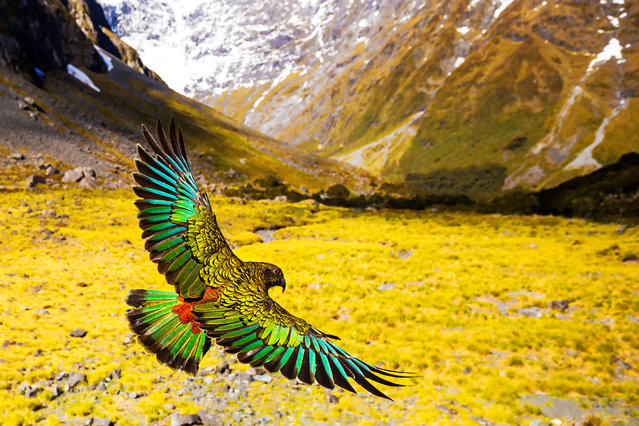
Kea are the only true alpine parrots in the world and thrive as cunning opportunists in the freezing conditions of the Southern Alps. Kea are thought to have developed their wide array of food-finding strategies during the last great ice age, where they learned to adapt using their unusual powers of curiosity. (Photo by Tom Walker/BBC Pictures/The Guardian)

Kea are the only true alpine parrots in the world and thrive as cunning opportunists in the freezing conditions of the Southern Alps. Kea are thought to have developed their wide array of food-finding strategies during the last great ice age, where they learned to adapt using their unusual powers of curiosity. (Photo by Tom Walker/BBC Pictures/The Guardian)
Details
19 Jul 2016 13:03:00
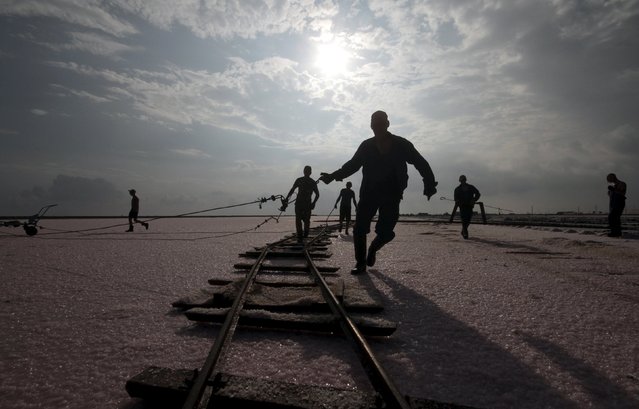
Workers adjust rails at the bed of a drained area of a lake used for the production of salt at the Sasyk-Sivash lake near the city of Yevpatoria, Crimea, September 25, 2015. The area has a long tradition of salt production, prepared from salt flats flooded with water from the Black Sea. (Photo by Pavel Rebrov/Reuters)

Workers adjust rails at the bed of a drained area of a lake used for the production of salt at the Sasyk-Sivash lake near the city of Yevpatoria, Crimea, September 25, 2015. The area has a long tradition of salt production, prepared from salt flats flooded with water from the Black Sea. (Photo by Pavel Rebrov/Reuters)
Details
28 Sep 2015 08:01:00
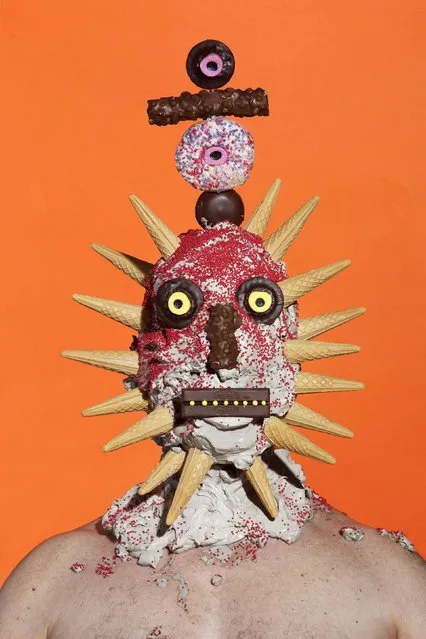
Ice cream cone head. (Photo by James Ostrer/Caters News)

“An artist has slammed junk food culture by creating shocking portraits of models covered in burgers, fries and even ketchup. Some of James Ostrer’s pictures resemble one of Willy Wonka’s nightmares as he uses liquorice for eyes and strawberry bootlaces for hair. In others, the 35-year-old smears his models’ faces with tears of ketchup and uses burgers, fries and sausages for facial features. James made the mouth-watering monstrosities to show the rampant consumption of junk food and how it affects our moods”. – Caters News
Details
15 Aug 2014 09:29:00