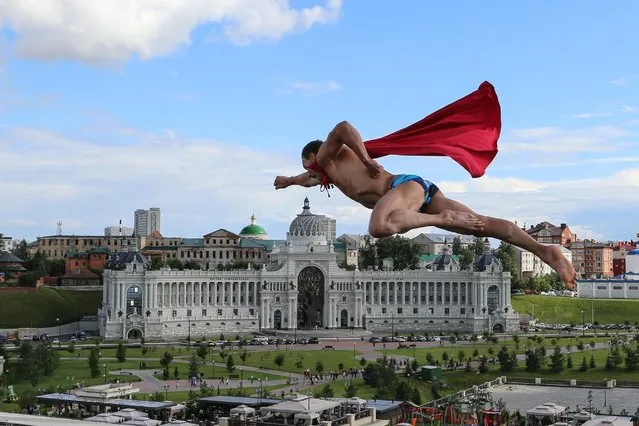
Michal Navratil of the Czech Republic performs after the men's 27 meter high dive final at the Swimming World Championships in Kazan, Russia, Wednesday, August 5, 2015. (Photo by Denis Tyrin/AP Photo)
Gentoo penguins watching Christmas films at the Sea Life London aquarium on November 30, 2020. The attraction has installed two TVs, showing festive films, outside the penguin enclosure to prepare them for the stimulation of guests returning on Wednesday after the UK’s lockdown is lifted. (Photo by Yui Mok/PA Images via Getty Images)
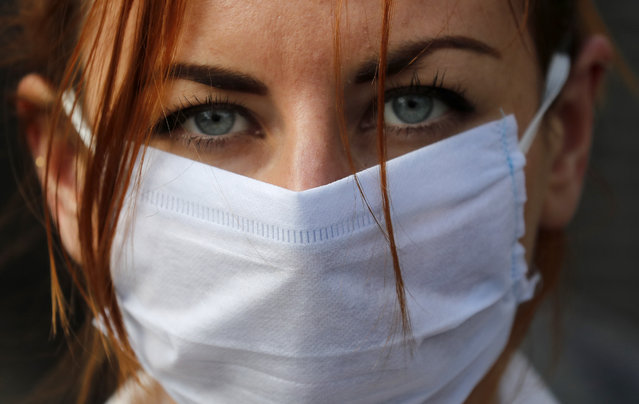
An member of the group “Pause the System” wears a face mask as she protests in front of the entrance to Downing Street in London, Friday, March 20, 2020. For most people, the new coronavirus causes only mild or moderate symptoms, such as fever and cough. For some, especially older adults and people with existing health problems, it can cause more severe illness, including pneumonia. (Photo by Frank Augstein/AP Photo)
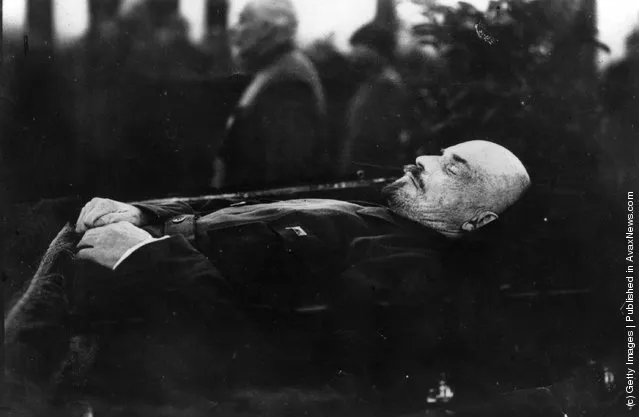
Photo: Vladimir Ilyich Lenin (1870 – 1924) lying in state in the Kremlin. (Photo by Hulton Archive/Getty Images). 1924
Important! For the same article in Russian language click here.
Something quite intriguing is happening within Russian-speaking internet during the last few – should you type a fully academic inquiry (at least, according to Russian academic requirements) in national search engines for "Lenin's mausoleum" – the first thing you get (even in top 10 searches) is website pages talking about black magic and occult. Website authors view this construction differently, but unconditionally agree on one thing: the mausoleum of the "leader of the world proletariat” – the essence of a magical artifact, a sort of “energy vampire”. It was built with a certain purpose: to drain the energy out of miserable Soviet citizens on one hand; and to poison the anthroposphere of one-sixth part of the earth with its vibes (the exact territory that was occupied by the former Soviet Union), depriving the Russian people of will to resist on the other hand. Complete nonsense? No doubt. Nevertheless, an intriguing one. Well, probably because some oddities do exist in mausoleum's history. These oddities are the thing we are going to discuss this time. First, let me refresh you memory on the subject.
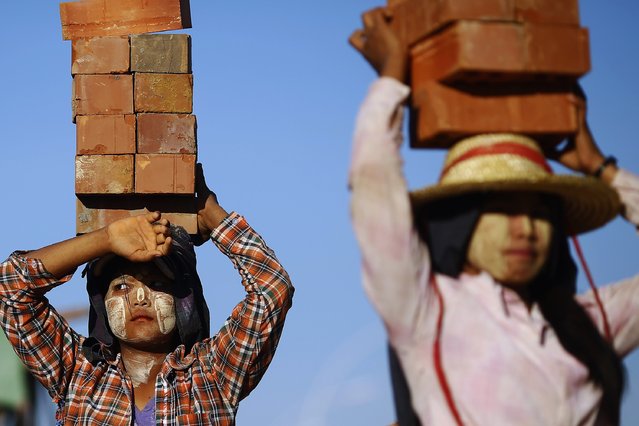
Construction workers carry bricks on their heads near the country's parliament building in Naypyitaw November 11, 2014. Yangon lost its status as Myanmar's capital in 2005, after the former military junta carved a new seat of government from a parched wilderness some 380 km (236 miles) to the north and called it Naypyitaw (“Abode of Kings”). (Photo by Damir Sagolj/Reuters)
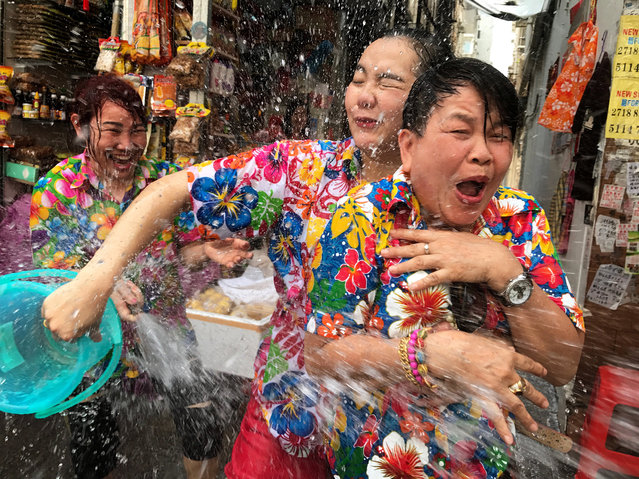
People spray water in the street ahead of “Songkran”, the annual Thai New Year water-throwing festival, in Kowloon City, Hong Kong, China, 09 April 2017. The pouring of water is a key element in the festival as it represents purification and the washing away of one's sins and bad luck for the year. The event also includes a “Miss Songkran” pageant where contestants are clothed in traditional Thai dress, and a winner is crowned. This year's “Songkran” will begin in Thailand on 13 April 2017. (Photo by Alex Hofford/EPA)
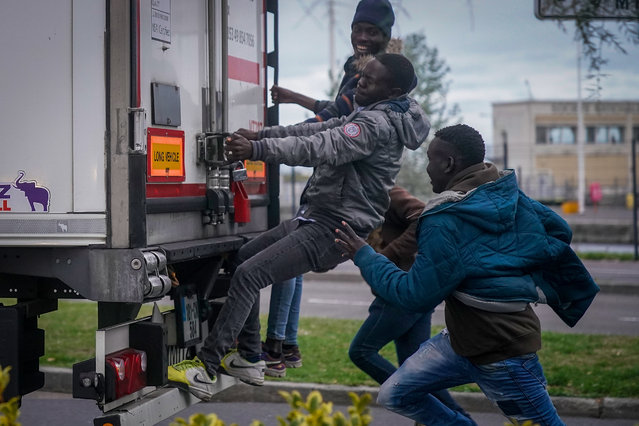
Migrants try to board a truck at Ouistreham ferry port in the hope of reaching the UK on September 12, 2018 in Ouistreham, France. After the clamp down at Calais many young migrants are seeking out new routes to the United Kingdom as stowaways on vehicles making the channel crossing by ferry from French ports. The migrants, of mostly African origin, camp out on the roadside and woodland areas as the authorities prevent the setting up of any camps. (Photo by Christopher Furlong/Getty Images)