A model poses for photos in Times Square while New York Fashion Week is underway in New York on Friday, February 9, 2024. (Photo by Ted Shaffrey/AP Photo)
Firefighters use flashlights to search for survivors among the rubble of collapsed buildings after a landslide hit an industrial park in Shenzhen, Guangdong province, China December 20, 2015. (Photo by Tyrone Siu/Reuters)
A woman washes her dishes outside the temporary shelter built near the houses damaged during an earthquake earlier this year, in Bhaktapur, Nepal December 28, 2015. (Photo by Navesh Chitrakar/Reuters)
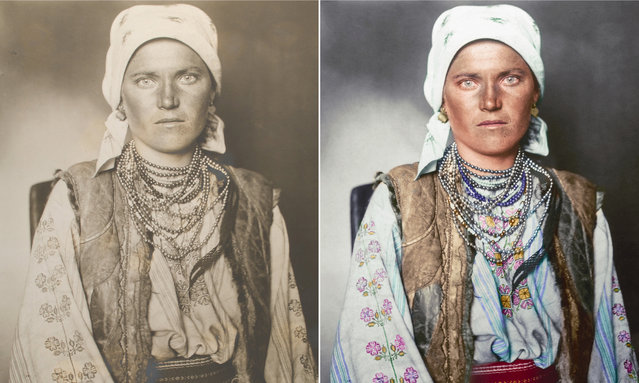
Many of the 12 million people who entered the US through New York’s Ellis Island wore traditional dress from their homelands. Here: A Ruthenian woman circa 1906 from the region historically inhabiting the kingdom of the Rus, incorporating parts of modern-day Slavic speaking countries. Her outfit consists of a shirt and underskirt made from linen embroidered with traditional floral-based patterns. (Photo by Augustus Francis Sherman/New York Public Library/The Guardian)
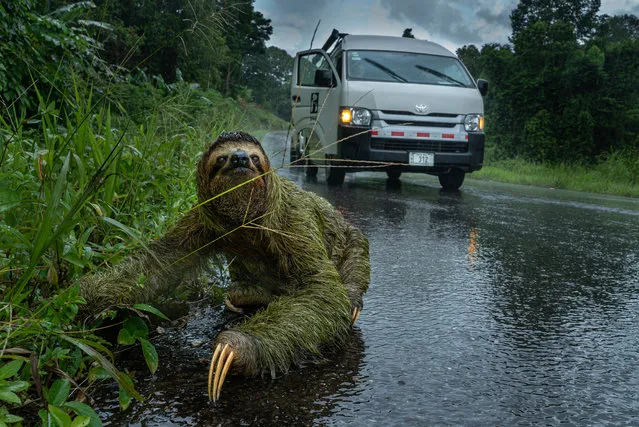
People and Nature category winner: Why did the sloth cross the road? by Andrew Whitworth (Osa Conservation and University of Glasgow), taken in Osa Peninsula, Costa Rica. “I was driving out from the Osa Peninsula, located on the southern Pacific coast of Costa Rica on a dark, stormy day. This female three-toed sloth (Bradypus variegatus) had luckily just about made it across the road, and the drivers of the Toyota on this occasion had spotted her in good time”. (Photo by Andrew Whitworth/2019 British Ecological Society Photography Competition)
An effigy representing Judas Iscariot burns as some people wearing masks watch during Holy Week in the Catia neighborhood of Caracas, Venezuela, Sunday, April 4, 2021. The Burning of Judas is an Easter-time ritual in many communities, where an effigy of Judas Iscariot is hanged on Good Friday, then burned on Easter Sunday. (Photo by Matias Delacroix/AP Photo)