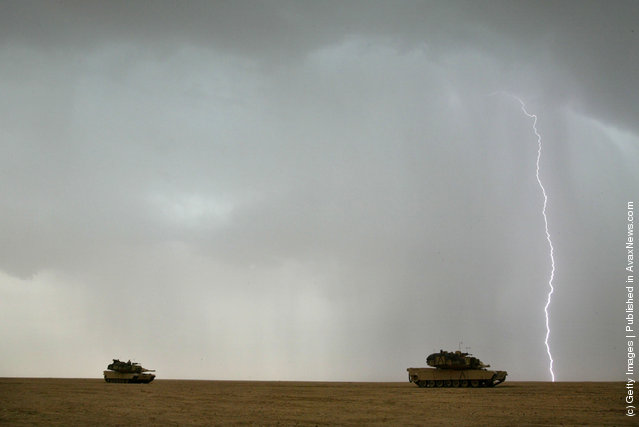
A lighting bolt flashes in the sky as U.S. Army M1A1 Abram tanks roll through the desert December 9, 2002 near the Iraqi border in Kuwait. (Photo by Joe Raedle/Getty Images)
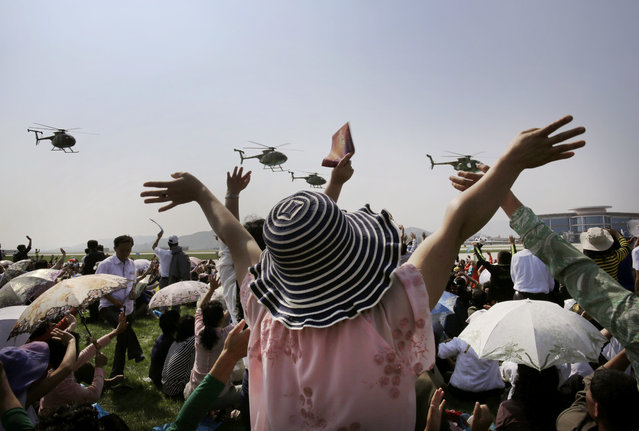
North Koreans wave as Hughes MD-500 helicopters fly past during an aerial display on Saturday, September 24, 2016, in Wonsan, North Korea. North Korea on Saturday opened an air festival featuring sky diving, demonstrations by its air force and lots of beer to promote a newly renovated and upgraded commercial airport in the coastal city of Wonsan that it hopes will draw for foreign tourists. (Photo by Wong Maye-E/AP Photo)
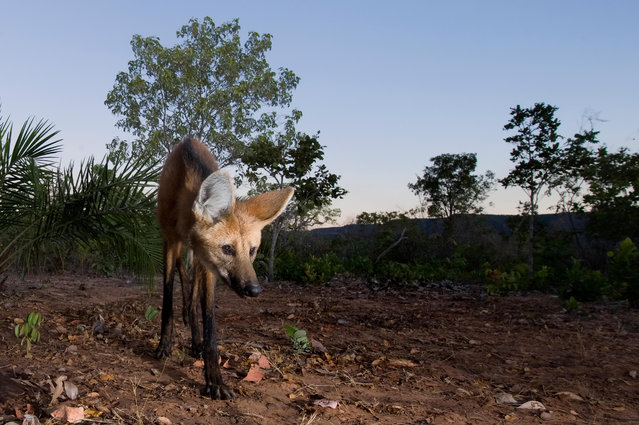
Global wildlife populations will decline by 67% by 2020 unless urgent action is taken to reduce human impact on species and ecosystems, warns the biennial Living Planet Index report from WWF (World Wide Fund for Nature) and ZSL (Zoological Society of London). From elephants to eels, here are some of the wildlife populations most affected by human activity. Here: The maned wolf is among the large mammals in the Brazilian Cerrado that are threatened by the increasing conversion of grasslands into farmland for grazing and growing crops. (Photo by Ben Cranke/Nature Picture Library/Alamy Stock Photo)
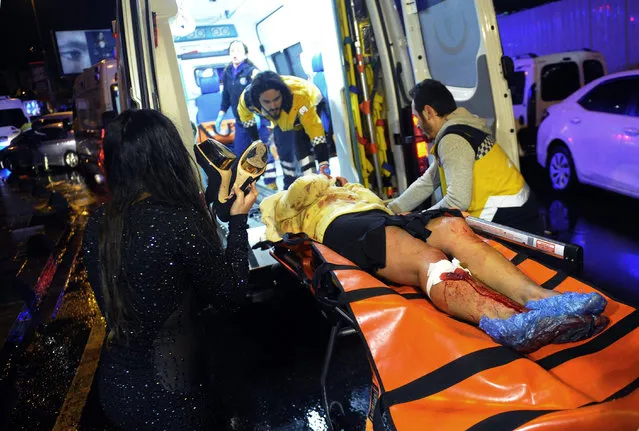
Medics carry a wounded person at the scene after an attack at a popular nightclub in Istanbul, early Sunday, January 1, 2017. Istanbul Governor Vasip Sahin said that an armed assailant has opened fire at a nightclub in Istanbul during New Year's celebrations. Turkish authorities have banned distribution of images relating to the Istanbul attack within Turkey. (Photo by IHA via AP Photo)
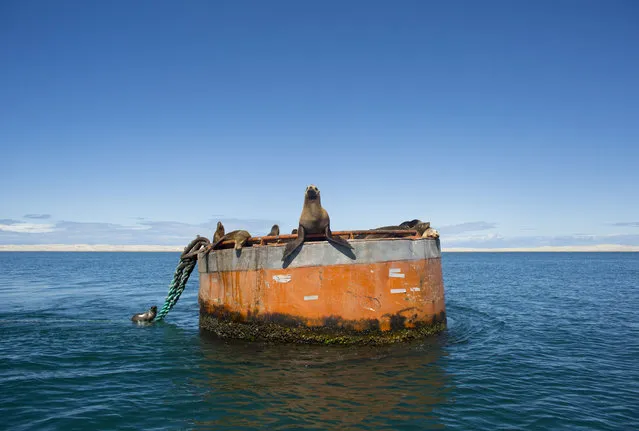
In this March 3, 2015 photo, a group of California sea lions rest on a large bouy in the San Ignacio lagoon, in the Pacific Ocean, near Guerrero Negro, in Mexico's Baja California peninsula. (Photo by Dario Lopez-Mills/AP Photo)
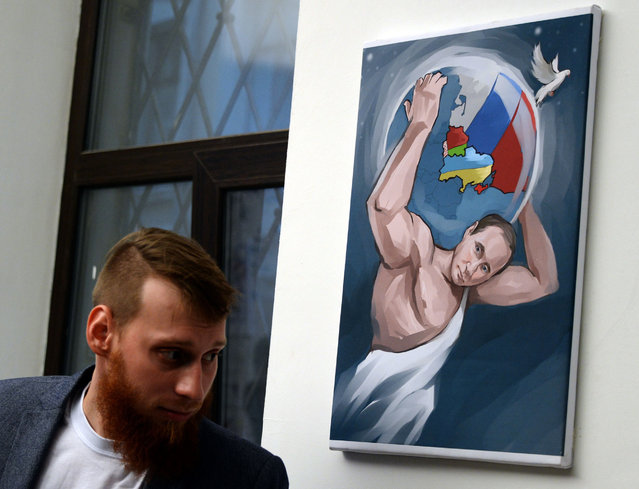
A visitor visit the “12 Labors of Putin” art exhibition on October 6, 2014 marking the 60th birthday of Russia's President Vladimir Putin at the design workshop in Moscow. (Photo by Vasily Maximov/AFP Photo)