Loading...
Done
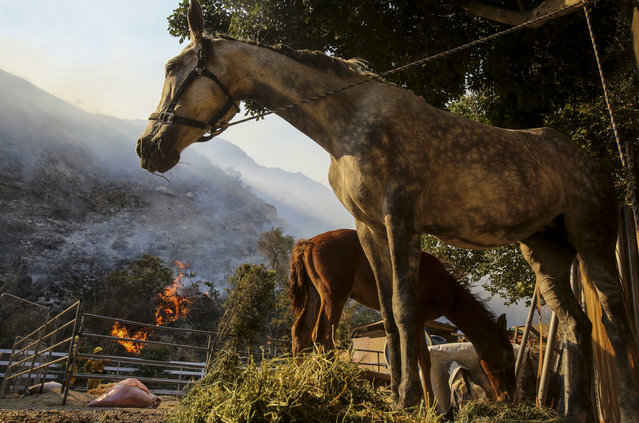
Horses are seen before they are evacuated from a ranch as a wildfire is burning along a hillside in Azusa, Calif., Monday, June 20, 2016. (Photo by Ringo H.W. Chiu/AP Photo)

Horses are seen before they are evacuated from a ranch as a wildfire is burning along a hillside in Azusa, Calif., Monday, June 20, 2016. New wildfires erupted Monday near Los Angeles and chased people from their suburban homes as an intense heatwave stretching from the West Coast to New Mexico blistered the region. (Photo by Ringo H.W. Chiu/AP Photo)
Details
22 Jun 2016 13:19:00
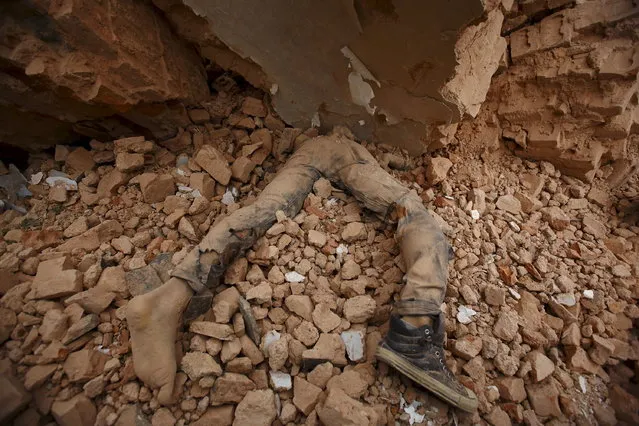
A body of a victim lies trapped in the debris after an earthquake hit, in Kathmandu, Nepal April 25, 2015. (Photo by Navesh Chitrakar/Reuters)

A body of a victim lies trapped in the debris after an earthquake hit, in Kathmandu, Nepal April 25, 2015. Rescue efforts in Nepal are intensifying after nearly 2,000 people were killed on Saturday in the worst earthquake there in more than 80 years. Many countries and charities have offered aid to deal with the disaster. Seventeen people have been killed on Mount Everest by avalanches – the mountain's worst-ever disaster. Meanwhile a powerful aftershock was felt on Sunday in Nepal, India and Bangladesh, and more avalanches were reported near Everest. (Photo by Navesh Chitrakar/Reuters)
Details
26 Apr 2015 09:11:00
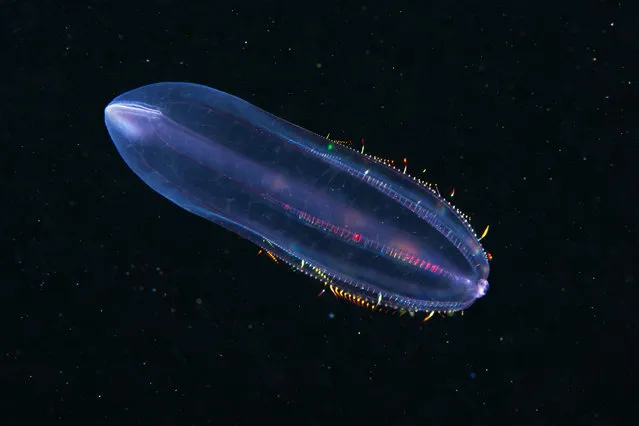
A Comb jelly – Beroe cucumis. (Photo by Alexander Semenovs/Caters News)

Underwater photographer Alexander Semenovs has snapped some of the most stunning, fragile life forms anywhere on planet Earth. Shot in deep, dark conditions, the images continue to provide an insight into what lies beneath, with glowing creatures appearing a lot like aliens in the pitch-black water. Semenovs has shot the likes of bioluminescent jellyfish, aggressive-looking worms and many species that leave a lot to the imagination. The 30-year-old from Moscow does the majority of his work in the White Sea, near the Arctic Circle. Here: A Comb jelly – Beroe cucumis. (Photo by Alexander Semenovs/Caters News)
Details
23 Nov 2015 08:06:00
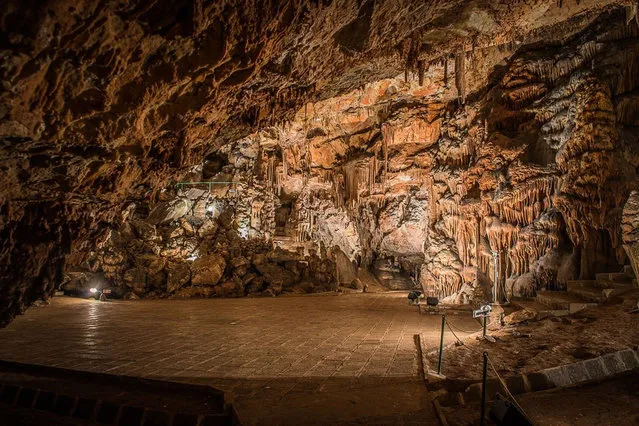
Saeva Dupka Cave

Saeva dupka (Bulgarian: Съева дупка) is a cave in Northern Bulgaria near the village of Brestnitsa, Lovech Province (43°2′N 24°11′E). Its five halls and 400 metres of corridors offer some of the most beautiful cave formations in the country. Besides that the cave has hosted many Choral music performances, thanks to the excellent acoustic conditions. Saeva dupka was named after two brothers Seyu and Sae who used it as a hiding place during the Ottoman occupation of Bulgaria. Recent excavations have showed the cave was inhabited since Roman times. Currently Saeva dupka is one of the 100 Tourist Sites of Bulgaria.
Details
20 Feb 2013 11:30:00
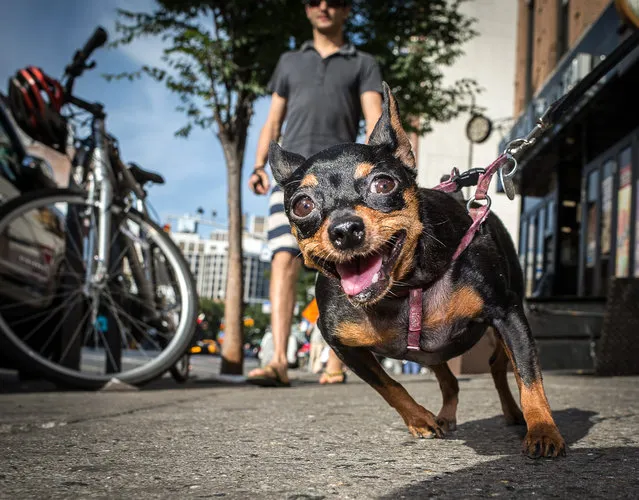
Take my picture! Apartment dogs in the East Village are always happy to be out for a walk. (Photo by Mark McQueen/Caters News Agency)

These hilarious images show dogs enjoying a day out exploring New York’s most iconic tourist hotspots Photographer Mark McQueen captured the canines hanging out near landmarks like the Brooklyn Bridge, on 5th Avenue and Times Square. Here: Take my picture! Apartment dogs in the East Village are always happy to be out for a walk. (Photo by Mark McQueen/Caters News Agency)
Details
03 Nov 2017 07:43:00
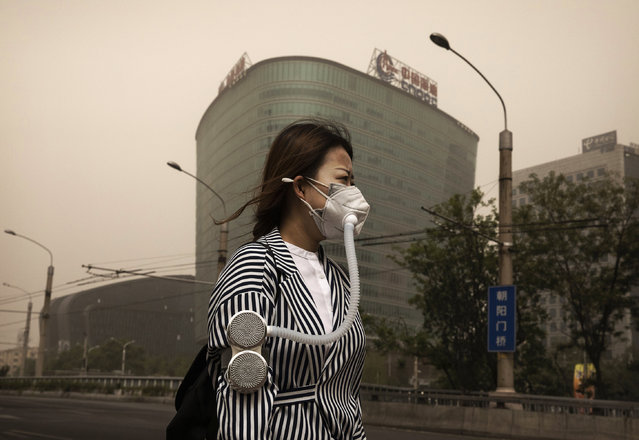
A Chinese woman wears a mask to protect from particles blown in during a sandstorm as she walks in the street on May 4, 2017 in Beijing, China. Sandstorms are common in northern China during the spring season and are caused when heavy winds from Mongolia in the north brings sand and pollutants that can blanket Chinese cities and cause air quality to deteriorate. (Photo by Kevin Frayer/Getty Images)

A Chinese woman wears a mask to protect from particles blown in during a sandstorm as she walks in the street on May 4, 2017 in Beijing, China. Sandstorms are common in northern China during the spring season and are caused when heavy winds from Mongolia in the north brings sand and pollutants that can blanket Chinese cities and cause air quality to deteriorate. (Photo by Kevin Frayer/Getty Images)
Details
12 May 2017 07:06:00
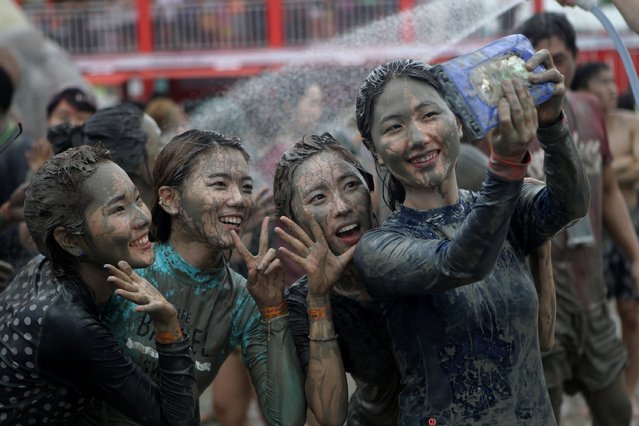
Festival-goers enjoy the mud during the annual Boryeong Mud Festival at Daecheon Beach on July 18, 2015 in Boryeong, South Korea. (Photo by Chung Sung-Jun/Getty Images)

Festival-goers enjoy the mud during the annual Boryeong Mud Festival at Daecheon Beach on July 18, 2015 in Boryeong, South Korea. The mud, which is believed to have benefical effects on the skin due to its mineral content, is sourced from mud flats near Boryeong and transported to the beach by truck. (Photo by Chung Sung-Jun/Getty Images)
Details
19 Jul 2015 10:05:00
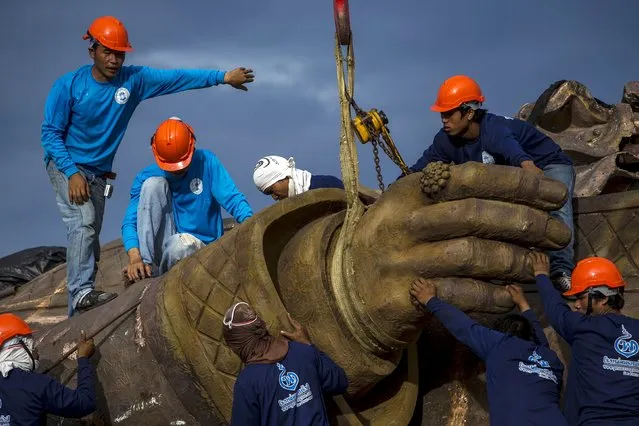
Labourers use a crane to lift the hand of a giant bronze statue of former King Rama I at Ratchapakdi Park in Hua Hin, Prachuap Khiri Khan province, Thailand, August 4, 2015. (Photo by Athit Perawongmetha/Reuters)

Labourers use a crane to lift the hand of a giant bronze statue of former King Rama I at Ratchapakdi Park in Hua Hin, Prachuap Khiri Khan province, Thailand, August 4, 2015. The park is being constructed by the Thai army to honor past Thai monarchs and is situated on an army compound near the Klai Kangwon Palace. The project is estimated to cost about 700 million baht ($20,000,000), according to local media. (Photo by Athit Perawongmetha/Reuters)
Details
05 Aug 2015 14:05:00