
10 May 2012 06:18:00,post received
0 comments

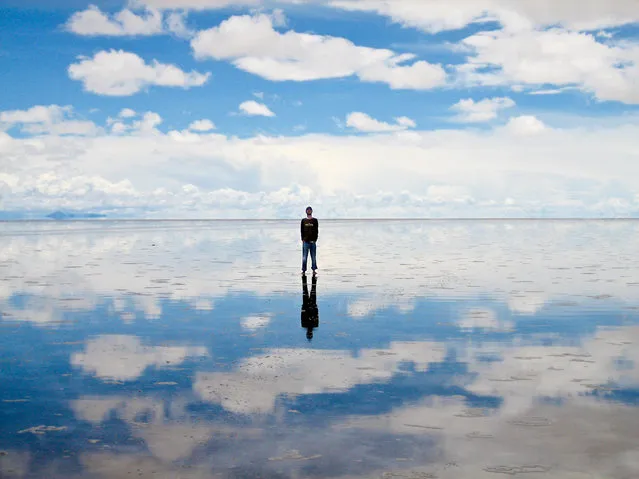
Salar de Uyuni (or Salar de Tunupa) is the world's largest salt flat at 10,582 square kilometers (4,086 sq mi). It is located in the Potosí and Oruro departments in southwest Bolivia, near the crest of the Andes, and is elevated 3,656 meters (11,995 ft) above mean sea level. The Salar was formed as a result of transformations between several prehistoric lakes. It is covered by a few meters of salt crust, which has an extraordinary flatness with the average altitude variations within one meter over the entire area of the Salar.
04 Aug 2012 08:42:00,post received
0 comments

“Reem Riyashi (1982 – 14 January 2004) was a Palestinian mother of two from Gaza City who killed herself and four Israelis at the Erez crossing on January 14, 2004 in a suicide bombing attack. Hamas and the Al-Aqsa Martyrs Brigade claimed that the attack by Riyashi was a joint operation mounted as a response to weeks of Israeli incursions into West Bank cities that had left about 25 Palestinians dead”. – Wikipedia
Photo: Reem Saleh Al-Riyashi, the first woman suicide bomber from Hamas, is shown with her daughter, Duha, in the Gaza Strip. She was married and the mother of two young children. (Photo by Getty Images)
Photo: Reem Saleh Al-Riyashi, the first woman suicide bomber from Hamas, is shown with her daughter, Duha, in the Gaza Strip. She was married and the mother of two young children. (Photo by Getty Images)
17 Aug 2011 11:16:00,post received
0 comments
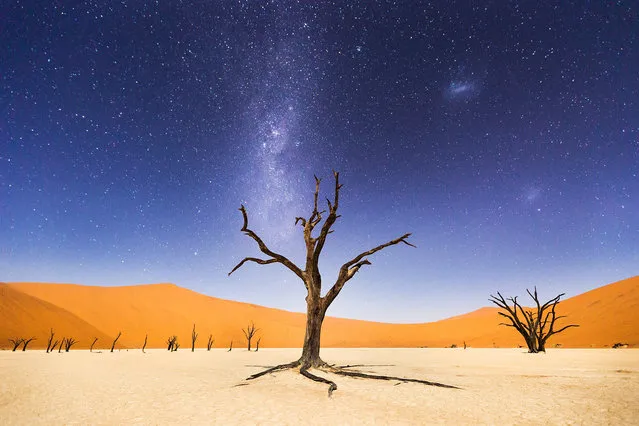
Merit: A Night at Deadvlei. The night before returning to Windhoek, we spent several hours at Deadveli. The moon was bright enough to illuminate the sand dunes in the distance, but the skies were still dark enough to clearly see the milky way and magellanic clouds. Deadveli means “dead marsh. The camelthorn trees are believed to be about 900 years old, but have not decomposed because the environment is so dry. (Photo and caption by Beth McCarley/National Geographic Traveler Photo Contest)
04 Aug 2015 11:50:00,post received
0 comments
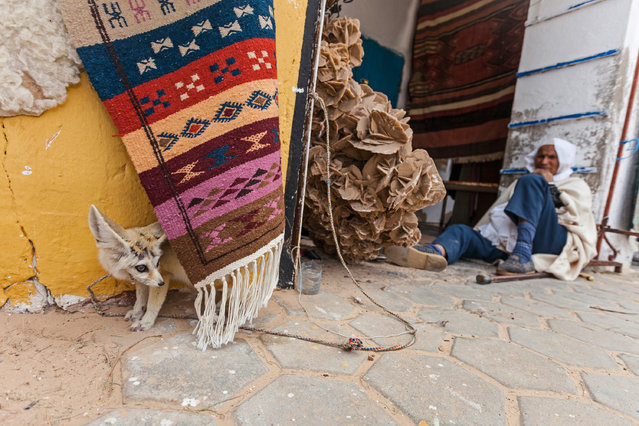
Sultan, a famous captive fennec that is displayed tied on a rope in front of a tourist shop, is the main attraction in the souk of Douz, a desert town in Tunisia. By the display of such a charismatic animal, tourists are often lured to buy things or pay for pictures. On inquiry, although Sultan has been caught as a pup in the wild, the owners of the shop reassure the foreigners stating that the animal is ‘domestic’. (Photo by Bruno D’Amicis/Fritz Pölking Prize/GDT EWPY 2015)
23 Nov 2015 08:02:00,post received
0 comments
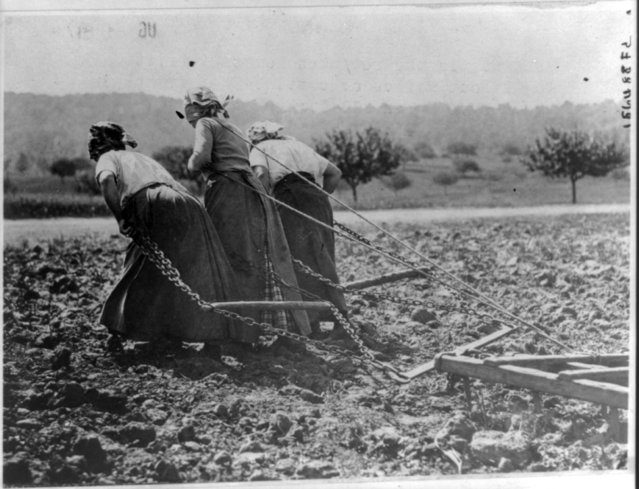
Peasants in the re-taken Somme District work in the fields, circa 1916- 1917, in this Library of Congress handout photo. For women 100 years ago, opportunities to work beyond the home and take part in political life were very limited. As the 20th century progressed, hard-won progress included gradually improved voting rights, while the upheaval of war pushed doors ajar as women worked as part of the war effort. U.S. Library of Congress archive photos show women's workplaces ranging from a flour mill in England to a coal mine in Belgium or Lincoln Motor Co.'s welding department in Detroit. International Women's Day is celebrated on March 8. (Photo by Reuters/Bain Collection/Library of Congress)
03 Mar 2016 11:39:00,post received
0 comments

When Colin Garratt went to photograph the traditional sentinels of the British countryside, he found they ranged from the dapper to the downright sinister. “They are not from the anaesthetised world of the craft fair”, says Colin Garratt, “but are the direct descendants of the ancient spectres which have haunted the landscape for centuries”. The Scarecrow Exhibition is at Geddes Gallery, London, from 25 to 30 March. (Photo by Colin Garratt)
29 Mar 2016 11:46:00,post received
0 comments
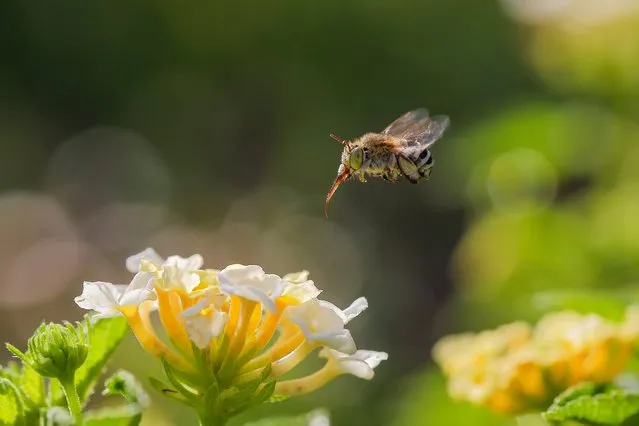
“Tasty Nature” by Dipesh Bhatt. “The blue banded bee (Amegilla cingulata) is pointing this sheath towards the flowers in preparation for sipping nectar”. Taken in Gujarat, India. (Photo by Dipesh Bhatt/2016 Royal Society of Biology Photographer of the Year competition)
30 Sep 2016 09:32:00,post received
0 comments