Loading...
Done
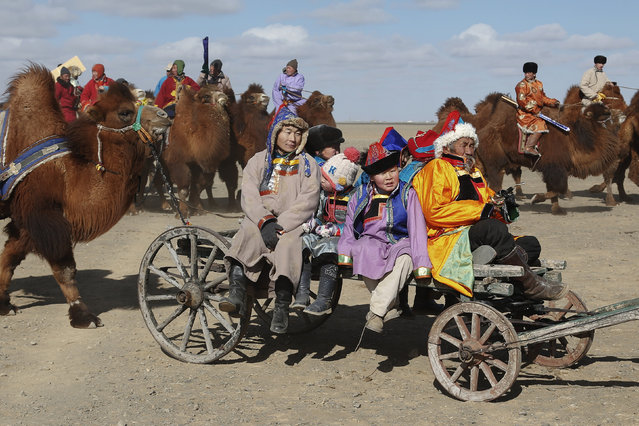
People sit on a cart with a camel tied to it during “Temeenii bayar”, the Camel Festival, in Dalanzadgad, Umnugobi aimag, Mongolia, March 6, 2016. (Photo by B. Rentsendorj/Reuters)

People sit on a cart with a camel tied to it during “Temeenii bayar”, the Camel Festival, in Dalanzadgad, Umnugobi aimag, Mongolia, March 6, 2016. On the steppes of the Gobi Desert, the crowd urges on Bactrian camels laden down with all that's needed to build and live in a traditional Mongolian tent. Guinness World Records classes the 15 km race thatÕs part of the two-day festival as the largest camel race in the world, drawing 1,108 participants. The winning camel romped home in 35 minutes and 12 seconds, according to the records website. (Photo by B. Rentsendorj/Reuters)
Details
30 Mar 2016 11:13:00
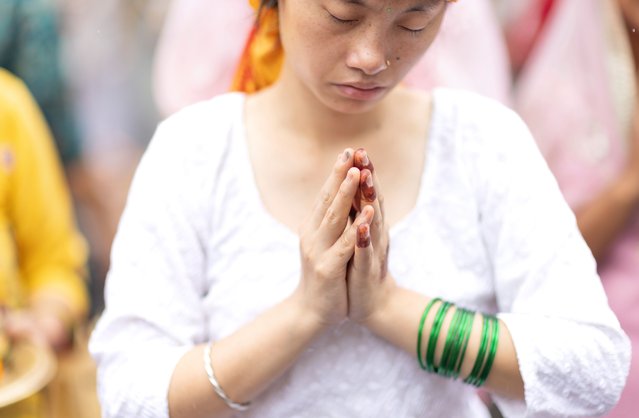
A woman prays during a Sarwan Brata (fast) offering to Lord Shiva, the Hindu god of creation and destruction, at the Pashupatinath Temple in Kathmandu, Nepal, 21 July 2025. Nepalese Hindu women wearing red, yellow and green attire, flock to temples during Sarwan month to pray for a long and prosperous life for their husbands, or to find a good husband. (Photo by Narendra Shrestha/EPA)

A woman prays during a Sarwan Brata (fast) offering to Lord Shiva, the Hindu god of creation and destruction, at the Pashupatinath Temple in Kathmandu, Nepal, 21 July 2025. Nepalese Hindu women wearing red, yellow and green attire, flock to temples during Sarwan month to pray for a long and prosperous life for their husbands, or to find a good husband. (Photo by Narendra Shrestha/EPA)
Details
01 Aug 2025 03:53:00
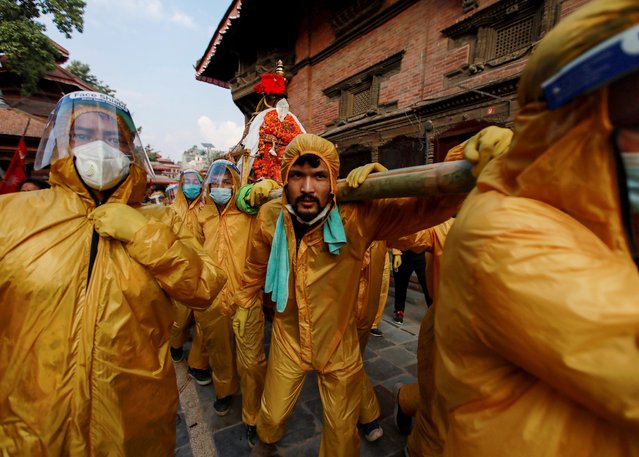
Devotees wearing personal protective equipment (PPE), carry a chariot of Pachali Bhairab amid the spread of coronavirus disease (COVID-19), in Kathmandu, Nepal on October 21, 2020. (Photo by Navesh Chitrakar/Reuters)

Devotees wearing personal protective equipment (PPE), carry a chariot of Pachali Bhairab amid the spread of coronavirus disease (COVID-19), in Kathmandu, Nepal on October 21, 2020. (Photo by Navesh Chitrakar/Reuters)
Details
29 Oct 2020 00:03:00
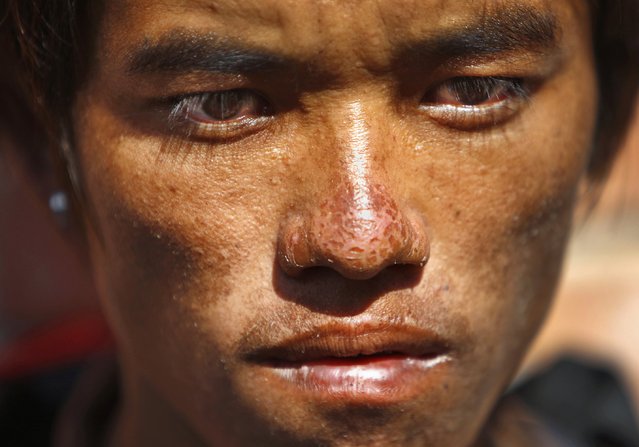
Ko Min, 26, manually extracts oil from one of three 300 feet deep wells he works on in the Minhla township of the Magwe district October 27, 2013. Everyday, Ko Min makes around $30 extracting crude oil from three small wells after he bought rights to use them for close to $1000 from a farmer who owns the land. (Photo by Damir Sagolj/Reuters)

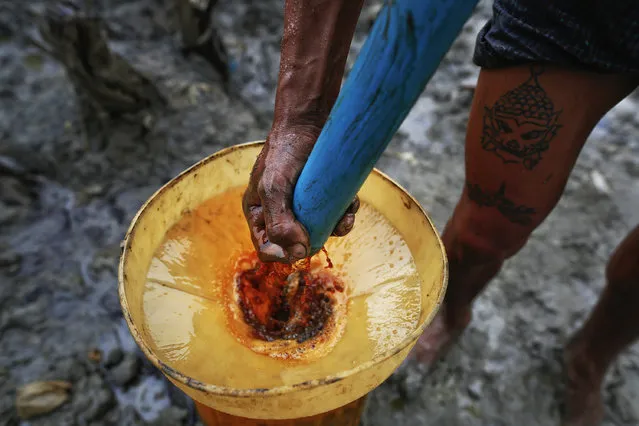
Ko Min, 26, manually extracts oil from one of three 300 feet deep wells he works on in the Minhla township of the Magwe district October 27, 2013. Everyday, Ko Min makes around $30 extracting crude oil from three small wells after he bought rights to use them for close to $1000 from a farmer who owns the land. In Myanmar, an impoverished country rich with natural resources, people from poor communities find ways to supplement their income by exploiting such resources, such as the Minhla township, traditionally rich with oil, often using primitive and dangerous methods. (Photo by Damir Sagolj/Reuters)
Details
21 Apr 2014 10:06:00
At the Krasnopresnenskaya station, the benches come from the Cathedral of Christ-Sauveur, which was built from 1839 to 1883 in memory of the victory of Russia against the army of Napoleon I. The cathedral was destroyed under Stalin in 1931, but the benches remained intact. Metro architects decided to install them in some stations. (Photo by Didier Bizet/The Washington Post)

At the Krasnopresnenskaya station, the benches come from the Cathedral of Christ-Sauveur, which was built from 1839 to 1883 in memory of the victory of Russia against the army of Napoleon I. The cathedral was destroyed under Stalin in 1931, but the benches remained intact. Metro architects decided to install them in some stations. (Photo by Didier Bizet/The Washington Post)
Details
24 Jan 2018 06:23:00


“The Sumatran Rhinoceros (Dicerorhinus sumatrensis) is a member of the family Rhinocerotidae and one of five extant rhinoceroses. It is the only extant species of the genus Dicerorhinus. It is the smallest rhinoceros, standing about 120–145 centimetres (3.9–4.76 ft) high at the shoulder, with a body length of 250 centimetres (8.2 ft) and weight of 500–800 kilograms (1,100–1,800 lb). Like the African species, it has two horns; the larger is the nasal horn, typically 15–25 centimetres (5.9–9.8 in), while the other horn is typically a stub. A coat of reddish-brown hair covers most of the Sumatran Rhino's body”. – Wikipedia

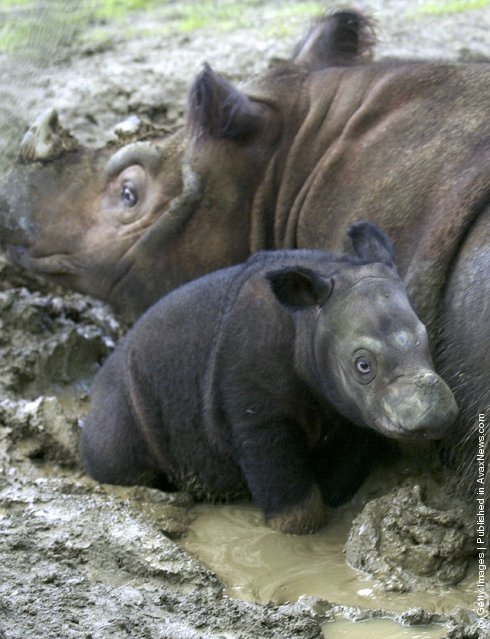
Photo: Emi, a Sumatran rhinoceros lies in the mud with her three-week-old female calf at the Cincinnati Zoo and Botanical Garden August 19, 2004 in Cincinnati, Ohio. Emi made history by becoming the first Sumatran rhino to produce two calves in captivity. (Photo by Mike Simons/Getty Images)
Details
22 Jun 2011 12:37:00
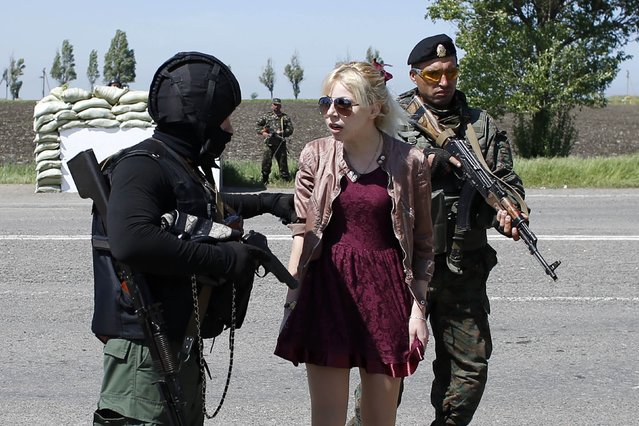
A woman is led aside as her partner is detained by Ukrainian security forces for being aggressive at an army checkpoint in the southeastern port city of Mariupol, on May 11, 2014. Residents’ attitudes appear to have hardened considerably with the deaths of dozens of pro-Russian activists in the city of Odessa this month and with reports that troops fired at a crowd in Mariupol last week. (Photo by Marko Djurica/Reuters)

A woman is led aside as her partner is detained by Ukrainian security forces for being aggressive at an army checkpoint in the southeastern port city of Mariupol, on May 11, 2014. Residents’ attitudes appear to have hardened considerably with the deaths of dozens of pro-Russian activists in the city of Odessa this month and with reports that troops fired at a crowd in Mariupol last week. (Photo by Marko Djurica/Reuters)
Details
12 May 2014 09:53:00
Sete Tamang, 20, avalanche survivor, waits to receive the bodies of his colleagues outside a morgue at Teaching Hospital in Katmandu, Nepal, Monday, October 20, 2014. Nepal was wrapping up rescue operations in its northern mountains Monday, saying all the hikers believed to have been stranded on a trekking route by a series of deadly blizzards are now safe. (Photo by Niranjan Shrestha/AP Photo)

Sete Tamang, 20, avalanche survivor, waits to receive the bodies of his colleagues outside a morgue at Teaching Hospital in Katmandu, Nepal, Monday, October 20, 2014. Nepal was wrapping up rescue operations in its northern mountains Monday, saying all the hikers believed to have been stranded on a trekking route by a series of deadly blizzards are now safe. (Photo by Niranjan Shrestha/AP Photo)
Details
20 Oct 2014 08:51:00