Loading...
Done
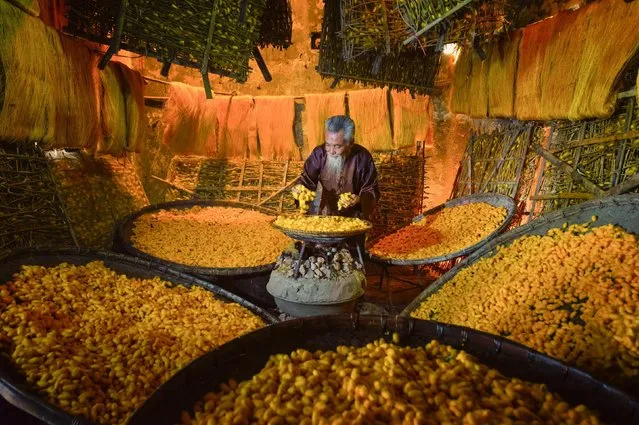
Thousands of bright yellow silkworm cocoons are dried in huge clay bowls in the village of Hong Ly, northern Vietnam in July 2022. Silk fibres are produced by silkworms when they spin themselves into a cocoon on their journey to becoming a silkmoth. The ultra-soft fibres are harvested from the cocoon in their raw state by being boiled in hot water. (Photo by Prabu Mohan/Solent News)

Thousands of bright yellow silkworm cocoons are dried in huge clay bowls in the village of Hong Ly, northern Vietnam in July 2022. Silk fibres are produced by silkworms when they spin themselves into a cocoon on their journey to becoming a silkmoth. The ultra-soft fibres are harvested from the cocoon in their raw state by being boiled in hot water. (Photo by Prabu Mohan/Solent News)
Details
31 Jul 2022 05:59:00
A woman crosses a road outside the EU Parliament ahead of the EU elections in Brussels, Belgium, May 22, 2019. (Photo by Yves Herman/Reuters)

A woman crosses a road outside the EU Parliament ahead of the EU elections in Brussels, Belgium, May 22, 2019. (Photo by Yves Herman/Reuters)
Details
01 Jun 2019 00:01:00
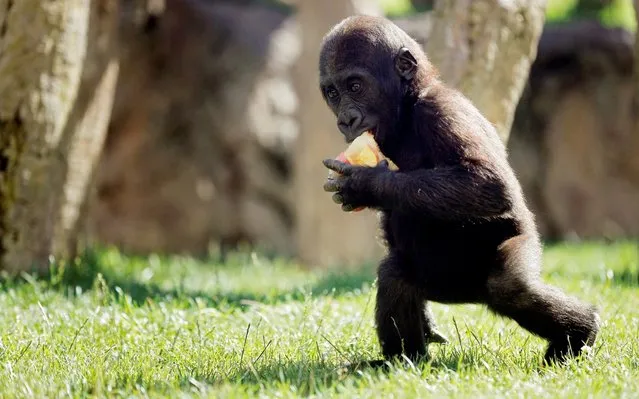
A gorilla cube named Pepe eats frozen fruit to fight high temperatures at the Bioparc zoo in Valencia, eastern Spain, 28 June 2019. Spanish peninsula is suffering a heat wave with temperatures reaching up to 45 degrees. (Photo by Kai Foersterling/EPA/EFE/Rex Features/Shutterstock)

A gorilla cube named Pepe eats frozen fruit to fight high temperatures at the Bioparc zoo in Valencia, eastern Spain, 28 June 2019. Spanish peninsula is suffering a heat wave with temperatures reaching up to 45 degrees. (Photo by Kai Foersterling/EPA/EFE/Rex Features/Shutterstock)
Details
30 Jun 2019 00:03:00
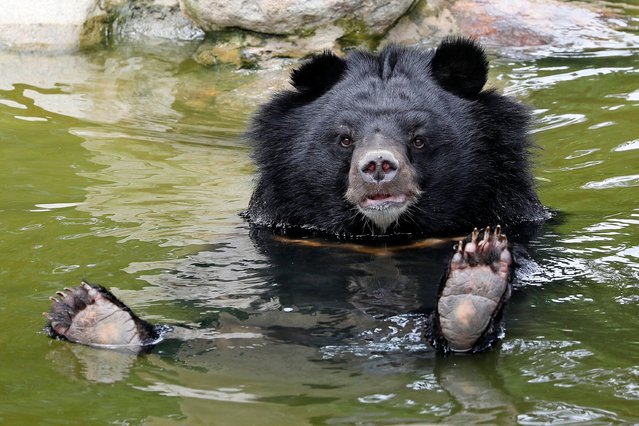
A moon bear rests in a pool inside an enclosure at the Vietnam bear rescue centre, in Tam Dao national park, Vinh Phuc, Vietnam, 09 July 2019. The center is operated by international organization Animals Asia. There are currently 184 bears living at the the Vietnam Bear Rescue Centre. It is estimated that there are less than a few hundred bears left in the wild in Vietnam. According to the latest data from the Ministry of Agriculture and Rural development, around 600 bears are still being kept on farms. In Vietnam, Animals Asia has rescued a total of 209 sun bears and moon bears. (Photo by Minh Hoang/EPA/EFE/Rex Features/Shutterstock)

A moon bear rests in a pool inside an enclosure at the Vietnam bear rescue centre, in Tam Dao national park, Vinh Phuc, Vietnam, 09 July 2019. The center is operated by international organization Animals Asia. There are currently 184 bears living at the the Vietnam Bear Rescue Centre. It is estimated that there are less than a few hundred bears left in the wild in Vietnam. According to the latest data from the Ministry of Agriculture and Rural development, around 600 bears are still being kept on farms. In Vietnam, Animals Asia has rescued a total of 209 sun bears and moon bears. (Photo by Minh Hoang/EPA/EFE/Rex Features/Shutterstock)
Details
14 Jul 2019 00:05:00
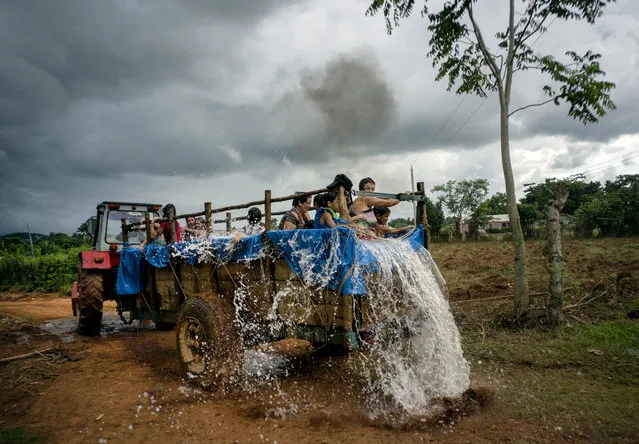
In this August 24, 2019 photo, a tractor pulls a trailer that was converted into a swimming pool as it drives along the roads of El Infernal neighborhood in San Andres in the province of Pinar del Río, Cuba. The idea for the mobile tractor-pool was hatched by local parents, to make their kids happy and fight the harsh Caribbean heat. (Photo by Ramon Espinosa/AP Photo)

In this August 24, 2019 photo, a tractor pulls a trailer that was converted into a swimming pool as it drives along the roads of El Infernal neighborhood in San Andres in the province of Pinar del Río, Cuba. The idea for the mobile tractor-pool was hatched by local parents, to make their kids happy and fight the harsh Caribbean heat. (Photo by Ramon Espinosa/AP Photo)
Details
10 Sep 2019 00:01:00
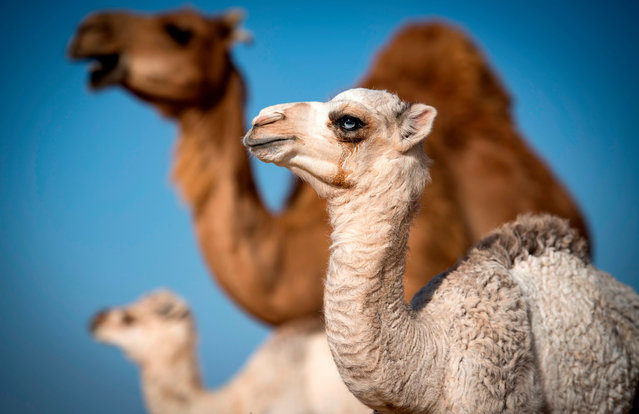
A camel calf is seen among a herd in the desert near Dakhla in Morocco-administered Western Sahara, on October 13, 2019. In the Oued Eddahab desert in Western Sahara, Habiboullah Dlimi raises dairy and racing camels just like his ancestors used to, but with a little help from modern technology. While his animals roam free and are milked traditionally, by hand, at dawn and dusk, they are watched over by hired herders and Dlimi follows GPS coordinates across the desert in a 4X4 vehicle to reach them. (Photo by Fadel Senna/AFP Photo)

A camel calf is seen among a herd in the desert near Dakhla in Morocco-administered Western Sahara, on October 13, 2019. In the Oued Eddahab desert in Western Sahara, Habiboullah Dlimi raises dairy and racing camels just like his ancestors used to, but with a little help from modern technology. While his animals roam free and are milked traditionally, by hand, at dawn and dusk, they are watched over by hired herders and Dlimi follows GPS coordinates across the desert in a 4X4 vehicle to reach them. (Photo by Fadel Senna/AFP Photo)
Details
24 Nov 2019 00:03:00
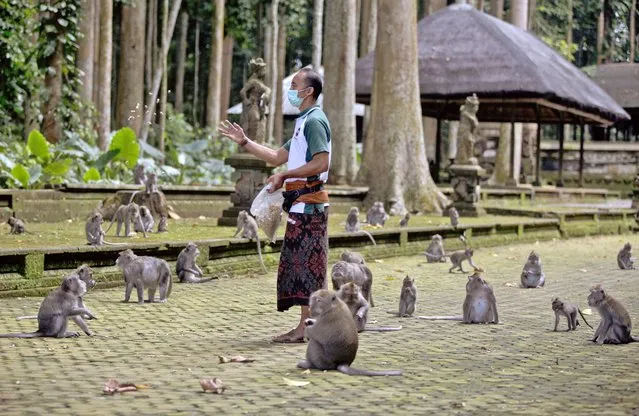
Made Mohon, the operation manager of Sangeh Monkey Forest, feeds macaques with donated peanuts during a feeding time at the popular tourist attraction site in Sangeh, Bali Island, Indonesia, Wednesday, September 1, 2021. (Photo by Firdia Lisnawati/AP Photo)

Made Mohon, the operation manager of Sangeh Monkey Forest, feeds macaques with donated peanuts during a feeding time at the popular tourist attraction site in Sangeh, Bali Island, Indonesia, Wednesday, September 1, 2021. (Photo by Firdia Lisnawati/AP Photo)
Details
07 Oct 2021 08:22:00
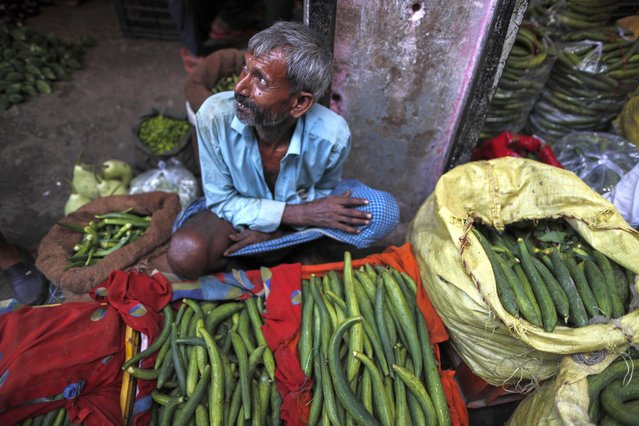
A farmer waits for customers at a wholesale vegetable market in Prayagraj, Uttar Pradesh state, India, Sunday, July 25, 2021. (Photo by Rajesh Kumar Singh/AP Photo)

A farmer waits for customers at a wholesale vegetable market in Prayagraj, Uttar Pradesh state, India, Sunday, July 25, 2021. (Photo by Rajesh Kumar Singh/AP Photo)
Details
13 Oct 2021 08:00:00