Loading...
Done
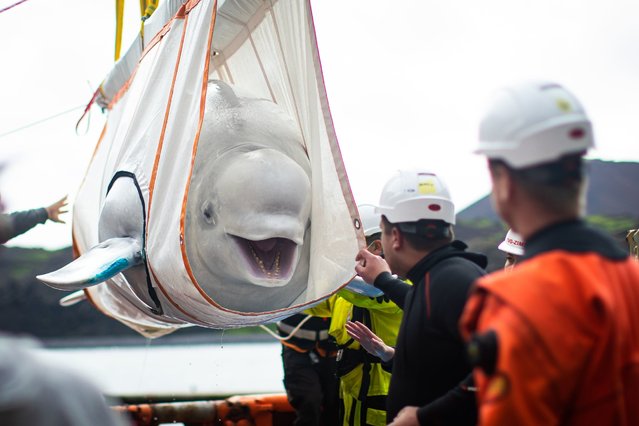
The Sea Life Trust team move Beluga Whale Little Gray from a tugboat during transfer to the bayside care pool where they will be acclimatised to the natural environment of their new home at the open water sanctuary in Klettsvik Bay in Iceland on August 7, 2020. The two Beluga whales, named Little Grey and Little White, are being moved to the world's first open-water whale sanctuary after travelling from an aquarium in China 6,000 miles away in June 2019. (Photo by Aaron Chown/PA Images via Getty Images)

The Sea Life Trust team move Beluga Whale Little Gray from a tugboat during transfer to the bayside care pool where they will be acclimatised to the natural environment of their new home at the open water sanctuary in Klettsvik Bay in Iceland on August 7, 2020. The two Beluga whales, named Little Grey and Little White, are being moved to the world's first open-water whale sanctuary after travelling from an aquarium in China 6,000 miles away in June 2019. (Photo by Aaron Chown/PA Images via Getty Images)
Details
28 Aug 2020 00:03:00
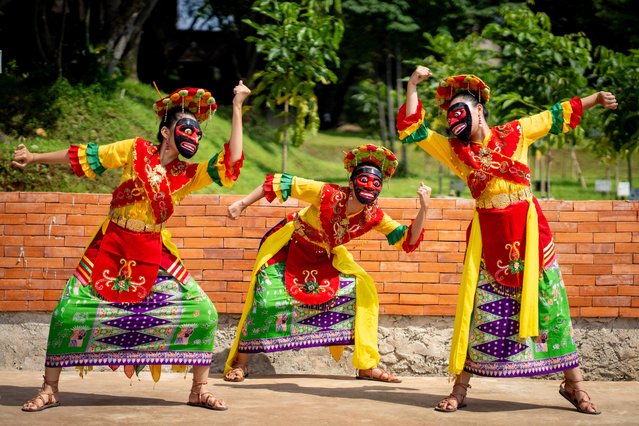
The dancers are posing after the Topeng Bekasi dance performance, a presentation from the West Java Pavilion, during the 50th anniversary celebration of Taman Mini Indonesia Indah (TMII), in Jakarta, on Sunday, April 20, 2025. (Photo by Andri Munazir/ZUMA Press Wire/Alamy Live News)

The dancers are posing after the Topeng Bekasi dance performance, a presentation from the West Java Pavilion, during the 50th anniversary celebration of Taman Mini Indonesia Indah (TMII), in Jakarta, on Sunday, April 20, 2025. (Photo by Andri Munazir/ZUMA Press Wire/Alamy Live News)
Details
31 May 2025 01:46:00
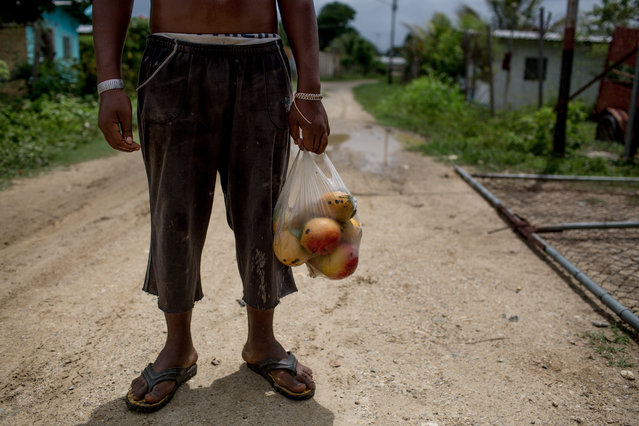
A teenager holds a bag of Mangos, a tropical fruit who grow up in threes in Caracas, Venezuela on June 22, 2016. The shortage of food especially in areas in extreme poverty had made Mangos the daily food. (Photo by Alejandro Cegarra/The Washington Post)

A teenager holds a bag of Mangos, a tropical fruit who grow up in threes in Caracas, Venezuela on June 22, 2016. The shortage of food especially in areas in extreme poverty had made Mangos the daily food. (Photo by Alejandro Cegarra/The Washington Post)
Details
11 Jul 2016 12:23:00
Portuguese runner Adriele Silva gestures during the Great Wall Marathon at the Huangyaguan section of the Great Wall of China, in Jixian of Tianjin, China May 19, 2018. (Photo by Jason Lee/Reuters)

Portuguese runner Adriele Silva gestures during the Great Wall Marathon at the Huangyaguan section of the Great Wall of China, in Jixian of Tianjin, China May 19, 2018. (Photo by Jason Lee/Reuters)
Details
26 May 2018 00:01:00
Of all the species affected by river regulation in Australia, the ibis is one of the few that has changed its behaviour and moved to coastal cities. (Photo by Rick Stevens/The Guardian)

Tip turkey, dumpster chook, rubbish raptor – the Australian white ibis goes by many unflattering names. But it is a true urban success story, scavenging to survive in cities across Australia as wetlands have been lost. Wildlife photographer Rick Stevens captured them in Sydney. Here: Of all the species affected by river regulation in Australia, the ibis is one of the few that has changed its behaviour and moved to coastal cities. (Photo by Rick Stevens/The Guardian)
Details
11 Apr 2018 00:03:00
Group of blow-up dolls and women. (Photo by Zomi/Getty Images)

Group of blow-up dolls and women. (Photo by Zomi/Getty Images)
Details
20 Mar 2017 09:43:00
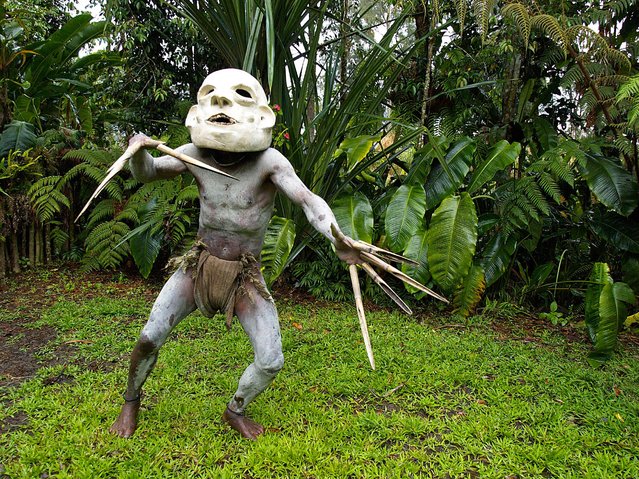
The mudmen come from the country’s western highlands, where there are virtually no roads, cars, electricity or shops. (Photo by Jeremy Hunter/Exclusivepix Media)

For centuries the Highlands peoples of Papua New Guinea fought over land, women and pigs. Sorcery and battle skills could elevate a clan to Bigmanship, where the bigger the “presentation”, the bigger the man. Clans therefore would paint their bodies and create fearsome masks as part of their psy. Here: These are the terrifying tribe of “mudmen” from a remote part of Papua New Guinea. (Photo by Jeremy Hunter/Exclusivepix Media)
Details
08 May 2017 08:12:00
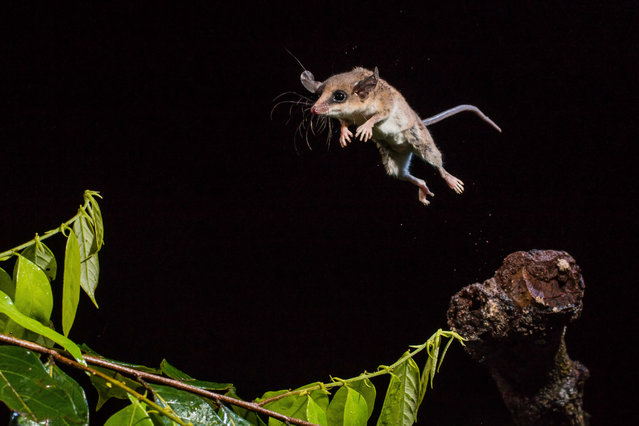
Tropical acrobatics by Adrià López Baucells in Manaus, Brazil. An unidentified South American marsupial, although the characteristic black markings on its face indicate it may be a mouse opossum. These small creatures are nocturnal and feed on bugs, fruit and bird eggs. (Photo by Adrià López Baucells/2019 Royal Society of Biology Photography Competition)

Tropical acrobatics by Adrià López Baucells in Manaus, Brazil. An unidentified South American marsupial, although the characteristic black markings on its face indicate it may be a mouse opossum. These small creatures are nocturnal and feed on bugs, fruit and bird eggs. (Photo by Adrià López Baucells/2019 Royal Society of Biology Photography Competition)
Details
10 Oct 2019 00:03:00