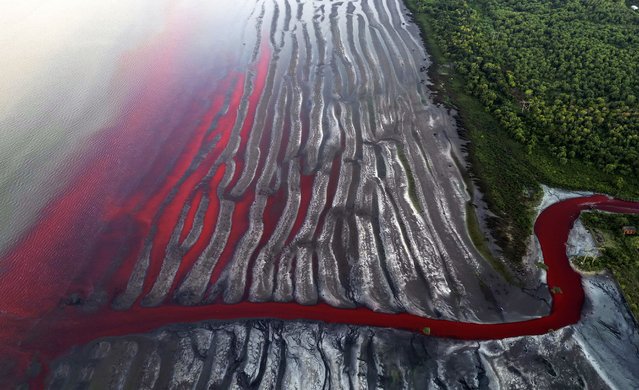
The “Sarandi” stream, dyed red due to unknown contaminants allege residents, flows into the Río de la Plata on the outskirts of Buenos Aires, Argentina, February 6, 2025. (Photo by Rodrigo Abd/AP Photo)
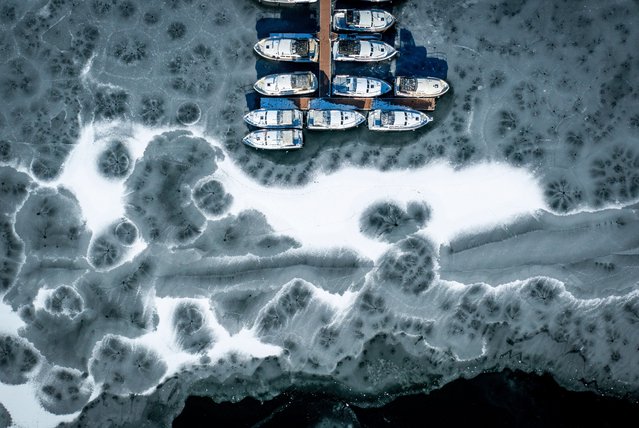
Houseboats and charter boats are docked in the ice in the harbor at Fischerhof Eldenburg in the Mecklenburg Lake District, northern Germany, Wednesday, February 19, 2025. (Photo by Jens Büttner/dpa)
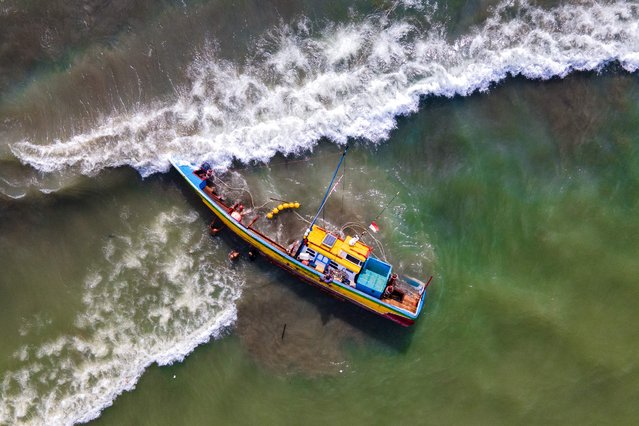
An aerial view shows a fishing boat which capsized due to weather conditions by the coast in Banda Aceh, Indonesia on June 23, 2025. (Photo by Chaideer Mahyuddin/AFP Photo)
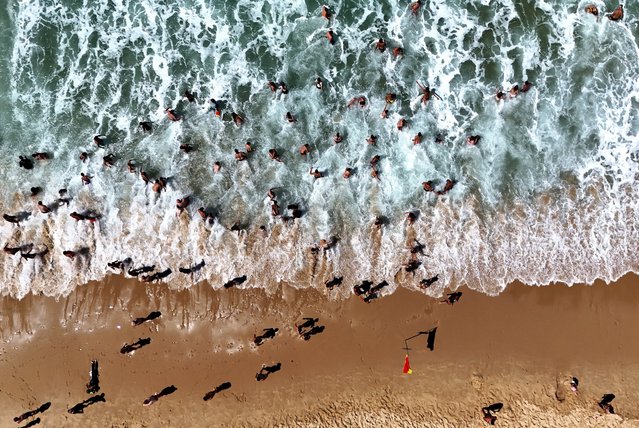
This aerial photograph shows beach-goers gathering on a beach alongside the Atlantic Ocean in Carcans, south-western France on July 22, 2025. (Photo by Christophe Archambault/AFP Photo)
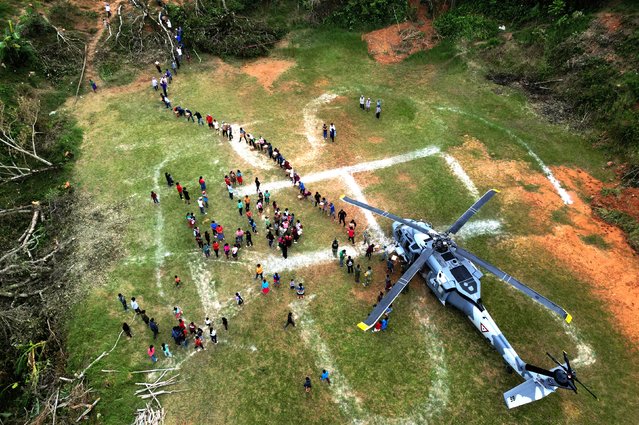
Local residents receive food from federal authorities in Xalacahuantla, Mexico, on Thursday, October 16, 2025. Hundreds of communities in central and eastern Mexico were cut off by deadly landslides and flooding caused by torrential rains. (Photo by Alfredo Estrella/AFP Photo)
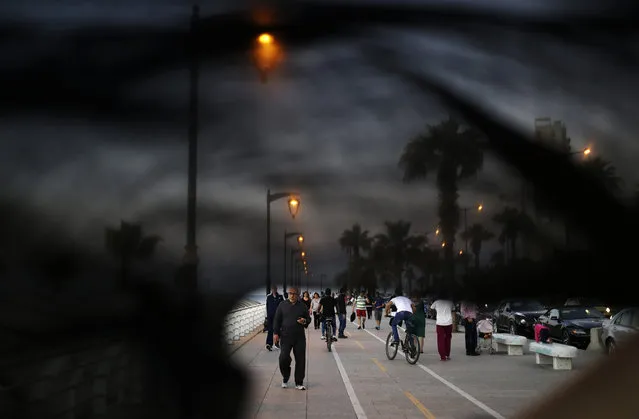
This Thursday, April 30, 2015 photo shows Lebanese citizens walking on the Corniche, or waterfront promenade in Beirut, Lebanon. This photo was shot through the lowered veil of a niqab, which is worn by some conservative Muslim women. The cloth allows women to follow a strict interpretation of their religious beliefs by preventing others from seeing their faces. (Photo by Hassan Ammar/AP Photo)
Ukrainian artist Dariya Marchenko works on a portrait of Russian President Vladimir Putin named “The Face of War” which is made out of 5,000 cartridges brought from the frontline in eastern Ukraine, in Kiev, July 23, 2015. The portrait will be presented along with a novel which will tell personal stories of six people involved in this project including Daria's own story and stories of people who helped her to collect shells from the frontline. Daria Marchenko calls her art approach philosophic symbolism where every element has its hidden meaning. In her works cartridges mean human's life that was brutally ended. (Photo by Gleb Garanich/Reuters)
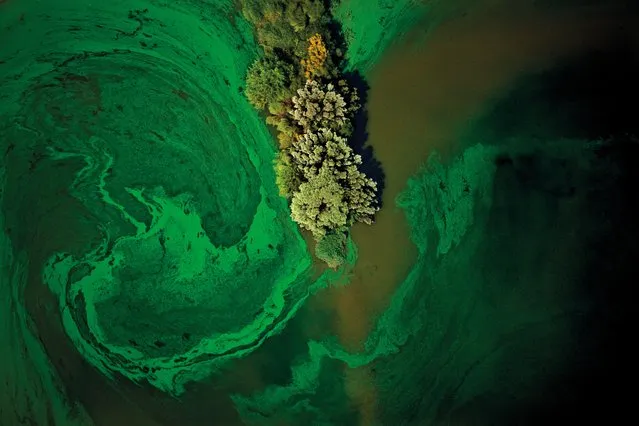
Luling, Louisiana, US. New evidence contradicts previous claims of the relative safety of glyphosate, the world’s most widely used herbicide, which is manufactured here. It is often used in conjunction with seeds that have been genetically modified to tolerate its application, meaning that anyone consuming these crops is eating a genetically modified plant, and whatever residue of the pesticide that remains. (Photo by J. Henry Fair/Industrial Scars/Papadakis Publisher)