Loading...
Done


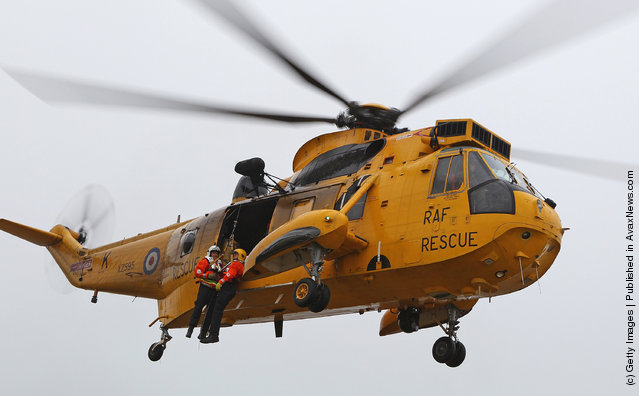
In this image provided by the Ministry of Defence, Prince William takes the controls of a Sea King helicopter on April 14, 2011 in Holyhead, Wales. Search and rescue co-pilot Prince William, based at RAF Valley will marry his fiancee Catherine Middleton in Westminster Abbey in London on April 29, 2011. (Photo by MoD Crown Copyright via Getty Images)
Details
15 Apr 2011 07:53:00


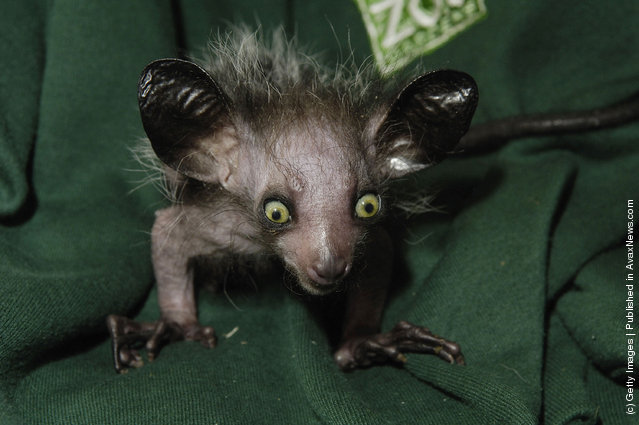
“The aye-aye (Daubentonia madagascariensis) is a lemur, a strepsirrhine primate native to Madagascar that combines rodent-like teeth and a special thin middle finger to fill the same ecological niche as a woodpecker. It is the world's largest nocturnal primate, and is characterized by its unusual method of finding food; it taps on trees to find grubs, then gnaws holes in the wood and inserts its narrow middle finger to pull the grubs out. The only other animal species known to find food in this way is the striped possum. From an ecological point of view the aye-aye fills the niche of a woodpecker as it is capable of penetrating wood to extract the invertebrates within”. – Wikipedia

Photo: In this handout image from Bristol Zoo is seen the first captive bred aye-aye in the UK named “Kintana” (meaning star in Malagasy) April 15, 2005 at Bristol Zoo Gardens, England. The zoo announced today only the second baby aye-aye to be hand-reared in the world (the first was in Jersey Zoo) and has now made his first public appearance since his birth on 11 February 2005. (Photo by Rob Cousins/Bristol Zoo via Getty Images)
Details
13 Apr 2011 13:33:00
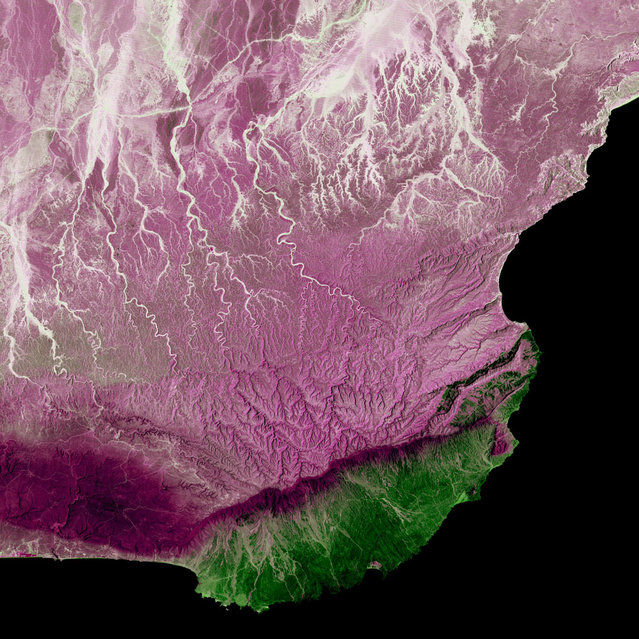
Dhofar Region, Oman. Much of Oman is desert, but the Arabian Sea coast in the Dhofar region represents a startling difference in climate. This coastal region catches the monsoon rains, or khareef, during the summer months. Drenching rains fall primarily on the mountainous ridge that separates the lush, fertile areas along the coast from the arid interior, recharging streams, waterfalls and springs that provide plentiful water supplies in the fertile lowlands for the remainder of the year. Image taken by Landsat 5 on April 2, 2005. (Photo by USGS/NASA)

Dhofar Region, Oman. Much of Oman is desert, but the Arabian Sea coast in the Dhofar region represents a startling difference in climate. This coastal region catches the monsoon rains, or khareef, during the summer months. Drenching rains fall primarily on the mountainous ridge that separates the lush, fertile areas along the coast from the arid interior, recharging streams, waterfalls and springs that provide plentiful water supplies in the fertile lowlands for the remainder of the year. Image taken by Landsat 5 on April 2, 2005. (Photo by USGS/NASA)
Details
25 Dec 2012 11:13:00


A Chinese girl touches the gun of a relievo featuring Chinese soldiers fighting with Japanese troops during World War II at an exhibition at the Anti-Japan War Museum to mark the 60th Anniversary of the Victory of the Chinese People's War of Resistance Against Japan on August 18, 2005 in Beijing, China. (Photo by Cancan Chu/Getty Images)
Details
30 Jul 2011 13:51:00
A model displays the collection of Italian luxury brand Diesel at its China's first flagship shop unveiling ceremony

A model displays the collection of Italian luxury brand Diesel at its China's first flagship shop unveiling ceremony, at Henglong Plaza on November 26, 2005 in Shanghai, China. (Photo by China Photos/Getty Images)
Details
02 Dec 2011 09:56:00
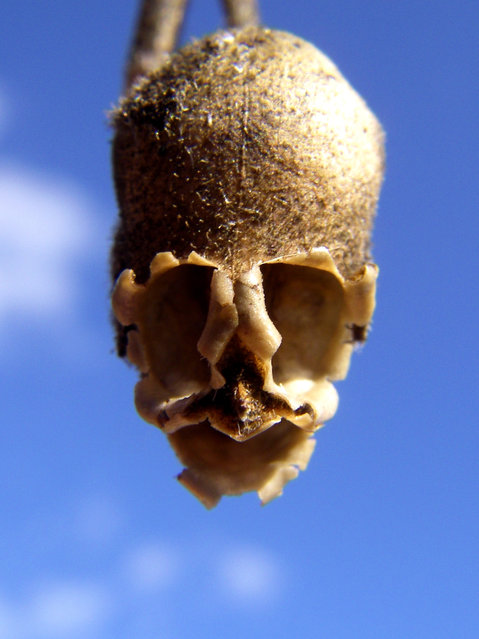
The Dragon’s Skull

Yes this is not a real dragon’s skull but it is still pretty creepy. This weird little plant is called a Snapdragon or Dragon flower or, if you want to sound even smarter, The Antirrhinum. Once the flower has died, the seed pod begins to look like the skulls you see here. Apart from being creepy as hell and alleged protectors of the garden, if you wore this about your body you would appear to be more “fascinating and gracious”. Though I imagine if anyone actually did find this on you, fascinating and gracious are not the only things they will think about you.
Details
22 Oct 2013 08:31:00
Porcelain Figurines By Martin Klimas

From a height of three meters, porcelain figurines are dropped on the ground, and the sound they make when they hit trips the shutter release. The result: razor-sharp images of disturbing beauty—temporary sculptures made visible to the human eye by high-speed photography technology. The porcelain statuette bursting into pieces isn't what really captures the attention; the fascination lies in the genesis of a dynamic figure that replaces the static pose. In contrast to the inertness of the intact kitsch figurines Klimas started out with, the photographs of their destruction possess a powerfully narrative character.
Details
21 Apr 2014 12:59:00
A serviceman of Russia's Emergencies Ministry wearing protective gear disinfects Moscow's Leningradsky railway station on May 19, 2020, amid the COVID-19 coronavirus pandemic. (Photo by Kirill Kudryavtsev/AFP Photo)

A serviceman of Russia's Emergencies Ministry wearing protective gear disinfects Moscow's Leningradsky railway station on May 19, 2020, amid the COVID-19 coronavirus pandemic. (Photo by Kirill Kudryavtsev/AFP Photo)
Details
21 May 2020 00:03:00