Loading...
Done
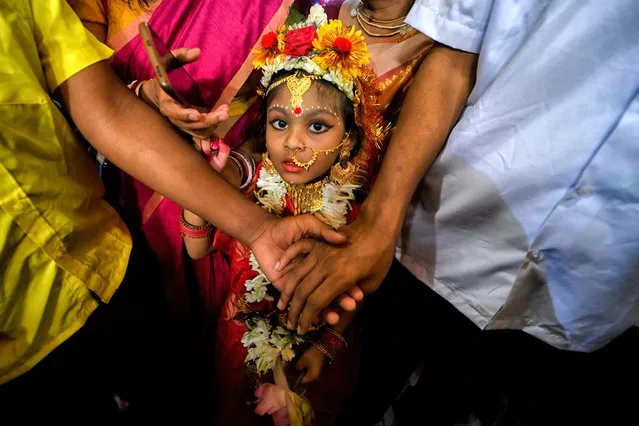
A little girl seen waiting in a queue to participate in the Kumari Puja ritual in Kolkata, India on March 30, 2023. Kumari Puja is an Indian Hindu Tradition mainly celebrated during the Durga Puja / Basanti Puja / Navratri according to Hindu calendar. Kumari actually describes a young virgin girl from the age 1 to 16 who is getting worshipped during the transition of Ashtami / Navami tithi of Durga Puja / Navaratri according to Hindu mythology. Young girls seen being worshipped during the Kumari Puja by their mothers at Adyapith Temple, It is believed that Kumari Puja grant many blessings to the worshipers and as well as the little Girl too. Devotees believe it will overcome all barriers, dangers for the little girls in the coming future and also, she will be empowered to handle any stress and obstruction in her coming life. (Photo by Avishek Das/SOPA Images/Rex Features/Shutterstock)

A little girl seen waiting in a queue to participate in the Kumari Puja ritual in Kolkata, India on March 30, 2023. Kumari Puja is an Indian Hindu Tradition mainly celebrated during the Durga Puja / Basanti Puja / Navratri according to Hindu calendar. Kumari actually describes a young virgin girl from the age 1 to 16 who is getting worshipped during the transition of Ashtami / Navami tithi of Durga Puja / Navaratri according to Hindu mythology. (Photo by Avishek Das/SOPA Images/Rex Features/Shutterstock)
Details
25 Apr 2023 03:26:00
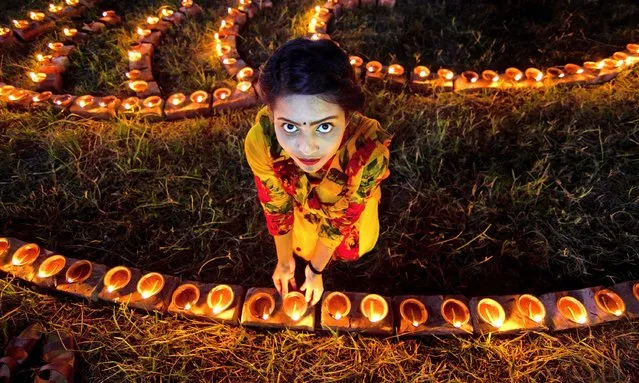
Hindu devotees light “Diyas” (earthen lamps) on a Rangoli, a framework of decorated pattern, as part of Diwali festivities in a temple premises in Dhaka, Bangladesh on November 12, 2023. The festival takes place every year in accordance with the Hindu lunar calendar. The word “Diwali” is derived from the Sanskrit word “Deepavali”, meaning series of lighted lamps; hence, it is also known as the festival of lights. Diwali is typically celebrated by socializing and exchanging gifts with family and friends. Many light oil lamps or candles to symbolize a victory of light over darkness, and fireworks are set off as part of the celebrations. (Photo by Joy Saha/Rex Features/Shutterstock)

Hindu devotees light “Diyas” (earthen lamps) on a Rangoli, a framework of decorated pattern, as part of Diwali festivities in a temple premises in Dhaka, Bangladesh on November 12, 2023. The festival takes place every year in accordance with the Hindu lunar calendar. The word “Diwali” is derived from the Sanskrit word “Deepavali”, meaning series of lighted lamps; hence, it is also known as the festival of lights. Diwali is typically celebrated by socializing and exchanging gifts with family and friends. Many light oil lamps or candles to symbolize a victory of light over darkness, and fireworks are set off as part of the celebrations. (Photo by Joy Saha/Rex Features/Shutterstock)
Details
18 Dec 2023 00:11:00
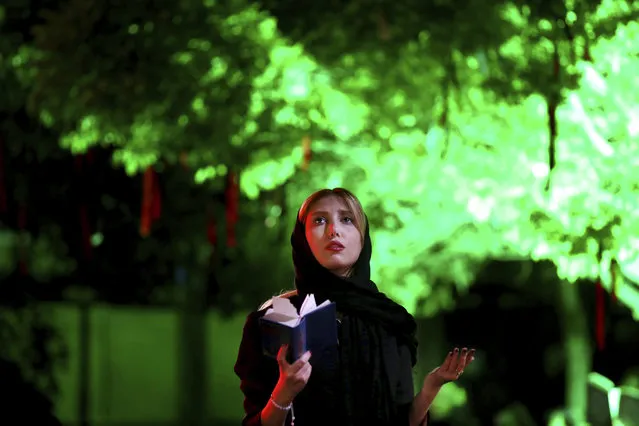
An Iranian Shiite Muslim prays in Laylat al-Qadr, or the night of destiny, during holy fasting month of Ramadan after midnight, in central Tehran, Iran, early Sunday, June 18, 2017. Laylat al-Qadr is the night when Muslims believe the Quran was first revealed to prophet Muhammad. Worshipers gather in religious ceremonies to pray, ask forgiveness and make wishes on one of the most important nights of the Islamic calendar. Shiite Muslims, the vast majority of Iranians, believe the night happens either on 19th, 21st or 23rd of the holy month of Ramadan. (Photo by Ebrahim Noroozi/AP Photo)

An Iranian Shiite Muslim prays in Laylat al-Qadr, or the night of destiny, during holy fasting month of Ramadan after midnight, in central Tehran, Iran, early Sunday, June 18, 2017. Laylat al-Qadr is the night when Muslims believe the Quran was first revealed to prophet Muhammad. Worshipers gather in religious ceremonies to pray, ask forgiveness and make wishes on one of the most important nights of the Islamic calendar. Shiite Muslims, the vast majority of Iranians, believe the night happens either on 19th, 21st or 23rd of the holy month of Ramadan. (Photo by Ebrahim Noroozi/AP Photo)
Details
18 Jun 2017 03:43:00
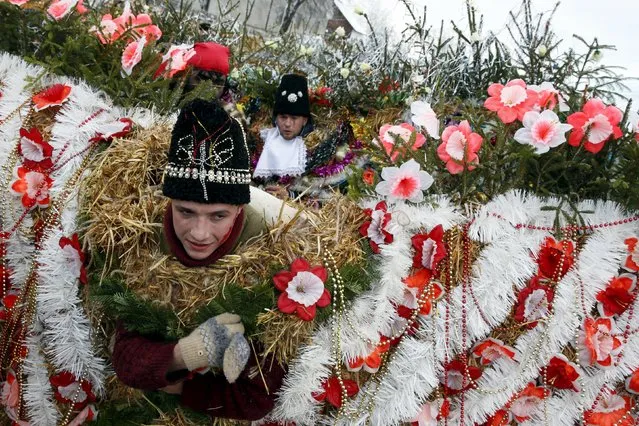
Local residents dressed in costumes perform during celebrations for the Malanka holiday in the village of Krasnoilsk in the Chernivtsi region of Ukraine, January 14, 2016. The Malanka traditional holiday is more popular in the western regions of the country and is also known as the Old New Year celebrated on January 13 and 14 - St. Basil's and St. Melania's Day, according to the old Julian calendar. During the celebrations, youngsters and adults wear traditional carnival costumes and masks, and visit local houses while singing carols, playing pranks or performing short plays. (Photo by Valentyn Ogirenko/Reuters)

Local residents dressed in costumes perform during celebrations for the Malanka holiday in the village of Krasnoilsk in the Chernivtsi region of Ukraine, January 14, 2016. The Malanka traditional holiday is more popular in the western regions of the country and is also known as the Old New Year celebrated on January 13 and 14 – St. Basil's and St. Melania's Day, according to the old Julian calendar. During the celebrations, youngsters and adults wear traditional carnival costumes and masks, and visit local houses while singing carols, playing pranks or performing short plays. (Photo by Valentyn Ogirenko/Reuters)
Details
16 Jan 2016 08:04:00
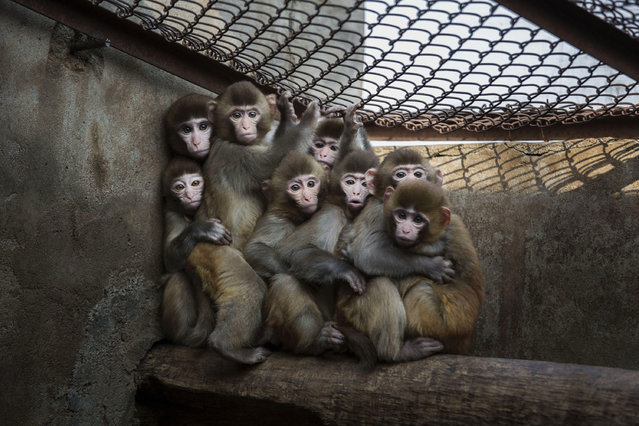
Macaque monkeys crowd together in their cage at a monkey farm on February 3, 2016 in Xinye county, Henan province, China. The area boasts a centuries-long and lucrative history of raising and training monkeys for performance. In Xinye, villagers are seeing an increase in business with the lunar calendar's “Year of the Monkey”. Farmers say most of the monkeys are bred and raised for domestic zoos, circuses, and performing groups, but add that some are also sold for medical research in China and the United States. Despite the popularity of the tradition, critics contend the training methods and conditions constitute animal cruelty. (Photo by Kevin Frayer/Getty Images)

Macaque monkeys crowd together in their cage at a monkey farm on February 3, 2016 in Xinye county, Henan province, China. The area boasts a centuries-long and lucrative history of raising and training monkeys for performance. In Xinye, villagers are seeing an increase in business with the lunar calendar's “Year of the Monkey”. Farmers say most of the monkeys are bred and raised for domestic zoos, circuses, and performing groups, but add that some are also sold for medical research in China and the United States. Despite the popularity of the tradition, critics contend the training methods and conditions constitute animal cruelty. (Photo by Kevin Frayer/Getty Images)
Details
31 Dec 2016 09:56:00
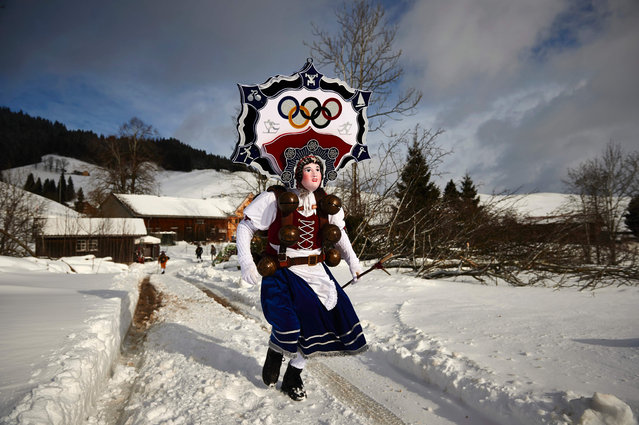
A leader “Rolli” of a yodel group “Schuppel” runs in the snow in front of a farmstead during the “Silvesterchlausen” in the early morning in Urnaesch in the Swiss canton Appenzell Ausserroden on January 13, 2017. The “Silvesterchlausen” is a tradition of the Swiss canton Appenzell, where colorfull characters organized in groups called “Schuppel”, chase out the old year and welcome the new one. They run all day long from farmstead to farmstead, gather together to sing a jodel and great the farmers. A “Schuppel” consists of some “Schelli” and two “Rolli”, sometimes with female dresses and nice scenes over the head, despite the dress all participants are males. The Silversterchlausen run twice a year, first for the new Silvester on December 31, and then again on January 13, for the old Silvester following the Julian calendar. (Photo by Michael Buholzer/AFP Photo)

A leader “Rolli” of a yodel group “Schuppel” runs in the snow in front of a farmstead during the “Silvesterchlausen” in the early morning in Urnaesch in the Swiss canton Appenzell Ausserroden on January 13, 2017. (Photo by Michael Buholzer/AFP Photo)
Details
14 Jan 2017 12:41:00
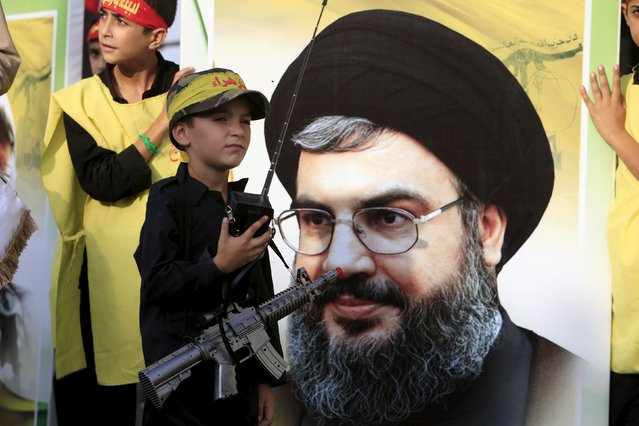
A Muslim Shi'ite boy carries a toy gun while standing next to a picture of Hezbollah leader Sayyed Hassan Nasrallah as he takes part in a march organised by Hezbollah during a re-enactment of the battle of Kerbala during a mourning process, ahead of the day of Ashura, in Saksakieh village, southern Lebanon, October 18, 2015. (Photo by Ali Hashisho/Reuters)

A Muslim Shi'ite boy carries a toy gun while standing next to a picture of Hezbollah leader Sayyed Hassan Nasrallah as he takes part in a march organised by Hezbollah during a re-enactment of the battle of Kerbala during a mourning process, ahead of the day of Ashura, in Saksakieh village, southern Lebanon, October 18, 2015. Ashoura, the most important day in the Shi'ite calendar, commemorates the death of Imam Hussein, grandson of the Prophet Mohammad, in the 7th century battle of Kerbala. (Photo by Ali Hashisho/Reuters)
Details
21 Oct 2015 08:00:00
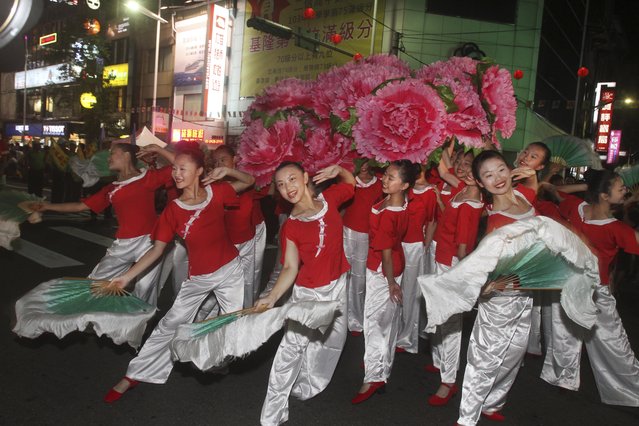
In this photo made late Saturday, August 9, 2014, in Keelung, Taiwan, a traditional Chinese dance troupe performs during a parade marking the beginning of the Chinese folklore's mid-summer's Ghost Month Festival. (Photo by Chiang Ying-ying/AP Photo)

In this photo made late Saturday, August 9, 2014, in Keelung, Taiwan, a traditional Chinese dance troupe performs during a parade marking the beginning of the Chinese folklore's mid-summer's Ghost Month Festival. Fourteen days into the seventh month of the lunar calendar, August 9, in 2014, marks the traditional Chinese Ghost Month where the gates of the underworld are opened and spirits of the deceased are set free to roam the world of the living. The month long festivities are aimed to please the roaming spirits. (Photo by Chiang Ying-ying/AP Photo)
Details
12 Aug 2014 11:57:00