Loading...
Done
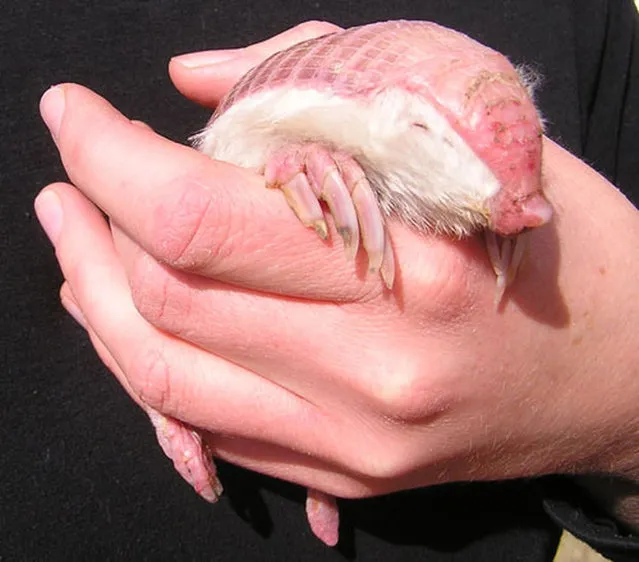
Pink Fairy Armadillo

The pink fairy armadillo (Chlamyphorus truncatus) or pichiciego is the smallest species of armadillo (mammals of the family Dasypodidae, mostly known for having a bony armor shell). It is found in central Argentina, where it inhabits dry grasslands and sandy plains with thorn bushes and cacti.The pink fairy armadillo is approximately 90–115 mm (3.5-4.5 inches) long, excluding the tail, and is pale rose or pink in color. It has the ability to bury itself completely in a matter of seconds if frightened.
Details
16 Jan 2014 10:35:00
A boy rides on a snow wagon towed by a robot dressed as a Teddy bear, which only moves forward by moving its legs, during the Ice and snow carnival at Taoranting park in Beijing February 9, 2015. (Photo by Kim Kyung-Hoon/Reuters)

A boy rides on a snow wagon towed by a robot dressed as a Teddy bear, which only moves forward by moving its legs, during the Ice and snow carnival at Taoranting park in Beijing February 9, 2015. (Photo by Kim Kyung-Hoon/Reuters)
Details
10 Feb 2015 11:31:00
A pole-dancing robot built by British artist Giles Walker performs at a gentlemen's club Monday, January 8, 2018, in Las Vegas. The event was held to coincide with CES International. (Photo by Jae C. Hong/AP Photo)

A pole-dancing robot built by British artist Giles Walker performs at a gentlemen's club Monday, January 8, 2018, in Las Vegas. The event was held to coincide with CES International. (Photo by Jae C. Hong/AP Photo)
Details
10 Jan 2018 09:16:00
Dennis Hong a professor of Mechanical & Aerospace Engineering at UCLA Samueli School of Engineering attempts to impede the movement of ARTEMIS, a full-sized humanoid robot with first-of-its-kind technology in Los Angeles, California, U.S., April 13, 2023. (Photo by Mike Blake/Reuters)

Dennis Hong a professor of Mechanical & Aerospace Engineering at UCLA Samueli School of Engineering attempts to impede the movement of ARTEMIS, a full-sized humanoid robot with first-of-its-kind technology in Los Angeles, California, U.S., April 13, 2023. (Photo by Mike Blake/Reuters)
Details
28 Apr 2023 02:40:00
Baby Fennec Fox

“The fennec fox is a small nocturnal fox found in the Sahara of North Africa. Its most distinctive feature is unusually large ears. The name “fennec” comes from the Arabic word for fox, and the species name zerda has a Greek origin that refers to its habitat. The fennec is the smallest species of canid in the world; coat, ears and kidney functions have adapted to a high-temperature, low-water, desert environment. In addition, its hearing is sensitive enough to hear prey moving underground”. – Wikipedia

Photo: A Baby Fennec is seen at Sunshine International Aquarium on June 24, 2009 in Tokyo, Japan. The small nocturnal fox babies were born on May 17 2009. (Photo by Junko Kimura/Getty Images)
Details
16 Sep 2011 12:02:00
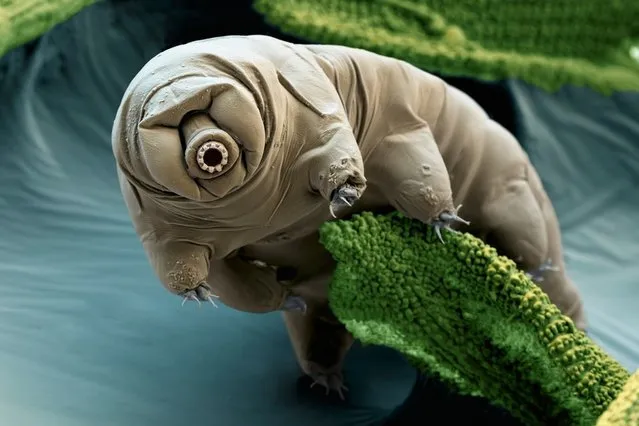
Tardigrades (commonly known as waterbears or moss piglets). (Photo by SPL/East News)

“Tardigrades (commonly known as waterbears or moss piglets) are small, water-dwelling, segmented animals with eight legs. Tardigrades were first discovered in 1773 by Johann August Ephraim Goeze, who called them kleiner Wasserbär, meaning “little water bear” in German. The name Tardigrada means “slow walker” and was given by Lazzaro Spallanzani in 1777. The name water bear comes from the way they walk, reminiscent of a bear's gait. The biggest adults may reach a body length of 1.5 millimetres (0.059 in), the smallest below 0.1 mm. Freshly hatched tardigrades may be smaller than 0.05 mm”. – Wikipedia. Photo: Tardigrades. (Photo by SPL/East News)
Details
26 Sep 2012 09:55:00
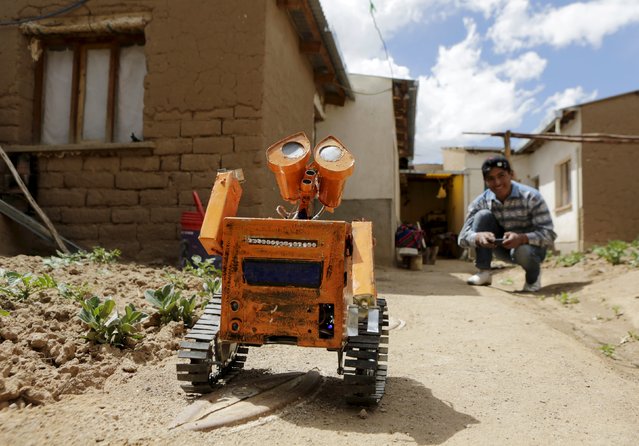
A replica of the Wall-E character is remotely controlled with a mobile phone by Bolivian student Esteban Quispe, 17, in Patacamaya, south of La Paz, December 10, 2015. (Photo by David Mercado/Reuters)

A replica of the Wall-E character is remotely controlled with a mobile phone by Bolivian student Esteban Quispe, 17, in Patacamaya, south of La Paz, December 10, 2015. Quispe built the Wall-E robot using materials he obtained from a rubbish dump in the town located in the Andean highland region. He hopes to mechanize agriculture in Patacamaya by making use of robots that operate on solar energy, Quispe told Reuters. (Photo by David Mercado/Reuters)
Details
13 Dec 2015 08:05:00
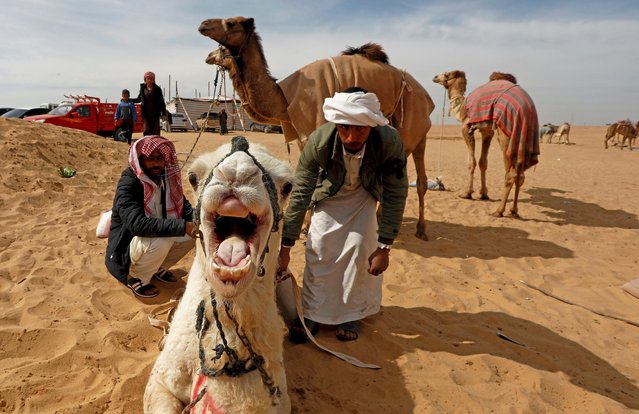
Bedouin breeders fix a robot jockey mounted on a camel before the 18th International Camel Racing festival at the Sarabium desert in Ismailia, Egypt, March 12, 2019. (Photo by Amr Abdallah Dalsh/Reuters)

Bedouin breeders fix a robot jockey mounted on a camel before the 18th International Camel Racing festival at the Sarabium desert in Ismailia, Egypt, March 12, 2019. Several Gulf countries have banned child jockeys from the traditional Bedouin sport after rights groups said the youngsters were often injured and some had been abducted or sold by their families. (Photo by Amr Abdallah Dalsh/Reuters)
Details
21 Mar 2019 00:01:00