Loading...
Done
Traders lay out their stools in a fishing village of Long Hai commune in Vung Tau province, Vietnam on June 17, 2020 with the market opening at midnight and trading into the early hours of the morning each day. It is the largest wholesale fishing market in the region and market traders can be seen sorting their fish into their different types before putting them into different coloured boxes for sale. (Photo by Pham Huy Trung/Solent News)

Traders lay out their stools in a fishing village of Long Hai commune in Vung Tau province, Vietnam on June 17, 2020 with the market opening at midnight and trading into the early hours of the morning each day. It is the largest wholesale fishing market in the region and market traders can be seen sorting their fish into their different types before putting them into different coloured boxes for sale. (Photo by Pham Huy Trung/Solent News)
Details
23 Jun 2020 00:01:00
Seven Sins By Alexey Malina

Alexey Malina has portrayed the Seven Deadly Sins in a series of posters called Seven Sins. The black shapes bleed as the deception and dread of sin’s course evolves in one’s life. Their stamina caves to lust, wrath, envy, greed, sloth, pride and gluttony. As the New Testament warns us, “flee from evil, cling to what is good” for the patterns that follow the seven only lead to death.
Details
20 Apr 2014 09:42:00
Dragon Bridge Over The River Hang

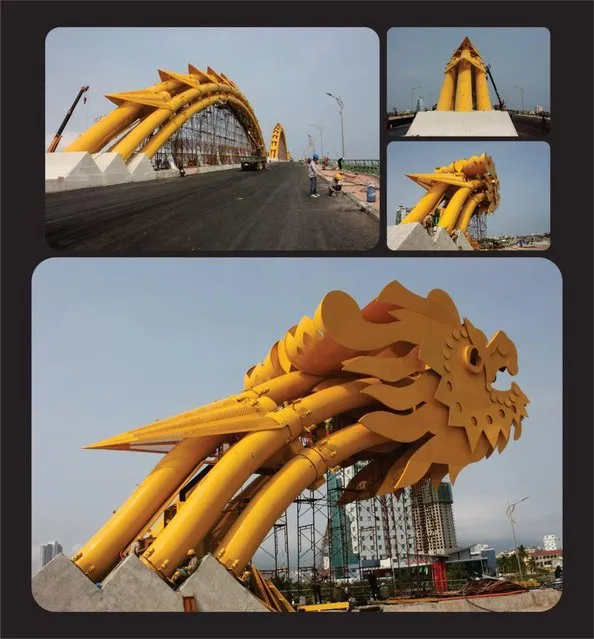
The Dragon Bridge (Vietnamese: Cầu Rồng) is a bridge over the River Hàn at Da Nang, Vietnam. Construction of the bridge began on 19 July 2009 (the same day as the inauguration of the nearby Thuận Phước Bridge) when the Prime Minister of Vietnam Nguyen Tan Dung and many high-ranking government officials attended the groundbreaking ceremony. Dragon Bridge is 666m long, 37.5m wide and has six lanes for traffic. It opened to traffic on March 29, 2013, at a cost os nearly VND 1.5 trillion dong (US$88m). The bridge was designed by the US-based Ammann & Whitney Consulting Engineers with Louis Berger Group. Construction was undertaken by Company No. 508, an affiliate of Civil Construction Engineering Corporation No.5, and Bridge Company No. 75.
Details
01 Jan 2014 08:41:00
Newborn White-Cheeked Gibbon Nomascus

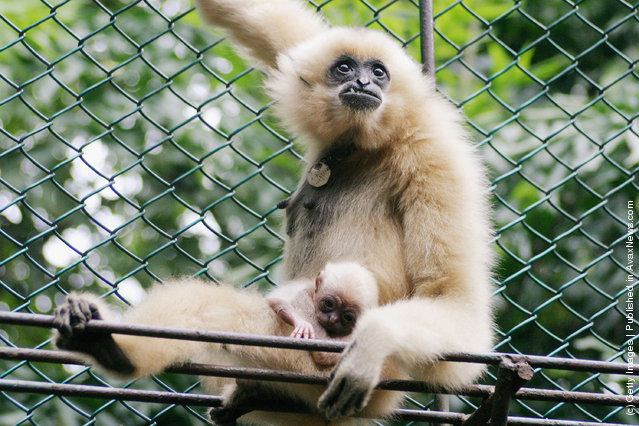
“Nomascus is the second most speciose genus of gibbons (family Hylobatidae). Originally this genus was a subgenus of Hylobates, and all individuals were considered one species, Hylobates concolor. Species within Nomascus are characterized by 52 chromosomes. Some species are all black, some light with a distinct black tuft of crown fur, and some by distinct, light-colored cheek patches. Nomascus is found from southern China (Yunnan) to southern Vietnam, and also on Hainan Island. One of the genus' species, Nomascus nasutus, has been deemed “the most critically endangered ape species in the world”. All of the species in this genus are endangered or critically endangered”. – Wikipedia

Photo: A newborn White-Cheeked Gibbon clings to its mother in the Nanning Zoo on April 12, 2004 in Nanning, Guangxi province, China. The White-Cheeked Gibbon's natural habitat is Southern China as well as Vietnam and Laos. They are classified as highly endangered and are on the brink of extinction due to poaching and reduction of natural rainforests. (Photo by Getty Images)

Details
12 Aug 2011 11:51:00
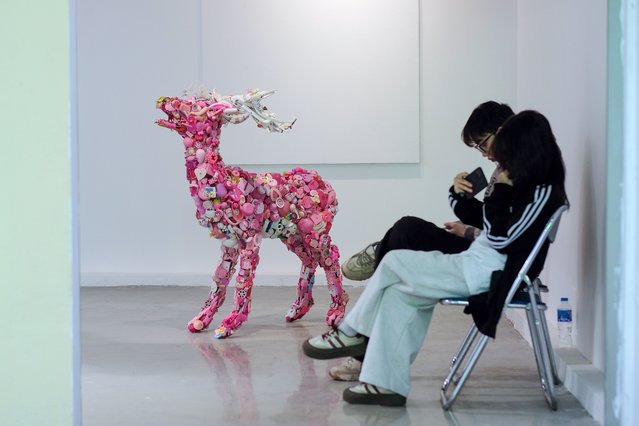
People sit next to an art installation during the “Plastic Dinoland” exhibition by Japanese artist Hiroshi Fuji, in Hanoi, Vietnam, 17 March 2025. The exhibition, which features colorful installations of dinosaurs made from discarded toys, runs from 15 March to 01 June 2025 at The Japan Foundation in Hanoi. (Photo by Luong Thai Linh/EPA/EFE)

People sit next to an art installation during the “Plastic Dinoland” exhibition by Japanese artist Hiroshi Fuji, in Hanoi, Vietnam, 17 March 2025. The exhibition, which features colorful installations of dinosaurs made from discarded toys, runs from 15 March to 01 June 2025 at The Japan Foundation in Hanoi. (Photo by Luong Thai Linh/EPA/EFE)
Details
11 Apr 2025 02:58:00
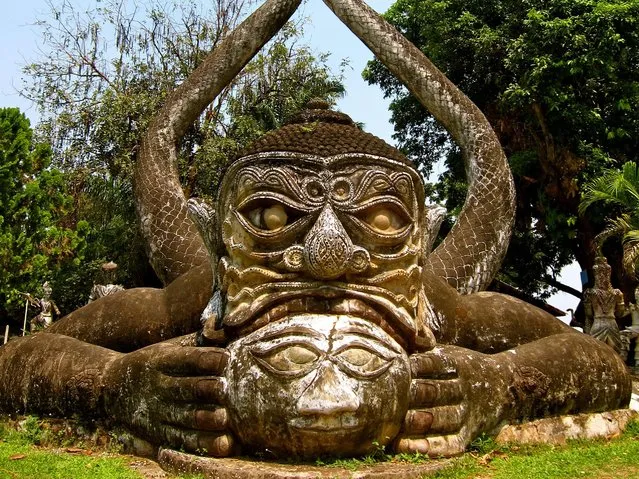
Lao Peoples Democratic Republic

Laos, officially the Lao People's Democratic Republic, is a landlocked country in Southeast Asia, bordered by Burma and China to the northwest, Vietnam to the east, Cambodia to the south, and Thailand to the west. Its population was estimated to be around 6.5 million in 2012. A third (33%) of the country's population lives below the international poverty line which means living on less than U.S. $1.25 per day.
Details
01 Sep 2013 14:51:00
Thailand By Saravut Whanset

Thailand officially the Kingdom of Thailand , formerly known as Siam, is a country located at the centre of the Indochina peninsula in Southeast Asia. It is bordered to the north by Burma and Laos, to the east by Laos and Cambodia, to the south by the Gulf of Thailand and Malaysia, and to the west by the Andaman Sea and the southern extremity of Burma. Its maritime boundaries include Vietnam in the Gulf of Thailand to the southeast, and Indonesia and India in the Andaman Sea to the southwest.
Details
30 May 2014 10:20:00
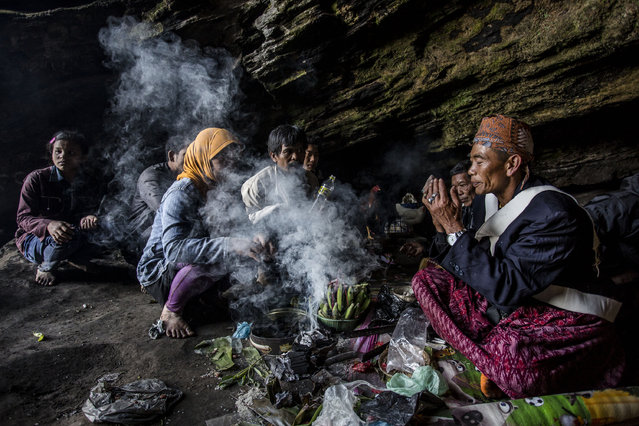
A Tenggerese shaman praying for worshippers at Widodaren cave during the Tenggerese Hindu Yadnya Kasada festival on July 31, 2015 in Probolinggo, East Java, Indonesia. The festival is the main festival of the Tenggerese people and lasts about a month. On the fourteenth day, the Tenggerese make the journey to Mount Bromo to make offerings of rice, fruits, vegetables, flowers and livestock to the mountain gods by throwing them into the volcano's caldera. (Photo by Ulet Ifansasti/Getty Images)

A Tenggerese shaman praying for worshippers at Widodaren cave during the Tenggerese Hindu Yadnya Kasada festival on July 31, 2015 in Probolinggo, East Java, Indonesia. The festival is the main festival of the Tenggerese people and lasts about a month. On the fourteenth day, the Tenggerese make the journey to Mount Bromo to make offerings of rice, fruits, vegetables, flowers and livestock to the mountain gods by throwing them into the volcano's caldera. The origin of the festival lies in the 15th century when a princess named Roro Anteng started the principality of Tengger with her husband Joko Seger, and the childless couple asked the mountain Gods for help in bearing children. The legend says the Gods granted them 24 children but on the provision that the 25th must be tossed into the volcano in sacrifice. The 25th child, Kesuma, was finally sacrificed in this way after initial refusal, and the tradition of throwing sacrifices into the caldera to appease the mountain Gods continues today. (Photo by Ulet Ifansasti/Getty Images)
Details
01 Aug 2015 12:07:00