Loading...
Done
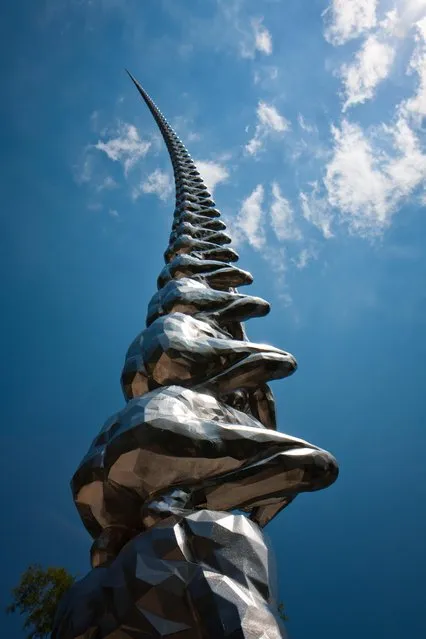
“Karma” by Do-Ho Suh. Sydney and Walda Besthoff Sculpture Garden, New Orleans Museum of Art, New Orleans, LA. (Photo by Alan Teo)

“Do-Ho Suh addresses issues of identity, memory, and relationships. Son of the famous Korean ink-painter Suh Se-Ok, Do-Ho Suh is a leading figure in the transnational avant-garde generation of Korean artists who came of age in the late 1990s, and his work eloquently represents a dual consciousness between East and West”.

Photo: “Karma” by Do-Ho Suh. Sydney and Walda Besthoff Sculpture Garden, New Orleans Museum of Art, New Orleans, LA. (Photo by Alan Teo)


Details
05 Mar 2013 09:37:00
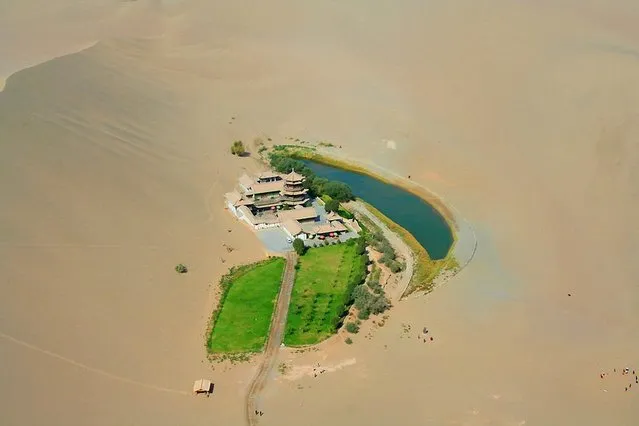
Crescent Lake In China

Yueyaquan is a crescent-shaped lake in an oasis, 6 km south of the city of Dunhuang in Gansu Province, China. It was named Yueyaquan in the Qing Dynasty. According to measurements made in 1960, the average depth of the lake was 4 to 5 meters, with a maximum depth of 7.5 metres In the following 40 years, the depth of the lake continually declined. In the early 1990s, its area had shrunk to only 5,500 m2 with an average depth of 0.9 meter (maximum 1.3 meter). In 2006, the local government with help of the central government started to fill the lake and restore its depth; its depth and size have been growing yearly since then. The lake and the surrounding deserts are very popular with tourists, who are offered camel and 4x4 rides.
Details
25 Jun 2013 10:29:00
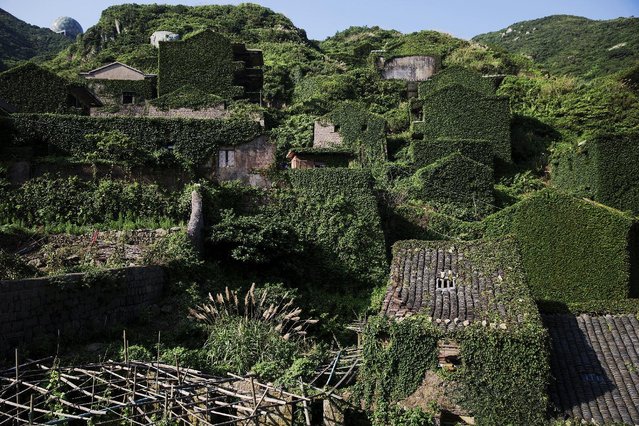
Plants grow on houses in the abandoned fishing village of Houtouwan on the island of Shengshan July 26, 2015. (Photo by Damir Sagolj/Reuters)

Plants grow on houses in the abandoned fishing village of Houtouwan on the island of Shengshan July 26, 2015. Just a handful of people still live in a village on Shengshan Island east of Shanghai that was once home to more than 2,000 fishermen. Every day hundreds of tourists visit Houtouwan, making their way on narrow footpaths past tumbledown houses overtaken by vegetation. The remote village, on one of more than 400 islands in the Shengsi archipelago, was abandoned in the early 1990s as first wealthy residents then others moved away, aiming to leave problems with education and food delivery behind them. (Photo by Damir Sagolj/Reuters)
Details
30 Jul 2015 12:24:00
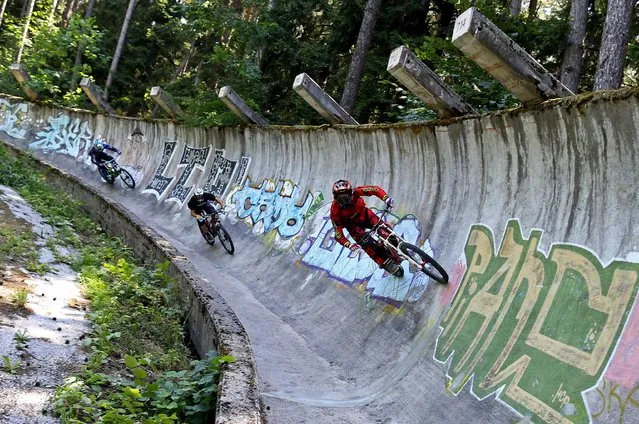
Downhill bikers Kemal Mulic (R-L), Tarik Hadzic and Kamer Kolar train on the disused bobsled track from the 1984 Sarajevo Winter Olympics on Trebevic mountain near Sarajevo, Bosnia and Herzegovina, August 8, 2015. (Photo by Dado Ruvic/Reuters)

Downhill bikers Kemal Mulic (R-L), Tarik Hadzic and Kamer Kolar train on the disused bobsled track from the 1984 Sarajevo Winter Olympics on Trebevic mountain near Sarajevo, Bosnia and Herzegovina, August 8, 2015. Abandoned and left to crumble into oblivion, most of the 1984 Winter Olympic venues in Bosnia's capital Sarajevo have been reduced to rubble by neglect as much as the 1990s conflict that tore apart the former Yugoslavia. (Photo by Dado Ruvic/Reuters)
Details
11 Aug 2015 13:39:00


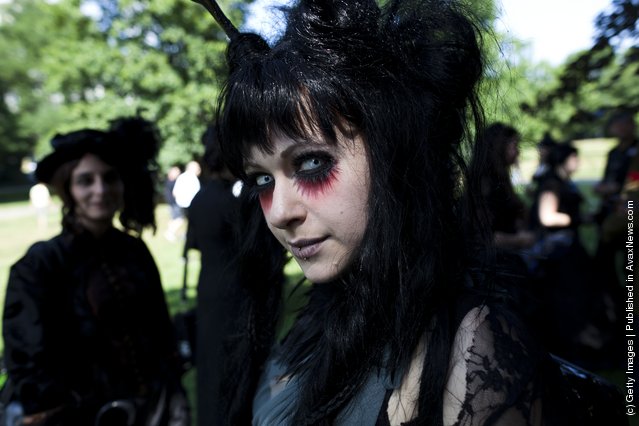
Gothic rock music enthusiasts walk the streets between venues during the annual Wave Gotik music festival on June 11, 2011 in Leipzig, Germany. The festival began in the 1990s and has since grown into one of the biggest gatherings of Goth scene followers in Europe with around 20,000 participants. Many of those attending wear elaborate outfits and make-up for which they require hours of painstaking preparation and that also show a departure from the traditional black of the Goth scene. Punk remains a strong influence in today's Goth style as witnessed in Leipzig, but newer trends, with names like Cybergoth and Steampunk, have emerged that blend bold colors, Victorian fashion elegance and 19th and 20th century factory accessories into a look reminiscent of a mutated Venetian carnival. The five-day festival includes performances by around 200 bands. (Photo by Carsten Koall/Getty Images)
Details
13 Jun 2011 08:31:00


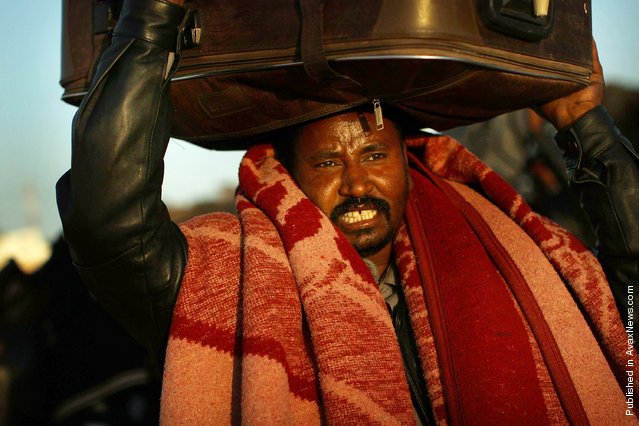
A Sudanese man walks to a United Nations displacement camp after crossing into Tunisia from Libya on March 06, 2011 in Ras Jdir, Tunisia. As fighting continues in and around the Libyan capital of Tripoli, tens of thousands of guest workers from Egypt, Tunisia, Bangladesh and other countries are fleeing to the border of Tunisia to escape the violence. The situation has turned into a humanitarian emergency as fledgling Tunisia is overwhelmed with the workers. Libyan leader Muammar Gaddafi has vowed to fight to the end. (Photo by Spencer Platt/Getty Images). RAS JDIR, TUNISIA – MARCH 06 2011
Details
10 Mar 2011 11:44:00
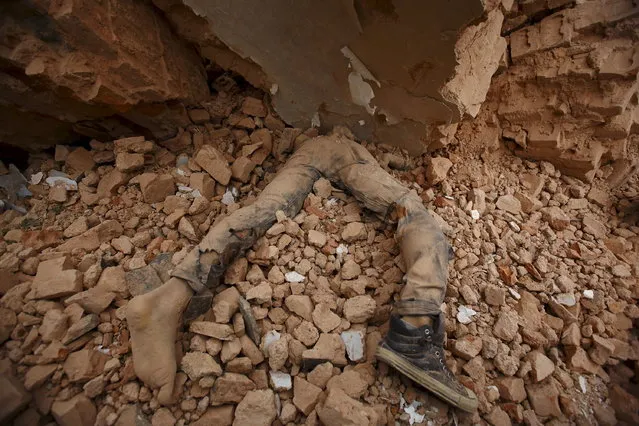
A body of a victim lies trapped in the debris after an earthquake hit, in Kathmandu, Nepal April 25, 2015. (Photo by Navesh Chitrakar/Reuters)

A body of a victim lies trapped in the debris after an earthquake hit, in Kathmandu, Nepal April 25, 2015. Rescue efforts in Nepal are intensifying after nearly 2,000 people were killed on Saturday in the worst earthquake there in more than 80 years. Many countries and charities have offered aid to deal with the disaster. Seventeen people have been killed on Mount Everest by avalanches – the mountain's worst-ever disaster. Meanwhile a powerful aftershock was felt on Sunday in Nepal, India and Bangladesh, and more avalanches were reported near Everest. (Photo by Navesh Chitrakar/Reuters)
Details
26 Apr 2015 09:11:00
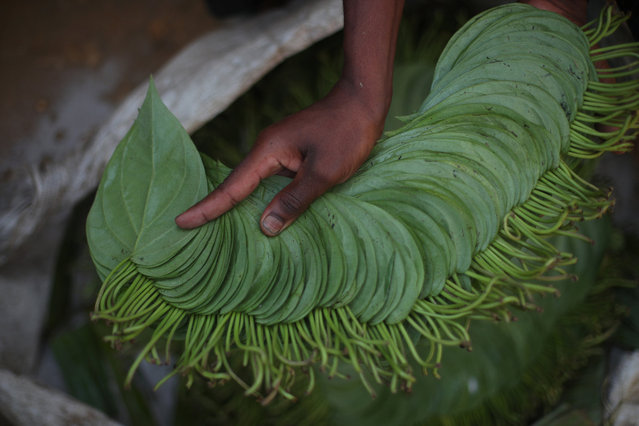
Faruk, 17, a Rohingya refugee trader holds betel leaves which are on sale at a stall in Palong Khali refugee camp near Cox's Bazar, Bangladesh, November 3, 2017. He left his village in Myanmar when the military opened fire towards the Rohingya. “I buy this betel leaf from Palong Khali market, in one bundle there are 160 pieces, I buy it for 80 taka and I sell it for 100 taka. Bangladeshi's and I sell for the same rate in the camp. Outside in the local market it is 80 taka per bundle. My problem is that I don't have money so I can't buy anything to eat, I can't buy fish to eat”, he said. (Photo by Hannah McKay/Reuters)

Faruk, 17, a Rohingya refugee trader holds betel leaves which are on sale at a stall in Palong Khali refugee camp near Cox's Bazar, Bangladesh, November 3, 2017. He left his village in Myanmar when the military opened fire towards the Rohingya. “I buy this betel leaf from Palong Khali market, in one bundle there are 160 pieces, I buy it for 80 taka and I sell it for 100 taka (1 Bangladeshi Taka = 0.012 US Dollar). Bangladeshi's and I sell for the same rate in the camp. Outside in the local market it is 80 taka per bundle. My problem is that I don't have money so I can't buy anything to eat, I can't buy fish to eat”, he said. (Photo by Hannah McKay/Reuters)
Details
27 Nov 2017 08:54:00