Loading...
Done


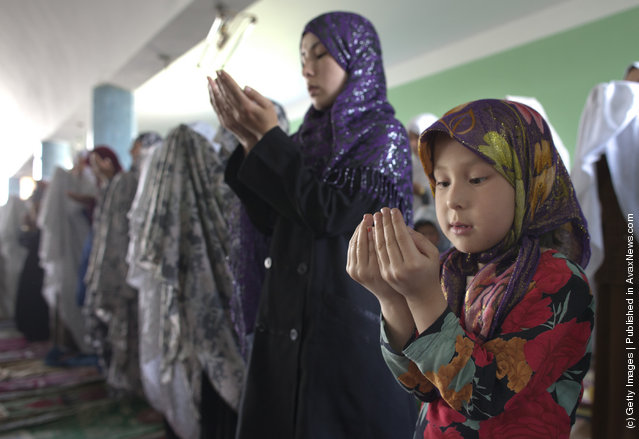
Afghan women pray at the Karti Sakhi shrine on May 13, 2011 in Kabul, Afghanistan. Within many mosques women have separate areas from the men for prayer, however, in many parts of Taliban controlled Afghanistan, women are only allowed to pray at home. (Photo by Paula Bronstein /Getty Images)
Details
16 May 2011 07:58:00
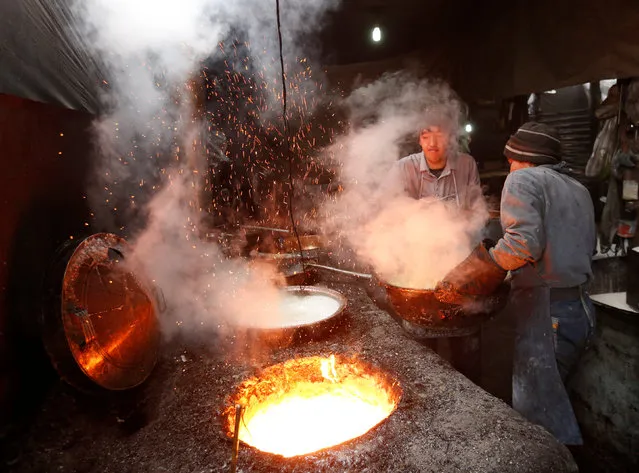
Afghan men work in a small sweets factory in Kabul, Afghanistan January 5, 2017. (Photo by Mohammad Ismail/Reuters)

Afghan men work in a small sweets factory in Kabul, Afghanistan January 5, 2017. (Photo by Mohammad Ismail/Reuters)
Details
11 Jan 2017 14:49:00
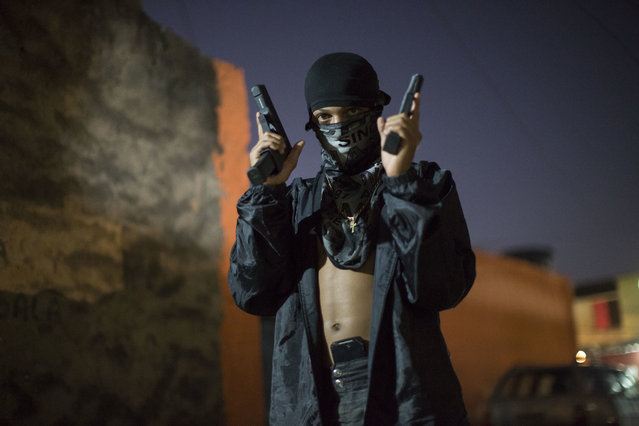
In this July 11, 2016 photo, a young, masked drug trafficker poses for photos holding his guns at a slum in Rio de Janeiro, Brazil. Teenagers openly tote guns while they work as guards, lookouts and distributors for drug lords operating just a few miles from where hundreds of thousands and tourists and athletes will be for the Aug. 5-21 Olympic Games. (Photo by Felipe Dana/AP Photo)

In this July 11, 2016 photo, a young, masked drug trafficker poses for photos holding his guns at a slum in Rio de Janeiro, Brazil. Teenagers openly tote guns while they work as guards, lookouts and distributors for drug lords operating just a few miles from where hundreds of thousands and tourists and athletes will be for the Aug. 5-21 Olympic Games. (Photo by Felipe Dana/AP Photo)
Details
24 Jul 2016 10:47:00


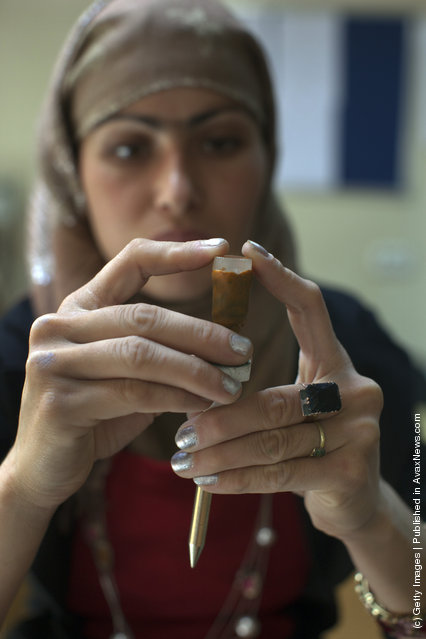
Student, Shoukria positions a stone for cutting at the Turquoise Mountain Gem cutting class on May 18, 2011, in Kabul, Afghanistan. The mineral resources of Afghanistan are relatively unexplored even with Afghanistan's mineral wealth of coal, copper, gold and iron ore, with precious and semiprecious stones, including high-quality emerald, lapis lazuli, red garnet and ruby. Given the country's remote and rugged terrain, on-going instability plus an inadequate infrastructure and transportation means that mining is still difficult. While many are trying to bring positive changes, Afghanistan's mining industry uses unregulated, primitive methods and outdated equipment. (Photo by Paula Bronstein/Getty Images)

Details
22 May 2011 09:11:00
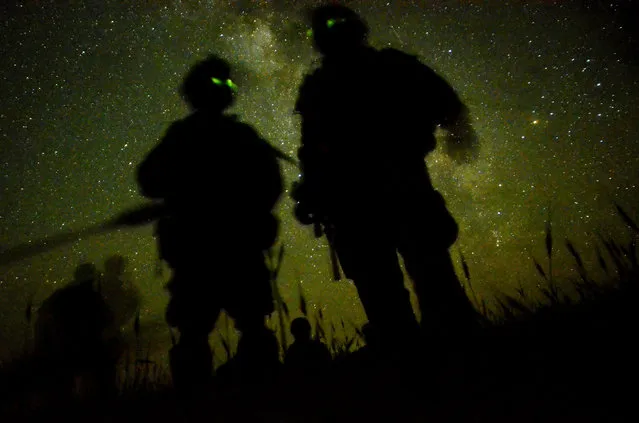
U.S. Army soldiers with the 1st Battalion, 501st Infantry Regiment deployed to Combat Outpost Sabari, Afghanistan scan their area as they begin a multi-day air assault mission near the Pakistani border of eastern Afghanistan's Khost province May 2, 2012. (Photo by Staff Sgt. Joshua L. DeMotts/U.S. Air Force)

U.S. Army soldiers with the 1st Battalion, 501st Infantry Regiment deployed to Combat Outpost Sabari, Afghanistan scan their area as they begin a multi-day air assault mission near the Pakistani border of eastern Afghanistan's Khost province May 2, 2012. (Photo by Staff Sgt. Joshua L. DeMotts/U.S. Air Force)
Details
08 Apr 2014 11:16:00
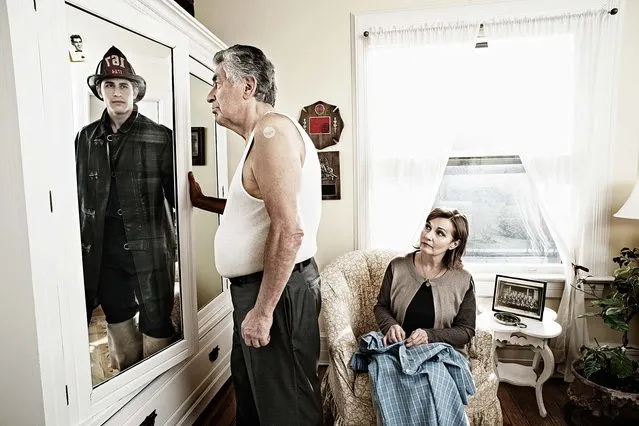
Reflections Of the Past By Tom Hussey

Tom Hussey is a photographer who focuses on advertising and portrait photography. The project featured on this post is called “Reflections” and was created for a new Novartis drug called the Exelon Patch. The drug in question is a prescription medicine for the treatment of mild to moderate Alzheimer’s dementia. The highly conceptual photographs shows an older person looking at the reflection of their younger self.
Details
23 Oct 2013 09:55:00
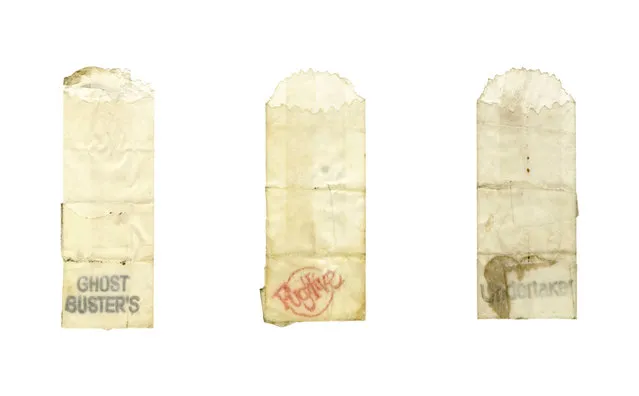
All In By Graham MacIndoe

In order to get a glimpse into the visual culture of drug trade in New York City, a British photographer Graham MacIndoe collected more than one hundred bags, which were used to sell heroin. These bags feature references to various movies, fast-food restaurants, and luxury brands. This could be a way to mark various purities of heroin, or maybe different drug dealers use different markers to distinguish between each other. We can only wonder where Graham has acquired all these heroin bags. Hopefully, he picked them up after their contents were emptied. (Photo by Graham MacIndoe)
Details
01 Dec 2014 14:15:00
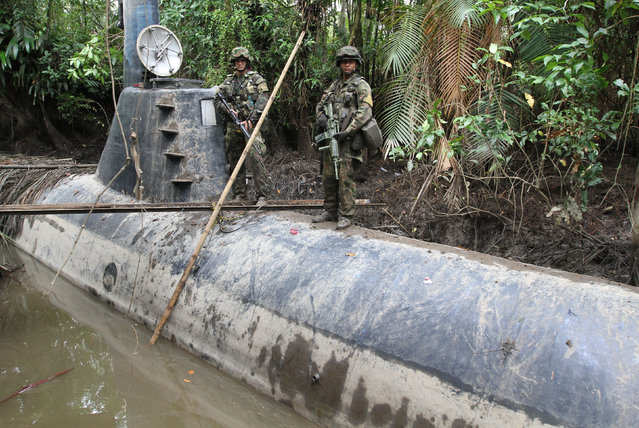
Members of the Colombian Navy stand guard on top of a seized submarine built by drug smugglers in a makeshift shipyard in Timbiqui, department of Cauca February 14, 2011. Colombian authorities said the submersible craft was to be used to transport 8 tons of cocaine illegally into Mexico. (Photo by Jaime Saldarriaga/Reuters)

Members of the Colombian Navy stand guard on top of a seized submarine built by drug smugglers in a makeshift shipyard in Timbiqui, department of Cauca February 14, 2011. Colombian authorities said the submersible craft was to be used to transport 8 tons of cocaine illegally into Mexico. (Photo by Jaime Saldarriaga/Reuters)
Details
14 Aug 2015 13:34:00