Loading...
Done
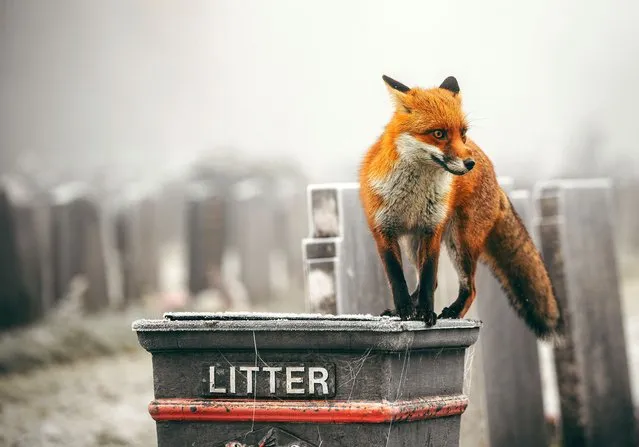
A man has snapped a series of images showing a cheeky fox stealing a McDonald's from a bin in a London park early December 2022. (Photo by Ashley James/Caters News Agency)

A man has snapped a series of images showing a cheeky fox stealing a McDonald's from a bin in a London park early December 2022. (Photo by Ashley James/Caters News Agency)
Details
08 Jan 2023 06:06:00
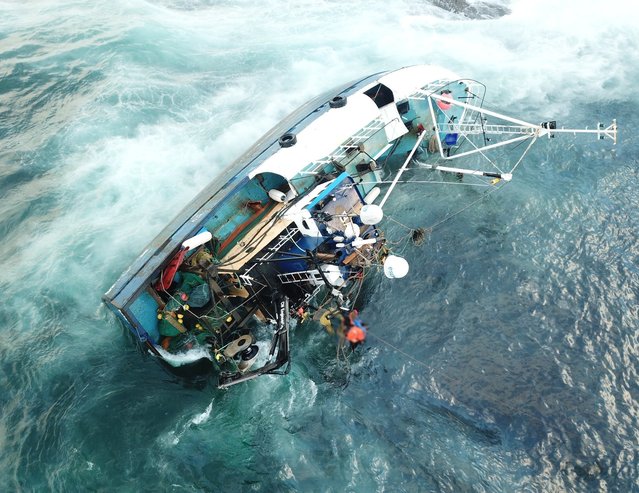
Dramatic aerial image show a Scots vessel slowly sinking beneath the waves after it hit a “black spot” in the North Sea mid-voyage.  Ocean Maid BA55 capsizing amidst the waves after it ran aground off the shore of Fraserburgh, Aberdeenshire, area of Scotland on yesterday morning, October 24, 2022. Fraserburgh Royal National Lifeboat Institution (RNLI) rescued the four crew members from the shipwreck at 5:56 am, guiding them into lifeboats as they escaped the keeling ship.  (Photo by Deadline News)

Dramatic aerial image show a Scots vessel slowly sinking beneath the waves after it hit a “black spot” in the North Sea mid-voyage. Ocean Maid BA55 capsizing amidst the waves after it ran aground off the shore of Fraserburgh, Aberdeenshire, area of Scotland on yesterday morning, October 24, 2022. Fraserburgh Royal National Lifeboat Institution (RNLI) rescued the four crew members from the shipwreck at 5:56 am, guiding them into lifeboats as they escaped the keeling ship. (Photo by Deadline News)
Details
14 Jan 2023 01:10:00
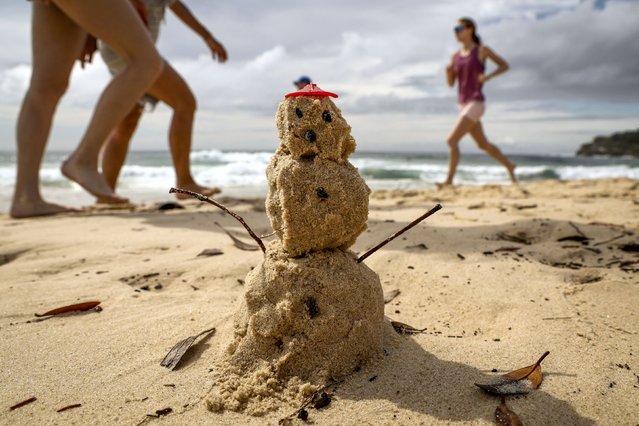
Beachgoers pass a snowman made from sand on Christmas Day at Bondi Beach in Sydney on December 25, 2023. (Photo by David Gray/AFP Photo)

Beachgoers pass a snowman made from sand on Christmas Day at Bondi Beach in Sydney on December 25, 2023. (Photo by David Gray/AFP Photo)
Details
13 Feb 2025 03:16:00
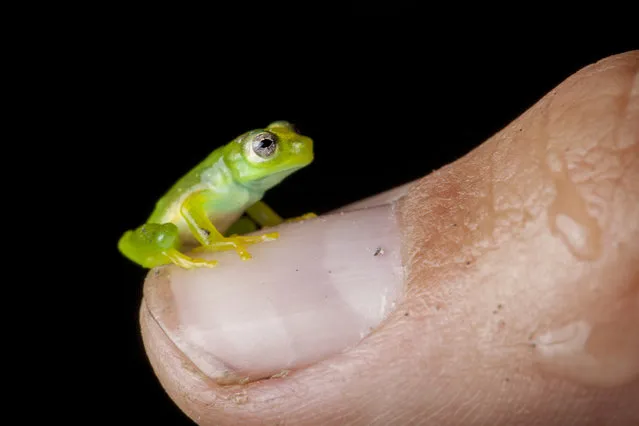
Miniature glass frog. (Photo by Robin Moore)

Thousands of species of amphibians are endangered and hundreds have already disappeared, but in recent years, a team of scientists and conservationists have re-discovered some of these “lost” species and uncovered previously unknown varieties. Here: Miniature glass frog. (Photo by Robin Moore)
Details
10 Oct 2014 12:55:00
Ocean voyage

Do you think that history is a science? Well, not exactly. First, and foremost, history is the state's “legend of wars”, it’s official regalia. Of course, public historians are not interested in scientific truth – quite the opposite. In this respect, any attempt to present a state’s history as altruistic and benevolent as possible is welcomed and encouraged – as opposed to any revisionism attempts that may be more accurate. In this matter, Chinese have surpassed us all – they revised in highly creative manner (but rather shamelessly) the technology already invented by Europeans, a process that resulted in oldest state on the planet. Here is an interesting paradox: ask any sinologist about the Middle Kingdom during second century B.C., and he will describe it to you in such a vivid manner as if he has been living there all his life – but as soon as you will ask him to describe Chinese history in the 19-20th centuries… let's say, his eagerness will be greatly diminished. However, we will discuss China in a different article, and in the meantime we will try to understand how exactly historic “legend of wars” is formed and functions – based on a specific and well-known example. A great example is Ferdinand Magellan's first voyage around the world.
Details
14 Nov 2011 09:11:00
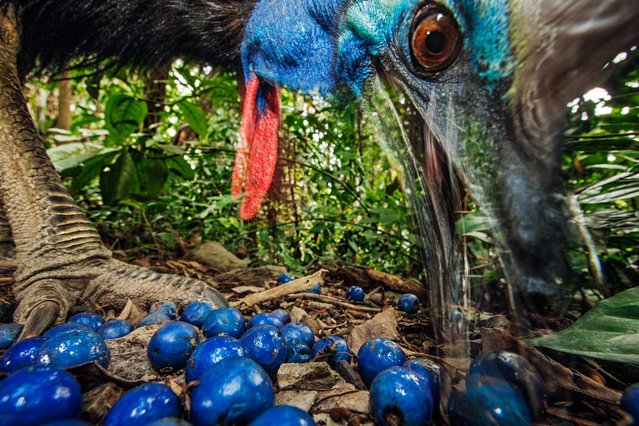
“Cassowaries are large, flightless birds related to emus and (more distantly) to ostriches, rheas, and kiwis”, writes Olivia Judson in the September issue of National Geographic magazine. (Photo by Christian Ziegler/National Geographic)

“Cassowaries are large, flightless birds related to emus and (more distantly) to ostriches, rheas, and kiwis”, writes Olivia Judson in the September issue of National Geographic magazine. How large? People-size: Adult males stand well over five foot five and top 110 pounds. Females are even taller, and can weigh more than 160 pounds. Dangerous when roused, they’re shy and peaceable when left alone. But even birds this big and tough are prey to habitat loss. The dense New Guinea and Australia rain forests where they live have dwindled. Today cassowaries might number 1,500 to 2,000. And because they help shape those same forests – by moving seeds from one place to another – “if they vanish”, Judson writes, “the structure of the forest would gradually change” too. (Photo by Christian Ziegler/National Geographic)
Details
06 Jan 2014 12:21:00
A BASE jumper is pictured against the skyline shrouded in a thick haze during the Kuala Lumpur Tower International Jump in Kuala Lumpur, Malaysia, 02 October 2015. More than 100 BASE jumpers take part in this extreme sport event, which enters its 15th year. The haze hovering over Malaysia is caused by the ongoing plantation and forest fires in the nearby Indonesian provinces of Sumatra and Kalimantan. (Photo by Fazry Ismail/EPA)

A BASE jumper is pictured against the skyline shrouded in a thick haze during the Kuala Lumpur Tower International Jump in Kuala Lumpur, Malaysia, 02 October 2015. More than 100 BASE jumpers take part in this extreme sport event, which enters its 15th year. The haze hovering over Malaysia is caused by the ongoing plantation and forest fires in the nearby Indonesian provinces of Sumatra and Kalimantan. (Photo by Fazry Ismail/EPA)
Details
04 Oct 2015 08:07:00
A picture made available on 09 September 2015 shows traditional mud men dancers from the Asaro District of Goroka in the Eastern Highlands Province of Papua New Guinea perform for the official opening of the Pacific Islands Forum in Port Moresby, Papua New Guinea, 08 September 2015. The Pacific Islands Forum goes from 07 to 11 September and discusses the regions vulnerability to Climate Change. (Photo by Mick Tsikas/EPA)

A picture made available on 09 September 2015 shows traditional mud men dancers from the Asaro District of Goroka in the Eastern Highlands Province of Papua New Guinea perform for the official opening of the Pacific Islands Forum in Port Moresby, Papua New Guinea, 08 September 2015. The Pacific Islands Forum goes from 07 to 11 September and discusses the regions vulnerability to Climate Change. (Photo by Mick Tsikas/EPA)
Details
10 Sep 2015 13:38:00