Loading...
Done
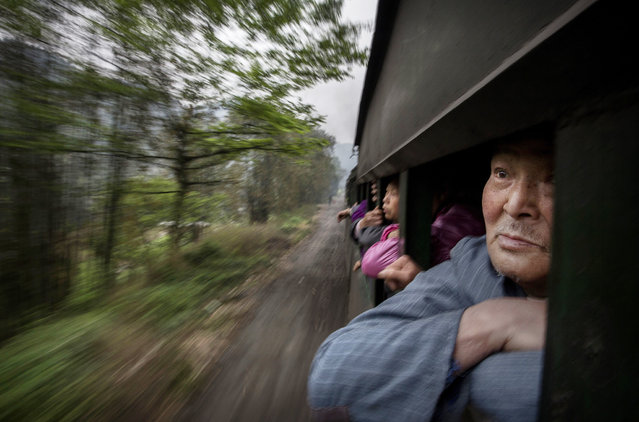
Local villagers ride a local coal powered steam train on March 27, 2015 at a station in the town of Shixi , Sichuan Province, in Southern China. While China boasts the world's most extensive high-speed rail infrastructure. (Photo by Kevin Frayer/Getty Images)

Local villagers ride a local coal powered steam train on March 27, 2015 at a station in the town of Shixi , Sichuan Province, in Southern China. While China boasts the world's most extensive high-speed rail infrastructure with over 16,000 kilometers of track, the Shixi-Bagou railway is still a primary connection for local villagers between towns and is kept alive by tourist cars carrying passengers for ten times the price. The rail line came into service in the late 1950s and the train was initially used to transport coal from a now-shuttered mine before passenger carriages were added. (Photo by Kevin Frayer/Getty Images)
Details
12 May 2015 12:00:00
In this photo taken Wednesday, November 26, 2014 attack dogs and their handlers apprehend a “rhino poacher” center, after alighting from a helicopter into water,  in a simulation exercise showing training at an academy run by the Paramount Group, near Rustenburg, South Africa. (Photo by Denis Farrell/AP Photo)

In this photo taken Wednesday, November 26, 2014 attack dogs and their handlers apprehend a “rhino poacher” center, after alighting from a helicopter into water, in a simulation exercise showing training at an academy run by the Paramount Group, near Rustenburg, South Africa. The course prepares canine units to find firearms or contraband, track suspects in the undergrowth and abseil in harnesses from helicopters in pursuit of poachers. Dogs and handlers learn to trust each other and fine tune a relationship balancing control and aggression. (Photo by Denis Farrell/AP Photo)
Details
01 Dec 2014 14:14:00
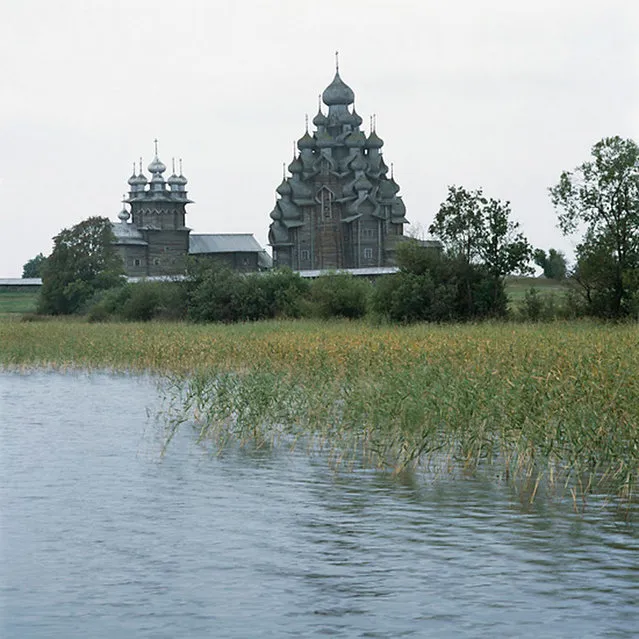
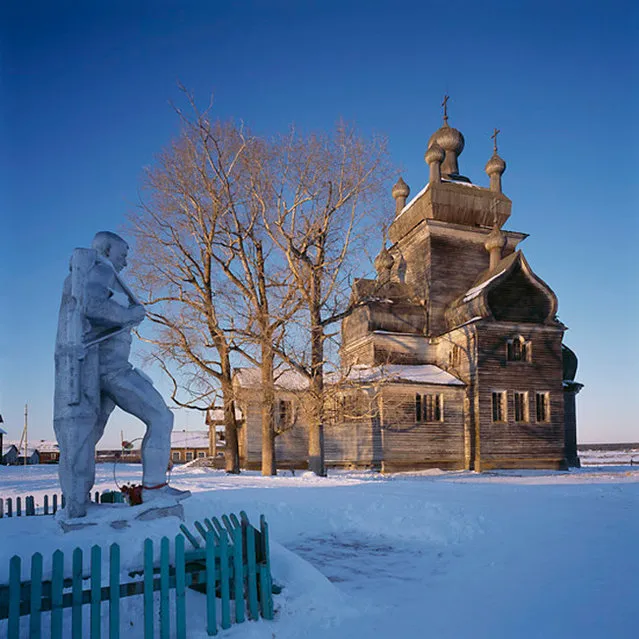
Wooden Churches - Travelling In The Russian North By Richard Davies Part 1

While communism, collectivism, worms, dry rot and casual looting failed to destroy the majestic wooden churches of Russia, it may be ordinary neglect that finally does them in. Dwindled now to several hundred remaining examples, these glories of vernacular architecture lie scattered amid the vastness of the world’s largest country. Just over a decade ago, Richard Davies, a British architectural photographer, struck out on a mission to record the fragile and poetic structures. Austerely beautiful and haunting, “Wooden Churches: Traveling in the Russian North” (White Sea Publishing; $132) is the result. Covering thousands of miles, Mr. Davies described how he and the writer Matilda Moreton tracked down the survivors from among the thousands of onion-domed structures built after Prince Vladimir converted to Christianity in 988.
Details
25 Nov 2013 12:47:00
Wooden Churches - Travelling In The Russian North By Richard Davies Part 2

While communism, collectivism, worms, dry rot and casual looting failed to destroy the majestic wooden churches of Russia, it may be ordinary neglect that finally does them in. Dwindled now to several hundred remaining examples, these glories of vernacular architecture lie scattered amid the vastness of the world’s largest country. Just over a decade ago, Richard Davies, a British architectural photographer, struck out on a mission to record the fragile and poetic structures. Austerely beautiful and haunting, “Wooden Churches: Traveling in the Russian North” (White Sea Publishing; $132) is the result. Covering thousands of miles, Mr. Davies described how he and the writer Matilda Moreton tracked down the survivors from among the thousands of onion-domed structures built after Prince Vladimir converted to Christianity in 988.

See also: Wooden Churches Part1
Details
28 Nov 2013 12:13:00
Women labourers work at the construction site of a road in Kolkata January 8, 2015. Across towns and cities in India, it is not uncommon to see women cleaning building sites, carrying bricks and or shoveling gravel - helping construct the infrastructure necessary for the country's economic and social development. (Photo by Rupak De Chowdhuri/Reuters)

Women labourers work at the construction site of a road in Kolkata January 8, 2015. Across towns and cities in India, it is not uncommon to see women cleaning building sites, carrying bricks and or shoveling gravel – helping construct the infrastructure necessary for the country's economic and social development. They help build roads, railway tracks, airports, and offices. They lay pipes for clean water supplies, cables for telecommunications, and dig the drains for sewage systems. But although women make up at least 20 percent of India's 40 million construction workers, they are less recognized than male workers with lower pay and often prone to safety hazards and sexual harassment. They are often unaware of their rights or scared to complain, say activists now trying to campaign for better treatment of women in the construction industry. (Photo by Rupak De Chowdhuri/Reuters)
Details
15 Jan 2015 13:47:00
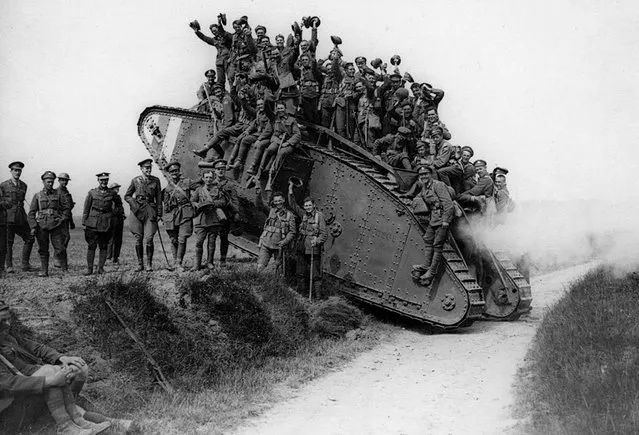
These black-and-white photos are taken from the new book “Armoured Warfare in the First World War 1916 – 1918” by Anthony Tucker-Jones and published by Pen & Sword Military. “Interestingly the British, French and Germans took completely different approaches with varying results”. The British military produced “Little Willie” in Autumn 1915 weighing 18 tonnes, which had a crew of two plus four gunners. “Inspired by a tracked artillery tractor “Little Willie” was referred to as a water tank – hence the name tank – to ensure secrecy”, said Anthony. “This led to the strange looking Mark I with its peculiar rhomboid shape, designed to cross trenches with guns in sponsons on either side. The Germans saw the tank as unchivalrous and were slow to grasp its utility. They favoured the Stormtrooper (specialist soldiers used to infiltrate enemy trenches) and artillery, not the tank”, said Anthony. “However, they didn’t hesitate to make use of captured British tanks. Although the tank helped secure victory and German soldiers dubbed it “Germany’s Downfall” the country was ultimately brought to its knees by the Allies blockade”. Here: British troops hitch a ride on a Mark IV after the massed tank fleet spearheading attack at Cambrai on November 20, 1917. (Photo by Anthony Tucker-Jones/Mediadrumworld.com)

These black-and-white photos are taken from the new book “Armoured Warfare in the First World War 1916 – 1918” by Anthony Tucker-Jones and published by Pen & Sword Military. Here: British troops hitch a ride on a Mark IV after the massed tank fleet spearheading attack at Cambrai on November 20, 1917. (Photo by Anthony Tucker-Jones/Mediadrumworld.com)
Details
23 Feb 2017 00:02:00
The Air2 (Air Squared) floating Bluetooth speaker from Axxess CE is displayed at CES Unveiled, the opening event for the media preview days at the 2015 Consumer Electronics Show, January 4, 2015 in Las Vegas, Nevada. The speaker which levitates over its own base is one of the winners for the CES Innovation Awards and is patent pending. (Photo by Robyn Beck/AFP Photo)

The Air2 (Air Squared) floating Bluetooth speaker from Axxess CE is displayed at CES Unveiled, the opening event for the media preview days at the 2015 Consumer Electronics Show, January 4, 2015 in Las Vegas, Nevada. The speaker which levitates over its own base is one of the winners for the CES Innovation Awards and is patent pending. (Photo by Robyn Beck/AFP Photo)
Details
09 Jan 2015 13:08:00
A three-seater Toyota Kikai concept car is displayed during the 2016 CES trade show in Las Vegas, Nevada January 8, 2016. (Photo by Steve Marcus/Reuters)

A three-seater Toyota Kikai concept car is displayed during the 2016 CES trade show in Las Vegas, Nevada January 8, 2016. (Photo by Steve Marcus/Reuters)
Details
12 Jan 2016 08:02:00