Loading...
Done
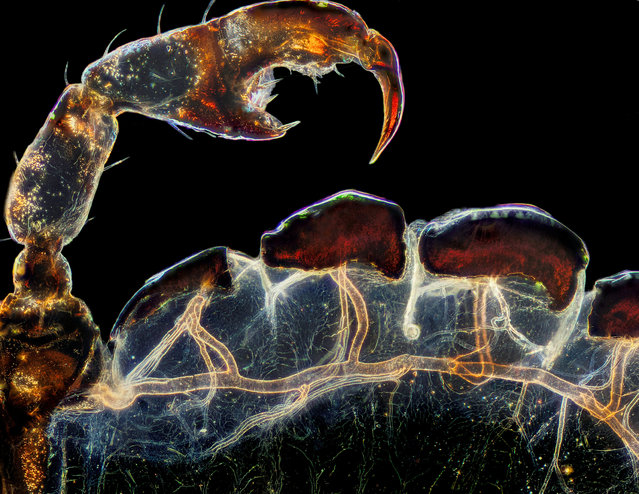
Third place: the rear leg, claw and respiratory trachea of a louse (Haematopinus suis). (Photo by Frank Reiser/Nassau Community College/Nikon Small World Photomicrography 2021)

Third place: the rear leg, claw and respiratory trachea of a louse (Haematopinus suis). (Photo by Frank Reiser/Nassau Community College/Nikon Small World Photomicrography 2021)
Details
15 Sep 2021 02:36:00
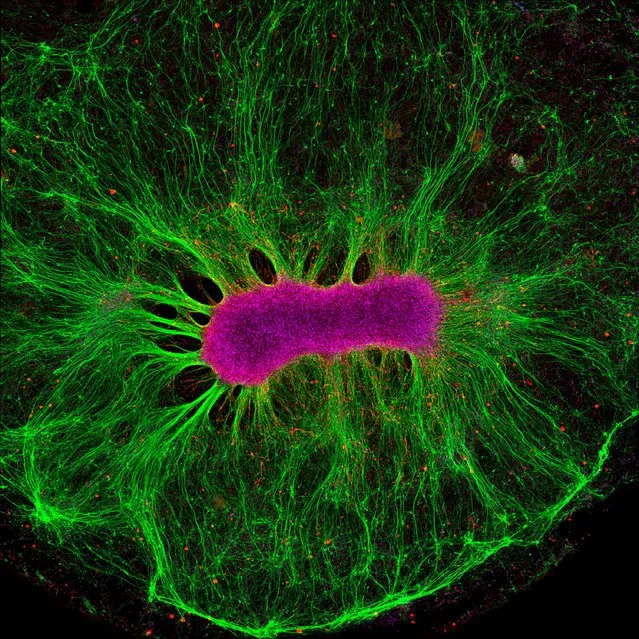
Brain-on-a-chip. Dazzling in green and magenta this image shows the nerve fibres (in green) produced by neural stem cells (in magenta) as they grow on a synthetic gel. Captured by a technique known as confocal microscopy, the image is part of research shedding light on how tinkering with the environment can affect the way in which nerve fibres grow. (Photo by Collin Edington and Iris Lee/Massachusetts Institute of Technology/Wellcome Images)

Brain-on-a-chip. Dazzling in green and magenta this image shows the nerve fibres (in green) produced by neural stem cells (in magenta) as they grow on a synthetic gel. Captured by a technique known as confocal microscopy, the image is part of research shedding light on how tinkering with the environment can affect the way in which nerve fibres grow. (Photo by Collin Edington and Iris Lee/Massachusetts Institute of Technology/Wellcome Images)
Details
17 Mar 2017 00:01:00
An AH-64D Apache attack helicopter flies in front of a wall of fire during the South Carolina National Guard Air and Ground Expo at McEntire Joint National Guard Base, South Carolina, U.S. on May 6, 2017. (Photo by Jorge Intriago/Reuters/Courtesy Air National Guard)

An AH-64D Apache attack helicopter flies in front of a wall of fire during the South Carolina National Guard Air and Ground Expo at McEntire Joint National Guard Base, South Carolina, U.S. on May 6, 2017. (Photo by Jorge Intriago/Reuters/Courtesy Air National Guard)
Details
10 May 2017 06:53:00
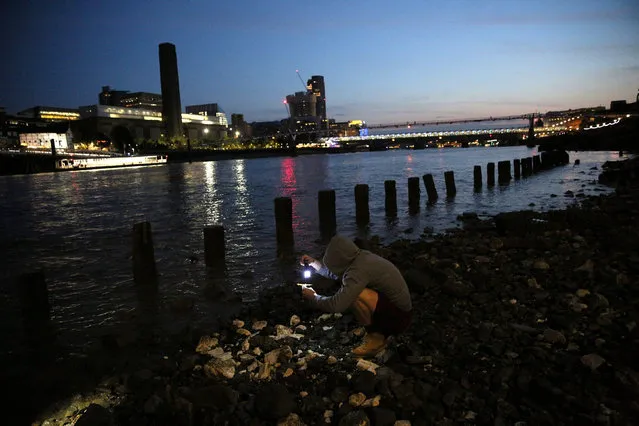
A mudlark uses a torch to look for items on the bank of the River Thames in London, Britain June 06, 2016. Mudlarking is believed to trace its origins to the 18th and 19th century, when scavengers searched the Thames' shores for items to sell. These days, history and archaeology fans are the ones hoping to find old relics such as coins, ceramics, artifacts or everyday items from across centuries. They wait for the low tide and then scour specific areas of exposed shores. "If you're in a field you could be out all day long, with the river you're restricted to about two or three hours," mudlark Nick Stevens said. While many just use the naked eye for their searches, others rely on metal detectors for which a permit from the Port of London Authority is needed. Digging also requires consent. (Photo by Neil Hall/Reuters)

A mudlark uses a torch to look for items on the bank of the River Thames in London, Britain June 06, 2016. Mudlarking is believed to trace its origins to the 18th and 19th century, when scavengers searched the Thames' shores for items to sell. These days, history and archaeology fans are the ones hoping to find old relics such as coins, ceramics, artifacts or everyday items from across centuries. their finds with the Portable Antiquities Scheme. Any item over 300 years old must be recorded. (Photo by Neil Hall/Reuters)
Details
27 Aug 2016 10:43:00
Members of the Colombian Navy stand guard on top of a seized submarine built by drug smugglers in a makeshift shipyard in Timbiqui, department of Cauca February 14, 2011. Colombian authorities said the submersible craft was to be used to transport 8 tons of cocaine illegally into Mexico. (Photo by Jaime Saldarriaga/Reuters)

Members of the Colombian Navy stand guard on top of a seized submarine built by drug smugglers in a makeshift shipyard in Timbiqui, department of Cauca February 14, 2011. Colombian authorities said the submersible craft was to be used to transport 8 tons of cocaine illegally into Mexico. (Photo by Jaime Saldarriaga/Reuters)
Details
14 Aug 2015 13:34:00
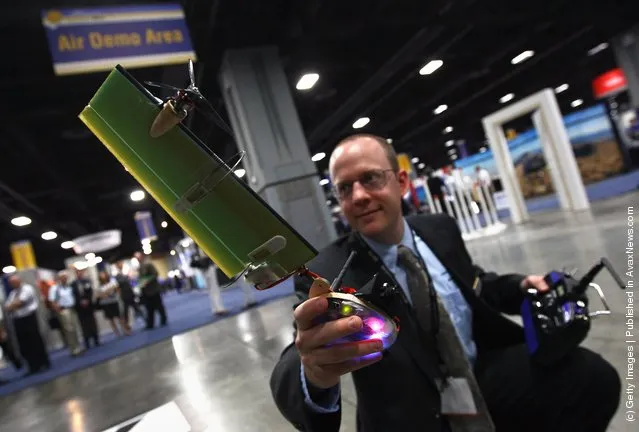
Samurai Flyer

David Sharp, an engineer with Lockheed Martin, displays the “Samurai Flyer”, an aviation design inspired by the maple seed, during the Association for Unmanned Vehicle Systems International Conference August 16, 2011 in Washington, DC. Lockheed Martin unveiled the new design and demonstrated vertical takeoff and landing, stable hover, and on-board video streaming of the aircraft during their demonstration. (Photo by Win McNamee/Getty Images)
Details
17 Aug 2011 11:56:00
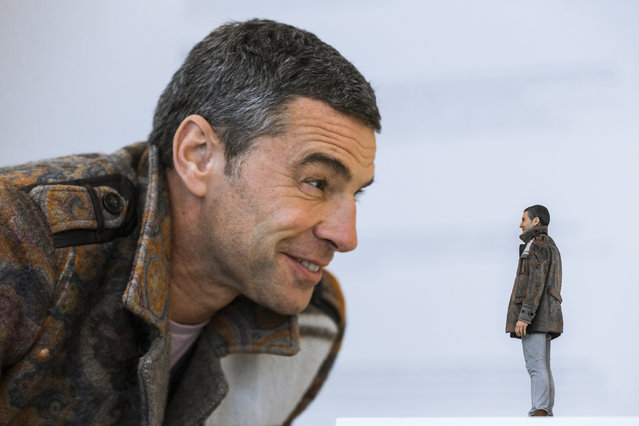
Customer Andreas Kroker looks at a 3D-printed figure of himself at the Twinkind 3D printing studio in Berlin, December 13, 2013. (Photo by Thomas Peter/Reuters)

Customer Andreas Kroker looks at a 3D-printed figure of himself at the Twinkind 3D printing studio in Berlin, December 13, 2013. A 3D-printed likeness is produced by taking a 360 degree photographic scan of a person, which is then rendered into a 3D digital model and retouched to meet the requirements for printing. The printing machine uses this digital model to produce a high-resolution solid figure. Twinkind co-founder Timo Schaedel said, people often come to the session well-groomed, with fresh hair-cuts and their best clothes, “just as they used to do in the past, when they had their portrait taken in a photo studio”. (Photo by Thomas Peter/Reuters)
Details
17 Jul 2014 11:22:00
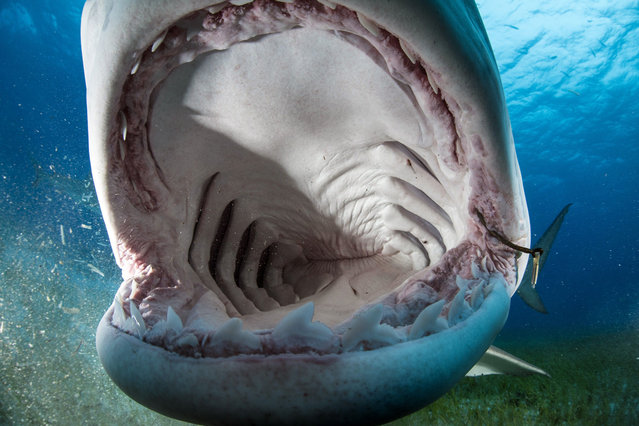
These jaw-some images show what its like to look inside the mouth of a tiger shark. Captured in amazing detail, the unique pictures show the alien-like anatomy of the shark and reveal rows upon rows of razor sharp teeth and white coloured gills. The incredible photographs were taken when a curious shark began to inspect the camera of British born photographer, Adam Hanlon, 46.(Photo by Adam Hanlon/Caters News)

These jaw-some images show what its like to look inside the mouth of a tiger shark. Captured in amazing detail, the unique pictures show the alien-like anatomy of the shark and reveal rows upon rows of razor sharp teeth and white coloured gills. The incredible photographs were taken when a curious shark began to inspect the camera of British born photographer, Adam Hanlon, 46. After sensing electronic impulses omitted by Adams camera, the inquisitive creature began to gently mouth at the cameras housing allowing him capture the unusual perspective. (Photo by Adam Hanlon/Caters News)
Details
29 Jan 2015 11:50:00