Loading...
Done
The Machines Of The Isle Of Nantes

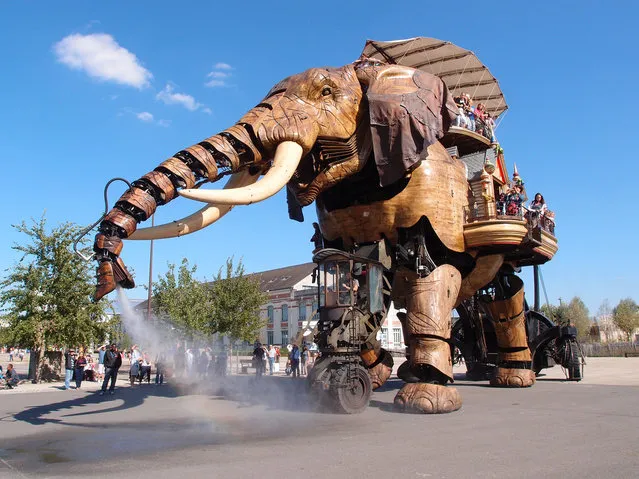
Due to the influence of Sci-Fi movies, many of us have an obsession with giant robots. How cool would it be to ride a gigantic robotic dinosaur or elephant? It would be even cooler to control one! Regretfully, the modern technologies are not yet sophisticated enough to fulfill this dream. Pierre Orefice and François Delarozière, however, came very close. These two artists have made it their goal to turn Nantes, France, into a hot tourist destination spot for people who love robots. In their project of Machines de l'île in Nantes, they have created a whole park of robotic monstrosities, ranging from a giant 3 story high elephant to a 2 meter long centipede crawling on a rail track.
Details
05 Jan 2015 13:21:00
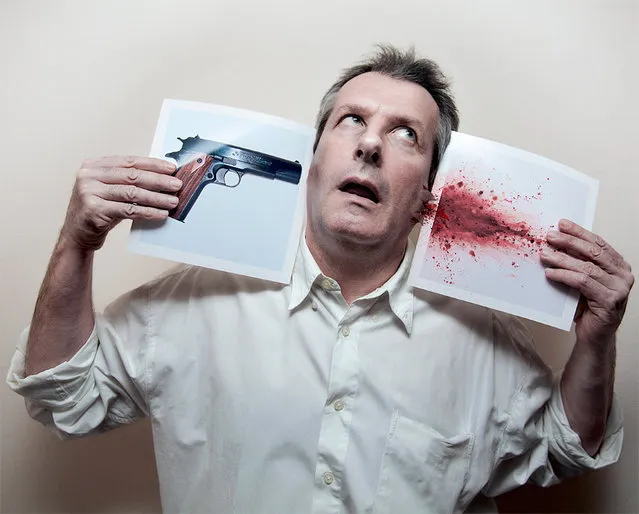
En attendant davoir des balles..... Photo Art by Pierre Beteille

Talented French artist, Pierre Beteille, is skillful in manipulation of portraits (specially his own self portraits) using Photoshop. This is how he describes himself: “I am not a photographer or an artist, I just make images… I shoot very average or even bad photos that I try to improve thanks to Photoshop”…

Photo: “En attendant d'avoir des balles”...., 2007 (Photo by Pierre Beteille)

Details
23 Jul 2012 08:52:00
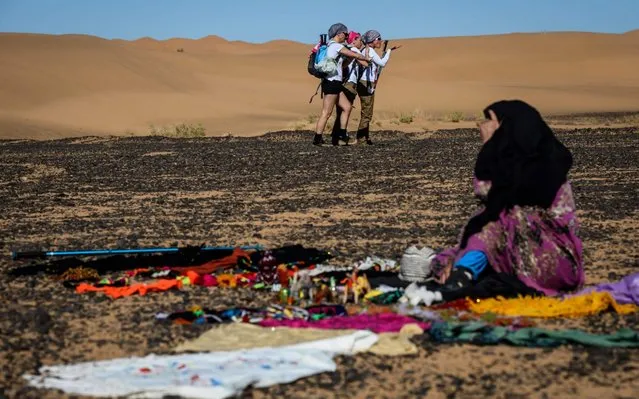
Women take part in the desert trek “Rose Trip Maroc”, on November 1, 2019 in the erg Chebbi near Merzouga. The Rose Trip Maroc is a female-oriented trek where teams of three must travel through the southern Moroccan Sahara desert with a compass, a map and a topographical reporter. (Photo by Jean-Philippe Ksiazek/AFP Photo)

Women take part in the desert trek “Rose Trip Maroc”, on November 1, 2019 in the erg Chebbi near Merzouga. The Rose Trip Maroc is a female-oriented trek where teams of three must travel through the southern Moroccan Sahara desert with a compass, a map and a topographical reporter. (Photo by Jean-Philippe Ksiazek/AFP Photo)
Details
04 Nov 2019 00:01:00
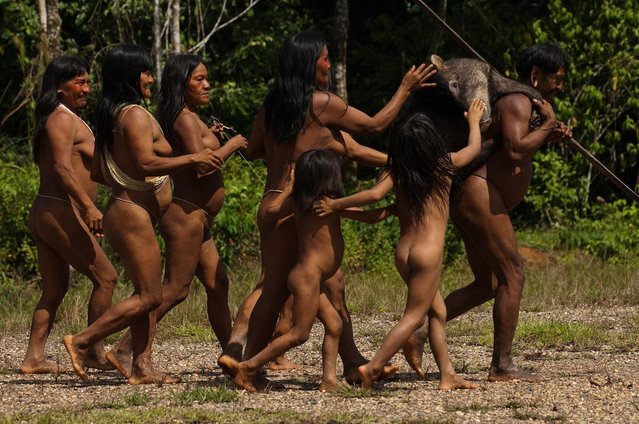
Spectacular images offering insight into the lives of the Huaorani people in the Ecuadorian Amazon have been revealed showing how they use traditional methods to hunt monkeys for food. The stunning pictures were taken by conservation photographer Pete Oxford from Torquay, Devon in the Ecuadorian Amazon. “The Huaorani Indians are a forest people highly in tune with their environment. Many are now totally acculturated since the 1950s by missionaries”, said Pete. “Today they face radical change to their culture to the proximity of oil exploration within their territory and the Yasuni National Park and Biosphere Reserve, they are vastly changed. Some still live very traditionally and for this shoot, through my Huaorani friend, a direct relative of those photographed he wanted to depict them as close to their original culture as possible. They still largely hunt with blow pipes and spears eating a lot of monkeys and peccaries”. The Huaorani are also known as the Waorani, Waodani or the Waos and are native Amerindians. Their lands are located between the Curaray and Napo rivers and speak the Huaorani language. Pete says that during his visit he was welcomed into the group and hopes that ancient cultures can be saved. Here: The tribe were seen celebrating after a hunter returned to camp with a wild pig. (Photo by Pete Oxford/Mediadrumworld.com)

Spectacular images offering insight into the lives of the Huaorani people in the Ecuadorian Amazon have been revealed showing how they use traditional methods to hunt monkeys for food. The stunning pictures were taken by conservation photographer Pete Oxford from Torquay, Devon in the Ecuadorian Amazon. Here: The tribe were seen celebrating after a hunter returned to camp with a wild pig. (Photo by Pete Oxford/Mediadrumworld.com)
Details
20 Jan 2017 07:58:00
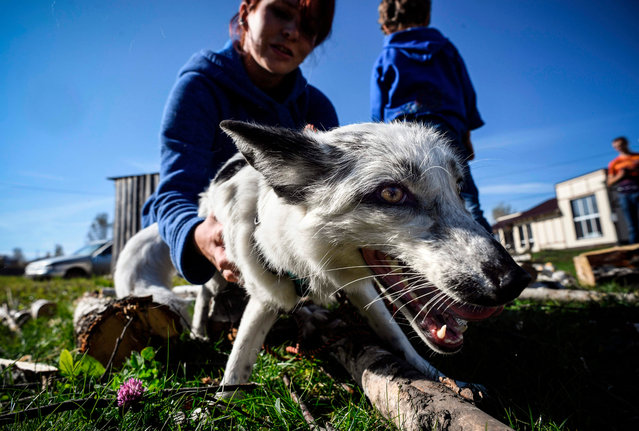
Tatyana Abramova, 33, plays with her home fox Plombir at her countryside house outside Siberian city of Novosibirsk on September 12, 2020. The official start of the Soviet experiment to better understand the domestication of animals by humans began in 1959, and was initiated by geneticists Dmitri Beliaiev and Lioudmila Trout on a farm in Akademgorodok, the scientific center of excellence in Siberia. Their primary objective was to domesticate foxes, to understand how the ancestor of wolves, another canine, evolved into a loyal and loving dog. And understand what this domestication tells us about the genetic evolution of species. (Photo by Alexander Nemenov/AFP Photo)

Tatyana Abramova, 33, plays with her home fox Plombir at her countryside house outside Siberian city of Novosibirsk on September 12, 2020. The official start of the Soviet experiment to better understand the domestication of animals by humans began in 1959, and was initiated by geneticists Dmitri Beliaiev and Lioudmila Trout on a farm in Akademgorodok, the scientific center of excellence in Siberia. Their primary objective was to domesticate foxes, to understand how the ancestor of wolves, another canine, evolved into a loyal and loving dog. And understand what this domestication tells us about the genetic evolution of species. (Photo by Alexander Nemenov/AFP Photo)
Details
25 Oct 2020 00:05:00
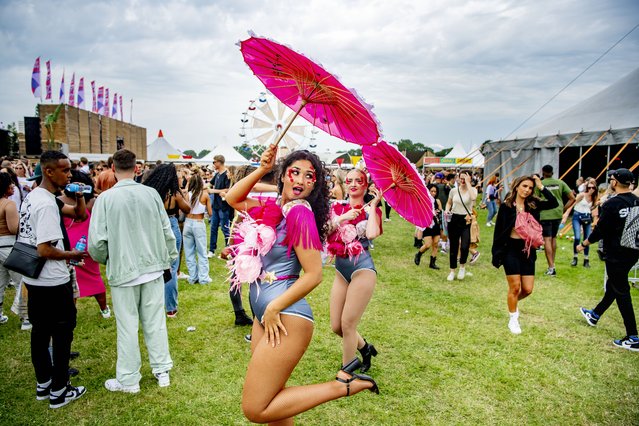
Revellers at the Chin Chin music festival in Amsterdam, Netherlands on July 3, 2021. The festival season has started with a QR code, one can enter, corona proof or vaccination proof in the corona check app. (Photo by Robin Utrecht/Rex Features/Shutterstock)

Revellers at the Chin Chin music festival in Amsterdam, Netherlands on July 3, 2021. The festival season has started with a QR code, one can enter, corona proof or vaccination proof in the corona check app. (Photo by Robin Utrecht/Rex Features/Shutterstock)

Details
14 Mar 2022 04:55:00
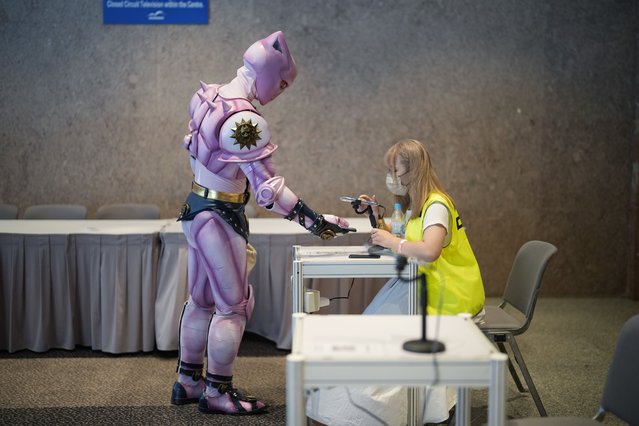
A participant wearing his cosplay featuring a character from an animation gets his government contact tracing QR code in the “LeaveHomeSafe” COVID-19 mobile app scanned at Ani-Com and Games exhibition in Hong Kong, Friday, July 29, 2022. (Photo by Kin Cheung/AP Photo)

A participant wearing his cosplay featuring a character from an animation gets his government contact tracing QR code in the “LeaveHomeSafe” COVID-19 mobile app scanned at Ani-Com and Games exhibition in Hong Kong, Friday, July 29, 2022. (Photo by Kin Cheung/AP Photo)
Details
05 Aug 2022 05:15:00
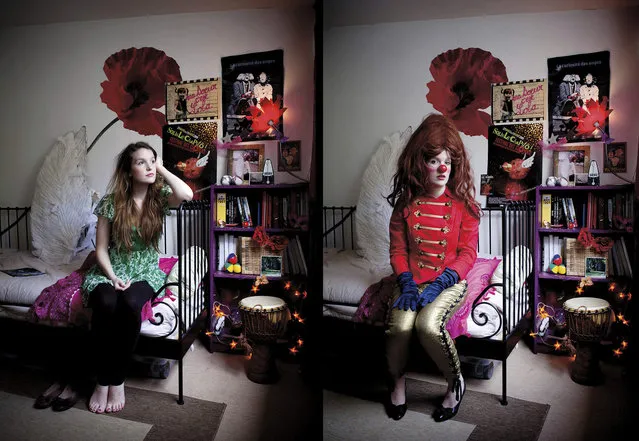
Lola is seen at left in everyday clothes – and then at right in her work clothes. She works as a clown in Paris. (Photo by Bruno Fert/Picturetank)

“The series of photos called Workwears, by French photographer Bruno Fert, visually juxtaposes people’s private lives with their lives at work. A firefighter, a fisherman, a nurse, a diver, a judge. One by one, Fert’s photos show people in their homes wearing everyday clothing – followed by another photo showing them dressed in the clothing of their chosen professions. Our reaction, Fert said, reminds us how tightly humans hold on to certain stereotypes about some professions. “I like to break those stereotypes”, he said”. – Thom Patterson via CNN. Here: Lola is seen at left in everyday clothes – and then at right in her work clothes. She works as a clown in Paris. (Photo by Bruno Fert/Picturetank)
Details
29 Oct 2014 12:40:00