Loading...
Done
The rarely seen blue sharks photographed by Saeed Rashid in British waters. (Photo by Saeed Rashid/Caters News)

The rarely seen blue sharks photographed by Saeed Rashid in British waters. Elusive blue sharks have recently been spotted off the south coast of England, having moved to the UKs warmer waters to hunt. The carnivorous sharks have been lurking off the coast of the popular British holiday destination, Penzance, in Cornwall. (Photo by Saeed Rashid/Caters News)
Details
12 Oct 2016 10:48:00
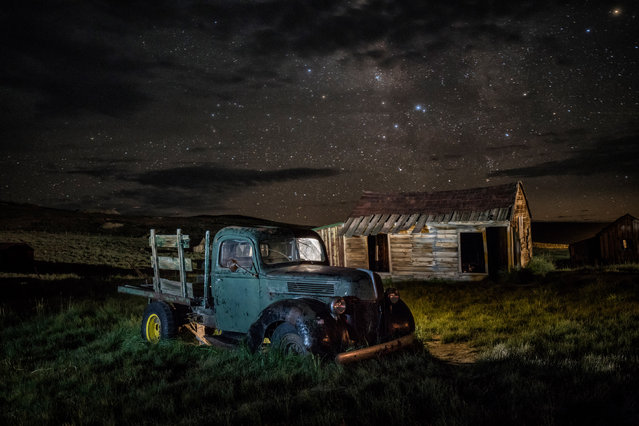
Bodie, California, a real-life ghost town. (Photo by Matthew Christopher/Caters News Agency)

In the build-up to Halloween those hunting for a real-life ghost town need look no further than this haunting spot. Bodie, California, USA – which requires special access to photograph at night – is one of the best preserved ghost towns in America, still featuring the abodes of the former miners who inhabited it more than 100 years ago. Here: Bodie, California, a real-life ghost town. (Photo by Matthew Christopher/Caters News Agency)
Details
28 Oct 2017 07:15:00
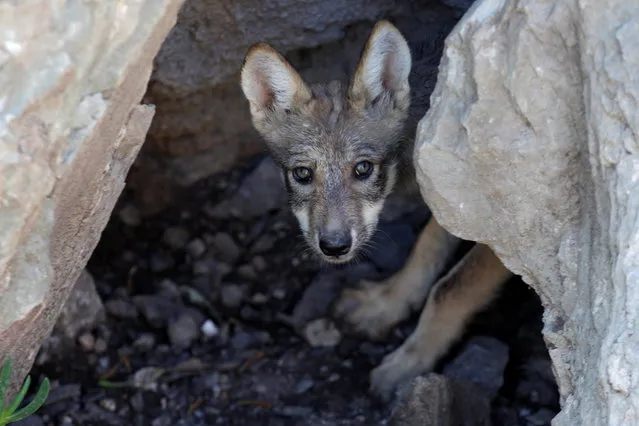
A newly born Mexican gray wolf cub, an endangered native species, is seen at its enclosure at the Museo del Desierto in Saltillo, Mexico, July 19, 2016. (Photo by Daniel Becerril/Reuters)

A newly born Mexican gray wolf cub, an endangered native species, is seen at its enclosure at the Museo del Desierto in Saltillo, Mexico, July 19, 2016. Though once held in high regard in Pre-Columbian Mexico, it is the most endangered gray wolf in North America, having been extirpated in the wild during the mid-1900s through a combination of hunting, trapping, poisoning and digging pups from dens. (Photo by Daniel Becerril/Reuters)
Details
21 Jul 2016 13:34:00
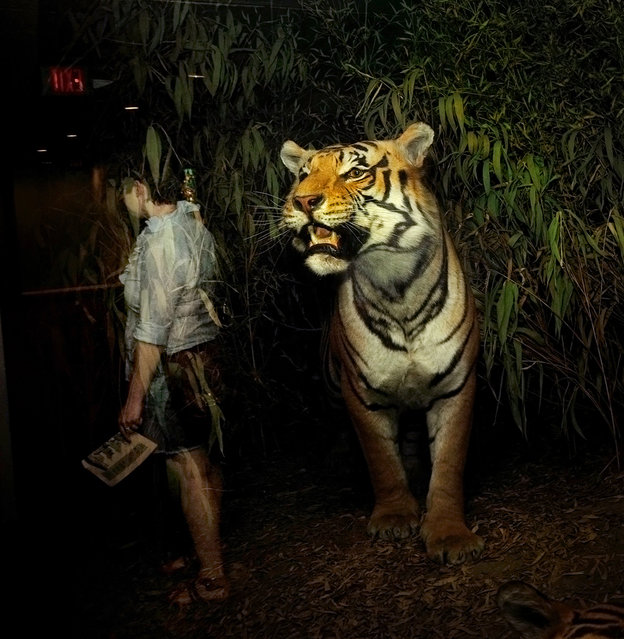
“Natural History”: Tiger. (Photo by Traer Scott)

“Natural History” is a series of completely candid single exposure images that merge the living and the dead to create allegorical narratives of our troubled co-existence with nature. Ghost-like reflections of modern visitors viewing wildlife dioramas are juxtaposed against the antique taxidermied subjects housed behind thick glass, their faces molded into permanent expressions of fear, aggression or fleeting passivity. After decades of over-hunting, climate change, poaching and destruction of habitat, many of these long dead diorama specimens now represent endangered or completely extinct species”. – Traer Scott. (Photo by Traer Scott)
Details
27 Oct 2014 11:39:00
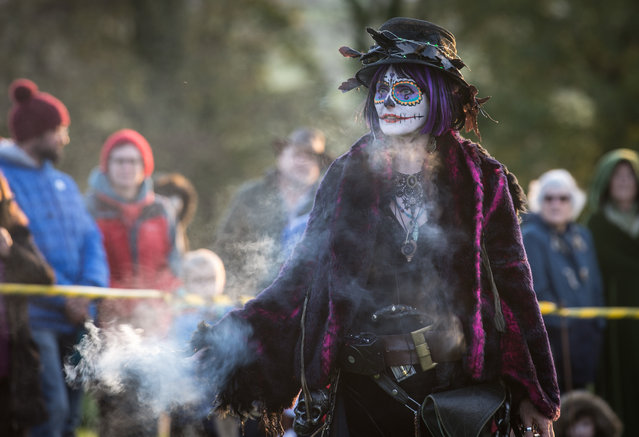
People take part in a sunset ceremony on the lower slopes of Glastonbury Tor as they celebrate Samhain at the Glastonbury Dragons Samhain Wild Hunt 2017 in Glastonbury on November 4, 2017 in Somerset, England. To celebrate Samhain, the Glastonbury Dragons, alongside Gwythyr Ap Greidal, the Summer King and the Winter King, Gwyn Ap Nudd, were paraded through the town to the lower slopes of Glastonbury Tor where the event was marked with ritual theatre, dancing and a fire to honour the dead. The Celtic festival of Samhain, which was later adopted by Christians and became Halloween, is a very important date in the Pagan calendar as it marks the division of the year between the lighter half (summer) and the darker half (winter). Pagans believe at Samhain, the division between this world and the otherworld was at its thinnest, allowing spirits to pass through. Many of the traditions of this ancient Celtic feast of the dead were later incorporated into the Christian calendar and Irish immigrants to America in the 19th century carried their customs, such as the wearing of costumes and masks to ward of harmful spirits and the harvest tradition of carving pumpkins, which have now blended into modern day Hallowee. (Photo by Matt Cardy/Getty Images)

People take part in a sunset ceremony on the lower slopes of Glastonbury Tor as they celebrate Samhain at the Glastonbury Dragons Samhain Wild Hunt 2017 in Glastonbury on November 4, 2017 in Somerset, England. To celebrate Samhain, the Glastonbury Dragons, alongside Gwythyr Ap Greidal, the Summer King and the Winter King, (Photo by Matt Cardy/Getty Images)
Details
07 Nov 2017 07:50:00
Clay "caganers" representing Spanish Prime Minister Mariano Rajoy (2nd L), Podemos's candidate Pablo Iglesias (R), Socialist Party (PSOE) leader Pedro Sanchez (2nd R) and Ciudadanos party leader Albert Rivera (L) are seen on display at the Santa Llucia Christmas market in central Barcelona, Spain, December 16, 2015. Catalans hide "caganers" or defecators, in Christmas Nativity scenes to let friends hunt for them during Christmas celebrations. The "caganers", which symbolise defecation and fertilization of the earth, are believed to bring prosperity and luck for the coming year. (Photo by Albert Gea/Reuters)

Clay "caganers" representing Spanish Prime Minister Mariano Rajoy (2nd L), Podemos's candidate Pablo Iglesias (R), Socialist Party (PSOE) leader Pedro Sanchez (2nd R) and Ciudadanos party leader Albert Rivera (L) are seen on display at the Santa Llucia Christmas market in central Barcelona, Spain, December 16, 2015. Catalans hide “caganers” or defecators, in Christmas Nativity scenes to let friends hunt for them during Christmas celebrations. The “caganers”, which symbolise defecation and fertilization of the earth, are believed to bring prosperity and luck for the coming year. (Photo by Albert Gea/Reuters)
Details
18 Dec 2015 08:00:00
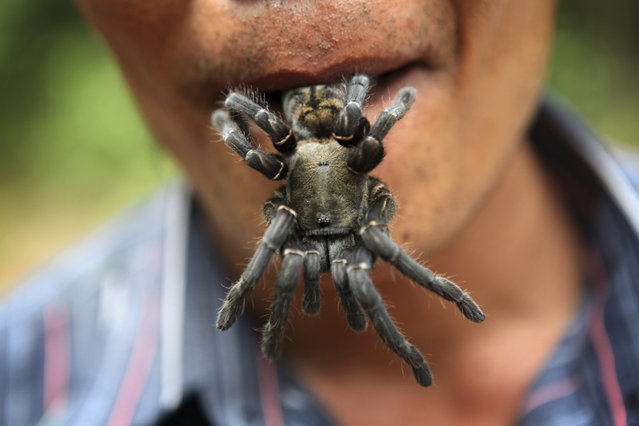
A Cambodian tuk tuk driver and guide with a tarantula in his mouth shortly after is was dug from the ground on June 7, 2010 in Skuon, Kampong Cham Province, Cambodia. The trade for spiders and other insects as food and for medicinal purposes has been in effect since the 1970's in Cambodia but only very recently have tourists been finding a way to see where the spiders are hunted in the nearby countryside. One guide, who can be found in Kampong Cham Town has started offering tours to tourists who can find him. (Photo by Tim Whitby/Getty Images)

A Cambodian tuk tuk driver and guide with a tarantula in his mouth shortly after is was dug from the ground on June 7, 2010 in Skuon, Kampong Cham Province, Cambodia. The trade for spiders and other insects as food and for medicinal purposes has been in effect since the 1970's in Cambodia but only very recently have tourists been finding a way to see where the spiders are hunted in the nearby countryside. One guide, who can be found in Kampong Cham Town has started offering tours to tourists who can find him. (Photo by Tim Whitby/Getty Images)
Details
04 Sep 2016 09:27:00
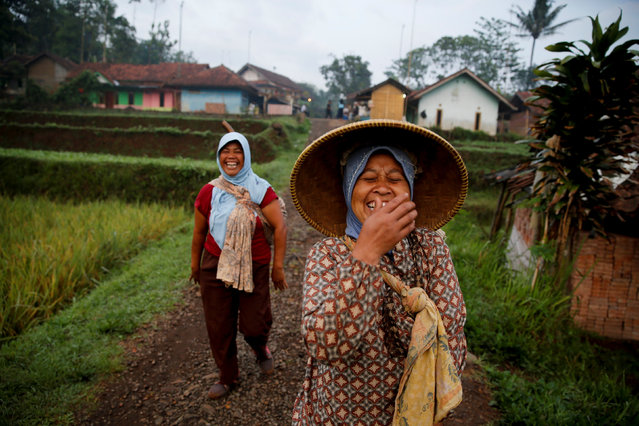
Women share a joke as they walk to a paddy field in Cikawao village of Majalaya, West Java province, Indonesia, October 12, 2017. (Photo by Reuters/Beawiharta)

A gory fight to the death between snarling dogs and captured wild boars. Gathered around a bamboo-walled arena, Indonesians in this remote part of Java island seem eager to watch the blood-curdling contests, known locally as “adu bagong” (boar fighting). Not surprisingly, animal rights activists are up in arms against the regular spectacle, which began in the 1960s when wild pig numbers in this area in West Java soared and they were hunted to protect crops. Here: Women share a joke as they walk to a paddy field in Cikawao village of Majalaya, West Java province, Indonesia, October 12, 2017. (Photo by Reuters/Beawiharta)
Details
21 Oct 2017 07:46:00