Loading...
Done
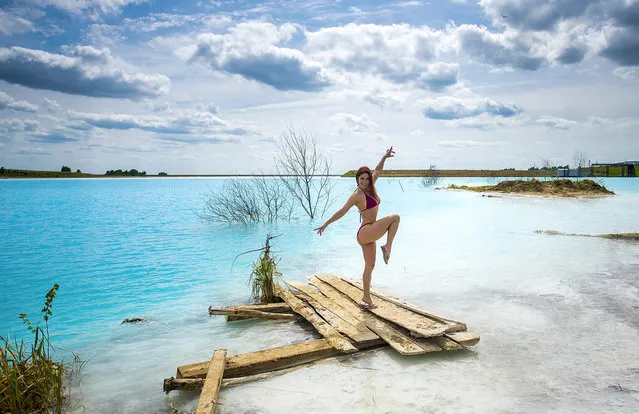
In this undated handout photo taken by mrwed54, a woman poses for a photo by a lake in the Siberian city of Novosibirsk, about 2,800 kilometers (1,750 miles) east of Moscow, Russia. Thousands of Novosibirsk residents, from scantily clad women to newlyweds have been instagramming selfies near the lake nicknamed the “Siberian Malvides” after the far-flung tropical islands in the Indian Ocean. This is in fact is a man-made dumb of coal from a nearby power station that provides for most of Novosibirsk’s energy needs. Environmentalists are warning people against coming into contact with the water. (Photo by mrwed54 via AP Photo)

In this undated handout photo taken by mrwed54, a woman poses for a photo by a lake in the Siberian city of Novosibirsk, about 2,800 kilometers (1,750 miles) east of Moscow, Russia. Thousands of Novosibirsk residents, from scantily clad women to newlyweds have been instagramming selfies near the lake nicknamed the “Siberian Malvides” after the far-flung tropical islands in the Indian Ocean. This is in fact is a man-made dumb of coal from a nearby power station that provides for most of Novosibirsk’s energy needs. Environmentalists are warning people against coming into contact with the water. (Photo by mrwed54 via AP Photo)
Details
15 Jul 2019 00:07:00
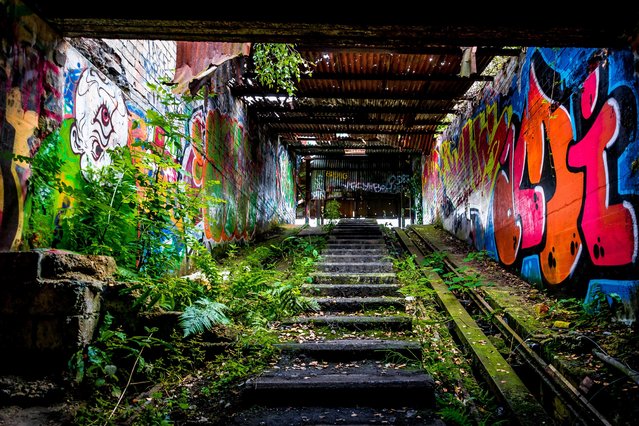
A railway siding in Wiltshire, UK where ammunition was transferred by tunnel to an underground storage facility. (Photo by MediaDrumWorld.com)

The series of shots show the bare steel infrastructure of the Bushfield army training camp near Winchester which was in operation during World War Two and was used to train Royal Green Jackets recruits in the sixties. The spectacular images were taken by an urban explorer who wished to remain anonymous. Here: A railway siding in Wiltshire, UK where ammunition was transferred by tunnel to an underground storage facility. (Photo by MediaDrumWorld.com)
Details
11 Jan 2017 14:18:00
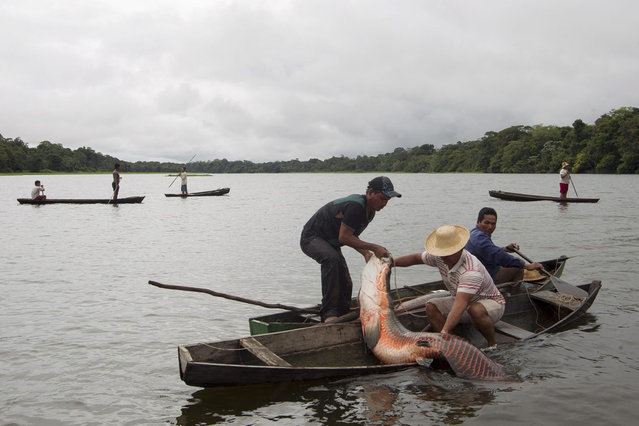
Villagers from the Porto Novo community load into their canoes arapaima or pirarucu, the largest freshwater fish species in South America and one of the largest in the world, while fishing in Poco Fundo lake along a branch of the Solimoes river, one of the main tributaries of the Amazon, in the Mamiraua nature reserve near Fonte Boa about 600 km (373 miles) west of Manaus, November 26, 2013. (Photo by Bruno Kelly/Reuters)

Villagers from the Porto Novo community load into their canoes arapaima or pirarucu, the largest freshwater fish species in South America and one of the largest in the world, while fishing in Poco Fundo lake along a branch of the Solimoes river, one of the main tributaries of the Amazon, in the Mamiraua nature reserve near Fonte Boa about 600 km (373 miles) west of Manaus, November 26, 2013. Catching the arapaima, a fish that is sought after for its meat and is considered by biologists to be a living fossil, is only allowed once a year by Brazil's environmental protection agency. The minimum size allowed for a fisherman to keep an arapaima is 1.5 meters (4.9 feet). (Photo by Bruno Kelly/Reuters)
Details
17 Dec 2013 08:03:00
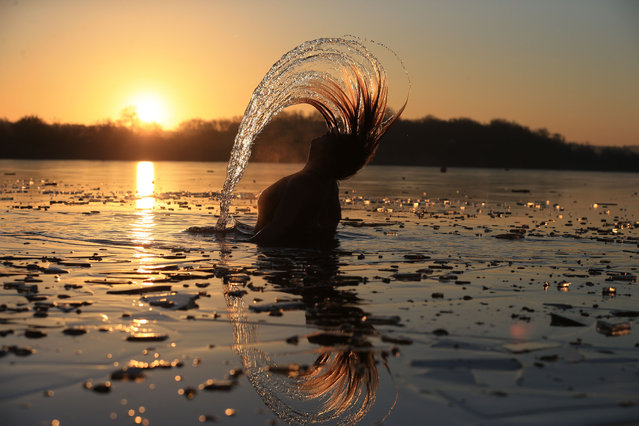
An open water swimmer surfaces as she enjoys a socially-distanced dawn swim after breaking the ice on the surface of a lake near Scunthorpe, northern England, January 9, 2021. Faced by a sharp rise in coronavirus infections, driven by the new strain, England entered a strict lockdown on January 5, 2021, with schools and non-essential shops closed for at least six weeks after previous measures failed to halt the steep rise in cases. (Photo by Lindsey Parnaby/AFP Photo)

An open water swimmer surfaces as she enjoys a socially-distanced dawn swim after breaking the ice on the surface of a lake near Scunthorpe, northern England, January 9, 2021. Faced by a sharp rise in coronavirus infections, driven by the new strain, England entered a strict lockdown on January 5, 2021, with schools and non-essential shops closed for at least six weeks after previous measures failed to halt the steep rise in cases. (Photo by Lindsey Parnaby/AFP Photo)
Details
27 Feb 2021 10:02:00
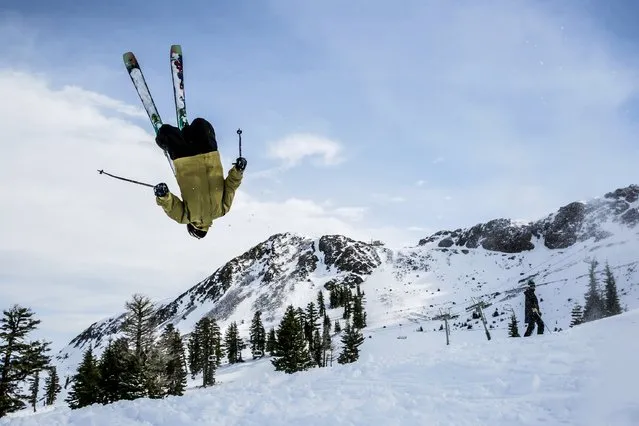
Cameron Shonnard backflips a jump at Squaw Valley in Olympic Valley, California, December 5, 2015. (Photo by Max Whittaker/Reuters)

Cameron Shonnard backflips a jump at Squaw Valley in Olympic Valley, California, December 5, 2015. An El Nino is forecasted for California, and regular precipitation has been welcomed after years of drought. (Photo by Max Whittaker/Reuters)
Details
08 Dec 2015 08:00:00


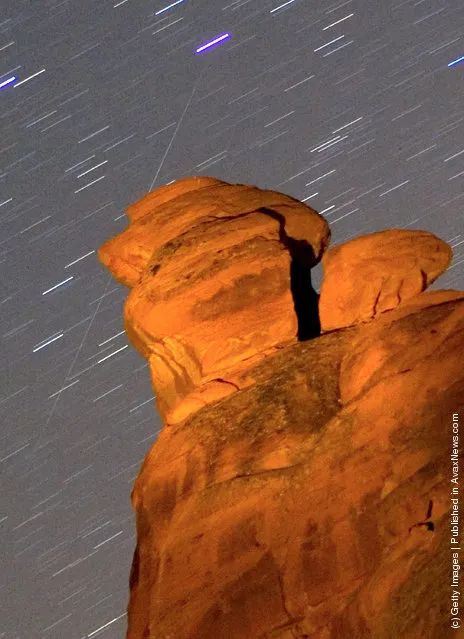
A Geminid meteor streaks diagonally across the sky against a field of star trails behind one of the peaks of the Seven Sisters rock formation in this long exposure early December 14, 2007 in the Valley of Fire State Park in Nevada. The meteor display, known as the Geminid meteor shower because it appears to radiate from near the star Castor in the constellation Gemini, is thought to be the result of debris cast off from an asteroid-like object called 3200 Phaethon. The shower is visible every December. (Photo by Ethan Miller/Getty Images)
Details
07 Jul 2011 10:34:00
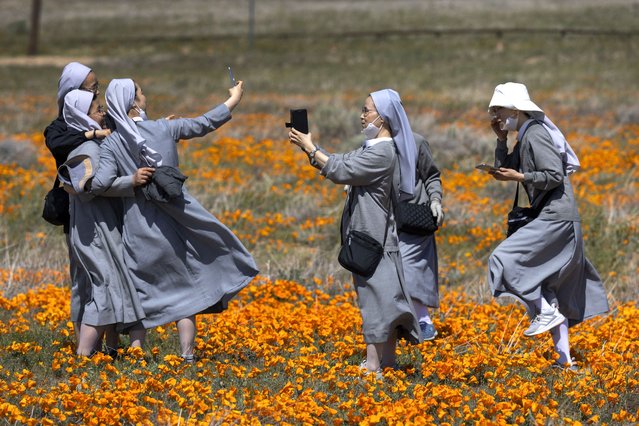
People walk in a field of California poppies and other wildflowers outside of the Antelope Valley California Poppy Reserve, after recent rains moved the region's second-driest winter on record up to its seventh-driest, near Lancaster, California, on April 2, 2022. The California Department of Water Resources reported that about one-third of the Sierra Nevada snowpack's water equivalency melted last week under higher-than-normal temperatures, leaving the statewide snow-water equivalent at 38% of normal for the date. (Photo by David Mcnew/AFP Photo)

People walk in a field of California poppies and other wildflowers outside of the Antelope Valley California Poppy Reserve, after recent rains moved the region's second-driest winter on record up to its seventh-driest, near Lancaster, California, on April 2, 2022. The California Department of Water Resources reported that about one-third of the Sierra Nevada snowpack's water equivalency melted last week under higher-than-normal temperatures, leaving the statewide snow-water equivalent at 38% of normal for the date. (Photo by David Mcnew/AFP Photo)
Details
12 Apr 2022 06:02:00
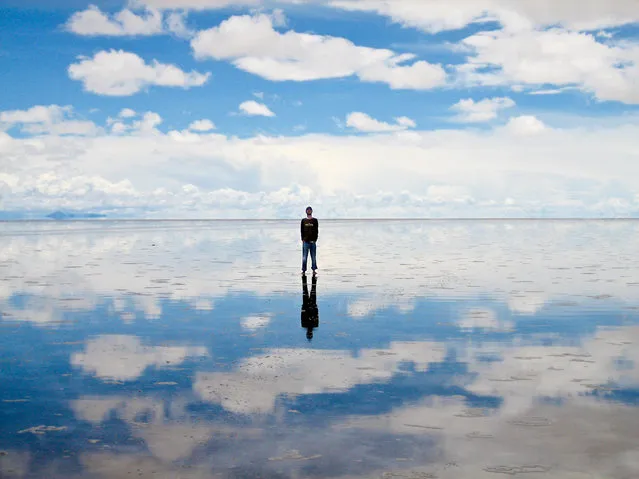
Salar de Uyuni

Salar de Uyuni (or Salar de Tunupa) is the world's largest salt flat at 10,582 square kilometers (4,086 sq mi). It is located in the Potosí and Oruro departments in southwest Bolivia, near the crest of the Andes, and is elevated 3,656 meters (11,995 ft) above mean sea level. The Salar was formed as a result of transformations between several prehistoric lakes. It is covered by a few meters of salt crust, which has an extraordinary flatness with the average altitude variations within one meter over the entire area of the Salar.
Details
04 Aug 2012 08:42:00