Loading...
Done
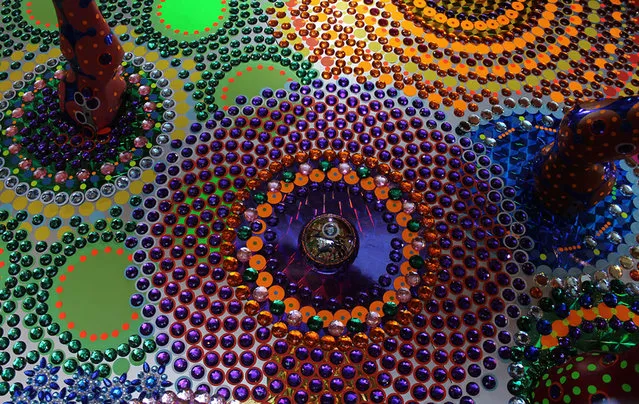
Kaleidoscopic Crystal Floor By Suzan Drummen

Dutch artist Suzan Drummen‘s large-scale floor installations are mesmerizing and complex circular patterns made out of mirrors and brightly colored glass. The fractal-like arrangements feature ornate and elaborate circles growing exponentially out of each other and vibrant rings of spiraling colors winding into the surface of the floor. They are composed of crystals, chromed metal, precious stones, mirrors and optical glass. A sensory experience, and visually stimulating, the glittering installations play with the architecture of the space — climbing up walls and sweeping across the surfaces — examining the idea of illusion and optical effects.
Details
27 May 2015 08:18:00
Two boys in the Gorbals area of Glasgow, UK on January 31, 1948. The Gorbals tenements were built quickly and cheaply in the 1840s, providing housing for Glasgow's burgeoning population of industrial workers. Conditions were appalling; overcrowding was standard and sewage and water facilities inadequate. The tenements housed about 40,000 people with up to eight family members sharing a single room, 30 residents sharing a toilet and 40 sharing a tap. By the time this photograph was taken 850 tenements had been demolished since 1920. Redevelopment of the area began in the late 1950s and the tenements were replaced with a modern tower block complex in the sixties. (Photo by Bert Hardy/Getty Images)

Two boys in the Gorbals area of Glasgow, UK on January 31, 1948. The Gorbals tenements were built quickly and cheaply in the 1840s, providing housing for Glasgow's burgeoning population of industrial workers. Conditions were appalling; overcrowding was standard and sewage and water facilities inadequate. The tenements housed about 40,000 people with up to eight family members sharing a single room, 30 residents sharing a toilet and 40 sharing a tap. By the time this photograph was taken 850 tenements had been demolished since 1920. Redevelopment of the area began in the late 1950s and the tenements were replaced with a modern tower block complex in the sixties. (Photo by Bert Hardy/Getty Images)
Details
09 Mar 2017 00:03:00
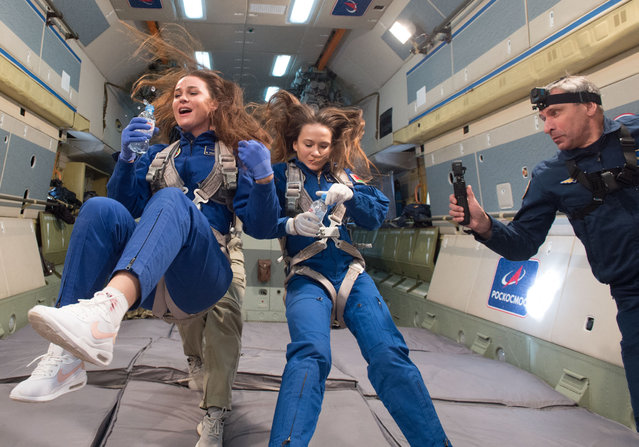
This handout picture released by the Gagarin Cosmonauts' Training Centre on October 17, 2023 shows Marina Vasilevskaya (L) flying during a parabolic flight aboard a zero-gravity simulator, a Russian IL-76 MDK aircraft used for cosmonauts' training flights in weightlessness, in Star City outside Moscow. Belavia flight attendant and spaceflight participant Marina Vasilevskaya of Belarus, along with NASA astronaut Tracy Dyson and Roscosmos cosmonaut Oleg Novitskiy, will blast off to the International Space Station (ISS) aboard the Soyuz MS-25 spacecraft in March 2024 and will spend approximately 12 days aboard the orbital complex. (Photo by Pavel Shvets/Gagarin Cosmonaut Training Center/AFP Photo)

This handout picture released by the Gagarin Cosmonauts' Training Centre on October 17, 2023 shows Marina Vasilevskaya (L) flying during a parabolic flight aboard a zero-gravity simulator, a Russian IL-76 MDK aircraft used for cosmonauts' training flights in weightlessness, in Star City outside Moscow. (Photo by Pavel Shvets/Gagarin Cosmonaut Training Center/AFP Photo)
Details
31 Oct 2023 06:26:00
What the World Eats By Peter Menzel And Faith D'Aluisio Part 2

A stunning photographic collection featuring portraits of people from 30 countries and the food they eat in one day. In this fascinating study of people and their diets, 80 profiles are organized by the total number of calories each person puts away in a day. Featuring a Japanese sumo wrestler, a Massai herdswoman, world-renowned Spanish chef Ferran Adria, an American competitive eater, and more, these compulsively readable personal stories also include demographic particulars, including age, activity level, height, and weight. Essays from Harvard primatologist Richard Wrangham, journalist Michael Pollan, and others discuss the implications of our modern diets for our health and for the planet. This compelling blend of photography and investigative reportage expands our understanding of the complex relationships among individuals, culture, and food.
Details
02 May 2014 09:20:00
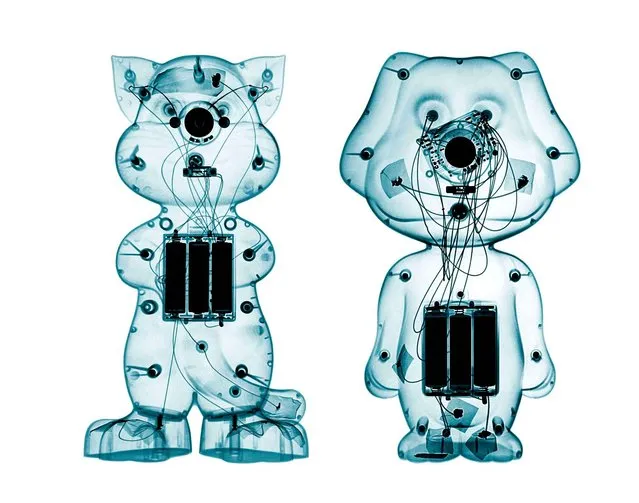
Australian photographer Brendan Fitzpatrick’s X-ray photographs expose the inner workings of toys. Fitzpatrick’s photographs are both whimsical and mechanical, evoking the curiosity of childhood and the desire to discover how things look and work from other perspectives. (Photo by Brendan Fitzpatrick)

Australian photographer Brendan Fitzpatrick’s X-ray photographs expose the inner workings of toys. Fitzpatrick’s photographs are both whimsical and mechanical, evoking the curiosity of childhood and the desire to discover how things look and work from other perspectives. The strategic placement of wires, batteries, and screws are revealed, the complexity of the inside contrasting with the seemingly simplistic design of the outside. Fitzpatrick uses chest X-ray and mammogram machines to photograph flowers, toys, and creatures, then enhances the color in the images in order to more effectively distinguish the various parts that have been exposed. This photographs are part of series he calls “Invisible Light”. (Photo by Brendan Fitzpatrick)
Details
08 Aug 2014 10:59:00


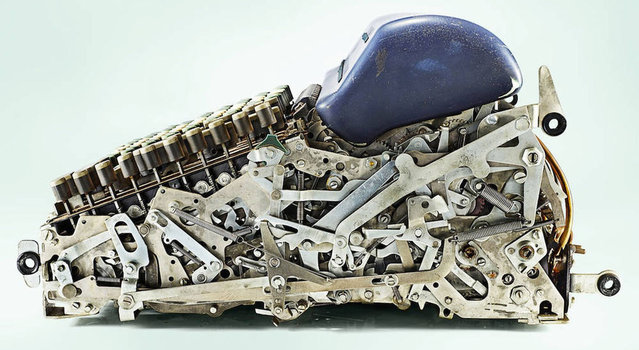
In his newest series of photos called Low Tech, Kevin Twomey artfully captures the complexity of old-style typewriters and similar machines. Despite being completely outdated, you cannot help being amazed at how complicated those “simple” devises really are. Hundreds of little parts were meticulously put together to form a machine that would perform such “basic” functions by today’s standards. Similarly, very few modern people actually think about how complicated the current technology really is. We take for granted streaming videos, GPS, and countless devises that we use every day, while in reality, these things would seem like magic to even the most prominent scientists from only half a century ago. (Photo by Kevin Twomey)
Details
21 Nov 2014 12:42:00
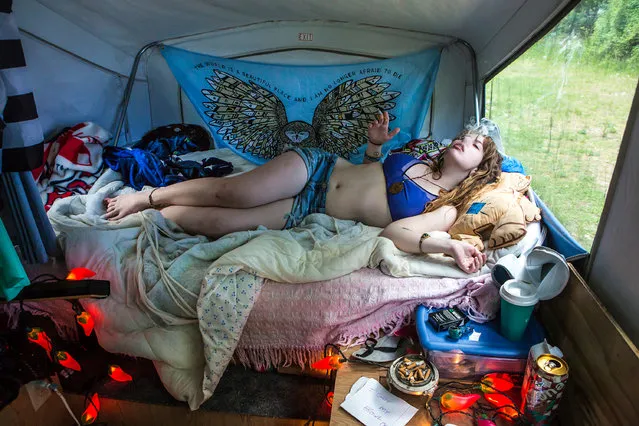
Jessica, Milford, New Hampshire: “Sometimes life throws you in all sorts of directions. The most important part about life is to remember you are exactly where you need to be”. (Photo by Barbara Peacock/Recipient of the Getty Images Grant for Editorial Photography 2017)

Barbara Peacock is one of five recipients of the Getty Images annual Grants for Editorial Photography programme, which gives photojournalists an award of $10,000 as well as the agency’s support in pursuing projects of their choosing. American Bedroom is an ongoing series of portraits in which she explores the complexities and idiosyncrasies of contemporary American life. Here: Jessica, Milford, New Hampshire: “Sometimes life throws you in all sorts of directions. The most important part about life is to remember you are exactly where you need to be”. (Photo by Barbara Peacock/Recipient of the Getty Images Grant for Editorial Photography 2017)
Details
19 Sep 2017 07:44:00
Warriors Of Brazil: Capoeira Spectacular

“Capoeira is a Brazilian art form that combines elements of martial arts, sports, and music. It was created in Brazil mainly by descendants of African slaves with Brazilian native influences, probably beginning in the 16th century. It is known by quick and complex moves, using mainly power kicks and quick leg sweeps, with some ground and aerial acrobatics, knee strikes, take-downs, elbow strikes, punches and headbutts. The word capoeira comes from Tupi, referring to the areas of low vegetation in the Brazilian interior”. – Wikipedia

Photo: The Warriors of Brazil perform on Coogee Beach on November 23, 2009 in Sydney, Australia. The Warriors of Brazil show is a spectacular stage show which combines the extraordinary martial art of Capoeira with the uplifting music and dance of Carnival. (Photo by Ryan Pierse/Getty Images)
Details
19 Sep 2011 14:13:00